
Lou’s Views
News & Views / January Edition
Calendar of Events
NA
 Discover a wide range of things to do in the Brunswick Islands for an experience that goes beyond the beach.
For more information » click here.
Calendar of Events Island

Town of Holden Beach officially established on February 14, 1969
Celebrating our 57th Anniversary!
Town Birthday Celebration
The Town of Holden Beach will hold its annual birthday celebration on Friday, February 13th at noon. Lunch will be served.
Please contact Christy at christy.ferguson@hbtownhall.com to register.
Reminders
 News from Town of Holden Beach
The town sends out emails of events, news, agendas, notifications, and emergency information. If you would like to be added to their mailing list, please go to their web site to complete your subscription to the Holden Beach E-Newsletter.
For more information » click here
 Paid Parking
Paid parking in Holden Beach
Paid parking will be enforced from 9:00 a.m. to 5:00 p.m. daily with free parking before and after that time. All parking will use license plates for verification.
Rates
Parking rates for a single vehicle in all designated areas will be:
$5 per hour for up to four hours
$20 per day for any duration greater than four hours
$80 per week for seven consecutive days
Handicap Parking
A vehicle displaying a handicap license plate and/or hang tag parked in a designated handicap space is free. Any other parking space will require a parking permit via the app.
Annual Passes
Annual permits for the calendar year allow vehicles (this includes low-speed vehicles and trailers) access to designated parking.
$175 for a single vehicle
Passes can be purchased via the app, website or by telephone.
Where to Park
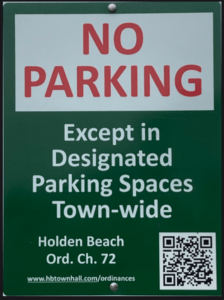
Per ordinance, there is no parking on the streets or rights-of-way except in designated parking spaces identified by Pay-to-Park signs. Click here to view an interactive map. The table with authorized parking can be viewed below.
Citations will be issued for:
-
-
- Parking without an active paid permit in a designated parking area
- Parking within 40 feet of a street intersection
- Parking in a crosswalk, sidewalk, or pedestrian access ways
- Parking blocking a driveway or mailbox
- Parking facing opposing traffic
- Parking in a no parking zone, or within right-of-way
- Parking on any portion of the roadway or travel lane
- Parking a non-LSV vehicle in an authorized LSV location
-
How Do I Pay to Park
The Town uses the SurfCAST by Otto Connect Mobile Solution. This is a mobile app downloadable for Apple and Android devices. Download the app today. Users will setup their account, enter their license plate details and pay for parking directly on the app. Alternatively, users can scan the QR Code located on the parking signs to access a secure website.
The Otto Connect customer service team will be available to help via phone and email.

Solid Waste Pickup Schedule
GFL Environmental change in service, October through May trash pickup will be once a week.
Please note:
Trash carts must be at the street by 6:00 a.m. on the pickup day
BAG the trash before putting it in the cart
Carts will be rolled back to the front of the house
GFL Refuse Collection Policy
GFL has recently notified all Brunswick County residents that they will no longer accept extra bags of refuse outside of the collection cart. This is not a new policy but is stricter enforcement of an existing policy. While in the past GFL drivers would at times make exceptions and take additional bags of refuse, the tremendous growth in housing within Brunswick County makes this practice cost prohibitive and causes drivers to fall behind schedule.
Solid Waste Pickup Schedule
starting October once a week
Recycling
starting October every other week pick-up
Curbside Recycling – 2026
GFL Environmental is now offering curbside recycling for Town properties that desire to participate in the service. The service cost per cart is $122.93 annually paid in advance to the Town of Holden Beach. The service consists of a ninety-six (96) gallon cart that is emptied every other week during the months of October – May and weekly during the months of June – September.
Curbside Recycling Application » click here
Curbside Recycling Calendar » click here

Trash Can Requirements – Rental Properties
GFL Environmental – trash can requirements
Ordinance 07-13, Section 50.08
Rental properties have specific number of trashcans based on number of bedrooms.
* One extra trash can per every 2 bedrooms
..
§ 50.08 RENTAL HOMES.
(A) Rental homes, as defined in Chapter 157, that are rented as part of the summer rental season, are subject to high numbers of guests, resulting in abnormally large volumes of trash. This type of occupancy use presents a significantly higher impact than homes not used for summer rentals. In interest of public health and sanitation and environmental concerns, all rental home shall have a minimum of one trash can per two bedrooms. Homes with an odd number of bedrooms shall round up (for examples one to two bedrooms – one trash can; three to four bedrooms – two trash cans; five – six bedrooms – three trash cans, and the like).
Upon Further Review

Island Properties Sold – Comparison * Lou’s Views
A comparison of Holden Beach properties sold through the last three (3) years
Island Homes Sold – 2025 * Lou’s Views
A complete list of homes sold in 2025
Island Land Sold – 2025 * Lou’s Views
A complete list of land sold in 2025
Carolina Bays Parkway project S.C. 31
Study analyzes tolling proposed Carolina Bays Parkway Extension
Findings from a state tolling analysis indicate the proposed Carolina Bays Parkway Extension into Brunswick County wouldn’t generate enough traffic and revenue to significantly reduce the cost of the estimated $800 million project. The North Carolina Turnpike Authority analyzed the feasibility of tolling the highway project that would connect North and South Carolina, potentially providing a quicker route between Wilmington and Myrtle Beach. “This project will help alleviate congestion,” said David Roy, who oversaw the study. “But the volumes on the new location, from a tolling perspective, just weren’t gonna be sufficient.” The study found that tolls could generate several million dollars annually by 2045. However, Roy said that revenue would only cover regular road maintenance. “Analysis shows the project would be unlikely to generate sufficient revenues to reduce the cost of construction to the State as a result of tolling under any of the scenarios analyzed,” the study says. “NCDOT and NCTA are not advocating for a particular path forward.” The analysis examined three scenarios for the parkway extension. The first phase would connect the Carolinas to Ash Little River Road, north of Route 17. There are two options for the second phase: a shorter connection eventually linking to Route 17 near Grissettown or a longer option extending to Shallotte. The longer option would generate the most revenue if tolled, the study found. “In any of those three scenarios…none of them showed significant revenue,” Roy said. The proposed project has drawn opposition from Brunswick County residents. Several hundred people attended a public hearing in Sunset Beach in October, with many expressing concerns about traffic, cost and environmental impacts. Adding a toll would likely generate further frustration, but Roy said tolls aren’t always the answer for funding. “It’s not the right solution for every project, and it really does require significant volume before, I think, it starts to make sense,” he said. Transportation leaders on both sides of the state line must now determine how to fund the project. Alternative funding options, beyond a toll, include a sales tax, bond or state appropriation. North Carolina, where most of the construction would take place, would be responsible for about $610 million of the $797 million cost. Construction is scheduled to begin in 2028, with completion timelines varying based on which scenario moves forward. In the study, the first phase was assumed to open in 2035, with the second phase in 2040. Roy said the project has also been submitted as a toll project in the latest NCDOT Prioritization round, where it’ll receive a score that could impact future funding decisions.
Read more » click here
Toll study sheds new light on major Brunswick road project
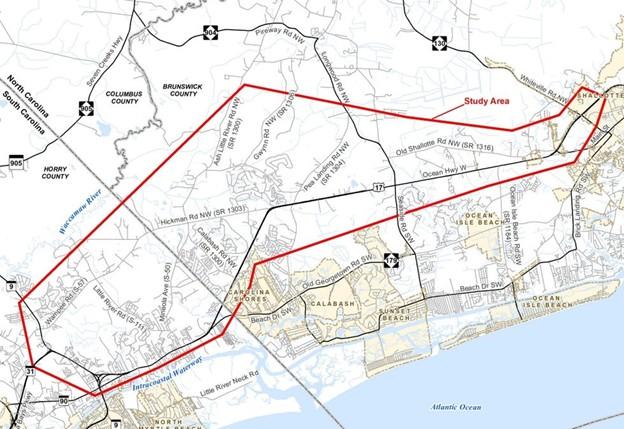
A new study reveals what tolling a new highway connecting North and South Carolina would actually look like for Brunswick County. After years of waiting, the Carolina Bays Parkway Extension project is slowly picking up speed and costs. The North Carolina Turnpike Authority has presented a tolling analysis for the project as one local transportation organization continues its search for funding opportunities to move the road off paper, and onto dirt. The North Carolina and South Carolina departments of transportation and Federal Highway Administration are working together to extend S.C. 31, known as Carolina Bays Parkway, from S.C. 9 in Horry County, South Carolina, to U.S. 17 in Brunswick County. If funded and constructed, the proposed project will result in a new multi-lane full access freeway connecting the Carolinas. Alternative map 4, which crosses through Hickmans Crossroads and the Longwood area, as the preferred route in Brunswick County that will eventually dump onto U.S. 17. All seven of NCDOT’s alternative maps for preferred routes can be viewed on NCDOT’s website. In June 2025, the Grand Strand Area Transportation Study Metropolitan Planning Organization Transportation Advisory Committee, comprised of Brunswick County leaders, passed a resolution requesting NCDOT conduct a feasibility study to consider tolling the Carolina Bays Parkway Extension project. The resolution also recognized other funding sources will need to be explored. Here’s a look at what the toll study includes and potential revenue that could come if the new highway is built and tolled.
Analysis data and current traffic counts
The StarNews obtained the Carolina Bays Parkway tolling analysis presentation, made by David Roy with the North Carolina Turnpike Authority. The study analyzed three scenarios based off alternative map 4 and 4A and included a “sketch level” traffic and revenue forecast for the project from Stantec. Phase one, projected to open in 2035, is constructing the highway from the state line to Ash Little River Road. Phase two included two scenarios, either could open in 2040. One phase two scenario continues the route from Ash Little River Road to N.C. 904, the other scenario stretching the route to the U.S. 17 Shallotte Bypass/N.C. 130 area. Like other state turnpike authority projects, as stated in the presentation, the project was modeled using an electronic toll collection/bill by mail tolling structure. The analysis used data collected 2023-2025 traffic counts from the NCDOT, NCTA and SCDOT. In 2024, S.C. 31 south of S.C. 9 East in South Carolina had an annual average daily traffic count of 37,000 and U.S. 17 near the state line had an approximate 19,000 annual average daily traffic count, per the presentation. The annual average daily traffic count west of N.C. 904 on U.S. 17 in 2025 was just under 32,000 in 2025.
Estimated revenue from tolling Carolina Bays Parkway extension
If phase one were to open in 2035, the study calculated the road having 630,000 transactions the first year and 1.1 million transactions by 2040. That would bring a net revenue of $500,000 to $860,000 each year for the first five years. Continuing the route from Ash Little River Road to N.C. 904 could climb the number of yearly transactions to 4.3 million in 2040 and 6.8 million in 2045. If built, this could generate $3.9-6.2 million in annual net revenue, according to the presentation. The highest revenue-generating route, from the study, would be building the highway from the state line to Ash Little River Road to the U.S. 17 Shallotte Bypass/N.C. 130 area. The study calculated this route could produce a total of $1170 million in revenue from 2035-2085. If completely built to this route, the lifecycle operations and maintenance are anticipated to cost around $660 million, with an additional $410 million in major road maintenance.

The NCDOT website, updated Nov. 21, has the total projected cost at $797 million, over $200 million more than the previous cost estimate. North Carolina’s portion is expected to cost $610.9 million, and the anticipated start date is 2028, per the website. A completion date has not been determined. The NCDOT portion of the project is only funded for preliminary engineering, NCDOT representatives previously told the StarNews, but not for right-of-way, utilities or construction. Despite the project anticipated to bring millions of dollars over the years, the analysis shows tolling the road could only support operations and maintenance costs, not create enough revenue to support construction funding through a “toll revenue supported debt.” A toll revenue bond is an example of a toll revenue supported debt. “Analysis shows the project would be unlikely to generate sufficient revenues to reduce the cost of construction to the state as a result of tolling under any of the scenarios analyzed,” the presentation states. The presentation notes the NCDOT and NCTA will continue supporting the organization but are not advocating for a specific path forward. The highway extension project has also been submitted as a toll project in the NCDOT Prioritization 8.0 process.
Read more » click here
Previously reported – June 2025
To fast-track highway extension into Brunswick, leaders push for toll study
A toll could be the only way to fund a new highway connecting North and South Carolina. After years of waiting, one local transportation organization is pressing the gas on a new highway in Brunswick County as the clock continues to tick by without funding.
Here’s what to know.
A new highway?
The N.C. Department of Transportation and the S.C. Department of Transportation are working together to extend S.C. 31, known as Carolina Bays Parkway, from S.C. 9 in Horry County, South Carolina, to U.S. 17 in Brunswick County. The Carolina Bays Parkway Extension project began in 2006 with a feasibility study with conceptual alternative routes and has evolved into seven potentialroutes being studied. Interactive maps of the alternatives can be viewed on NCDOT’s website.
Funding troubles for North Carolina
The NCDOT’s website, last updated in October 2024, has the total project cost estimated at $552 million with North Carolina’s portion costing $367 million. However, the Federal Infrastructure Projects Permitting Dashboard lists the estimated project cost at $797 million.
Read more » click here
Previously reported – September 2025
Landing spot identified for new highway connecting Brunswick County to SC
The North Carolina Department of Transportation is taking several steps toward moving the Carolina Bays Parkway Extension into Brunswick County. After years of planning and hoping, a recent environment statement has identified a landing spot for the major highway project and kickstarted a public comment period. The NCDOT and the South Carolina Department of Transportation are working together to extend S.C. 31, known as Carolina Bays Parkway, from S.C. 9 in Horry County, South Carolina, to U.S. 17 in Brunswick County. If funded and constructed, the proposed project will result in a new multi-lane full access freeway connecting the Carolinas. The route will be built in phases and could enhance evacuation routes as Brunswick County continues to grow in population.
Carolina Bays Parkway Extension project history
The Carolina Bays Parkway Extension project began in 2006 with a feasibility study with conceptual alternative routes. The road, if constructed, could impact places on each side of U.S. 17 in southern Brunswick County. NCDOT has seven alternative maps for preferred routes in Brunswick County that will eventually dump onto U.S. 17. However, five alternatives cross on the northern side of U.S. 17 around Hickman Crossroads along Hickman Road in Calabash. Interactive maps of the alternatives can be viewed on NCDOT’s website. “The primary purpose of the project is to improve transportation in the area by enhancing mobility and connectivity for traffic moving in and through the project area,” per NCDOT website.
New movement on the nearly $800 million project
The NCDOT website, updated Aug. 22, states the $797 million project is in development with an anticipated start date of 2028. The project is also part of NCDOT and SCDOT’s state transportation improvement program. North Carolina’s portion is expected to cost $610.9 million, per the website. “In North Carolina, this project is currently funded for the planning document, but not for right-of-way or construction,” Jenkins said.
Read more » click here
Corrections & Amplifications
 OIB Terminal Groin
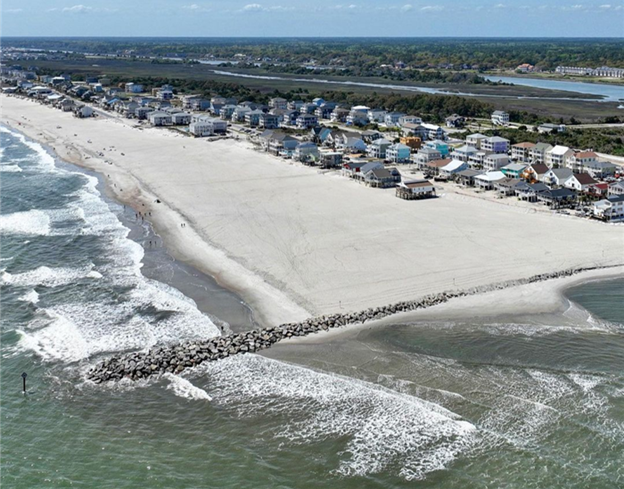
Ocean Isle Beach completed construction of a terminal groin on its east end in April 2022 to help protect the beach immediately behind it. However, this structure has contributed to significant erosion at the east end near Shallotte Inlet by interrupting natural longshore drift, prompting ongoing efforts such as sandbag use to prevent ocean encroachment on properties in that area.
2024 OIB SHORELINE AND INLET ANNUAL MONITORING REPORT
On Holden Beach, the recent volume change rates (May 2024 to November 2024) along the oceanfront shoreline indicated erosion at 12 of the 21 monitoring stations. Similarly, the MHW shoreline change rates indicated a shoreline retreat at 15 of the 21 monitoring stations. The long-term post-construction linear shoreline changes along the Holden Beach oceanfront shoreline indicated landward retreat. However, volumetric changes indicated slight accretion (0.2 cy/ft./yr.) within this area over the long-term period. The shoreline threshold analysis results along the Holden Beach oceanfront shoreline show that the post-construction shoreline change threshold was exceeded at only one monitoring station. This is the first time a threshold has been exceeded at Holden Beach since this annual analysis started in 2022. In addition, the analysis of May 2024 aerial imagery-derived wet/dry line revealed an 885 ft. section of Holden Beach’s inlet shoreline that exceeded the inlet shoreline threshold by a maximum distance of 100 feet. The inlet shoreline threshold on Holden Beach was also exceeded in Year-2. This marks two straight years where this threshold was exceeded. The inlet shoreline recession is believed to likely be attributed to a combination of morphological changes within Shallotte Inlet including the position and orientation of the main channel through Shallotte Inlet and the formation of a flood channel on the inlet shoulder of Holden Beach. Regardless, as stated in the Plan, because the shoreline changes in this area exceeded the threshold over the entire 2-year confirmation period, an assessment of the proper responsive measures will be made through coordination with State and Federal regulatory officials.
 Sand is vanishing on east side of Ocean Isles $11M erosion fix
When the Army Corps of Engineers issued its final decision on the terminal groin project here more than eight years ago, the document conveyed a prescient warning. A terminal groin may increase erosion along the easternmost point of Ocean Isle Beach, down-drift of the structure. Today, the shoreline east of terminal groin is being gnawed away, vanishing beach in front of a neighborhood of grand, multimillion-dollar homes built shortly after the $11 million erosion-control structure was completed in spring 2022. A wall of sandbags fends off waves from reaching some of the waterfront homes on the ocean side of the gated community that’s advertised as luxurious coastal living. Several lots remain vacant because the properties no longer have enough beachfront necessary to meet the state’s ocean setback requirements. I would have never developed the property if I had known this was going to happen,said Doc Dunlap, a developer with Pointe OIB, LLC. It’s just devastating to tell you the truth. I even had plans myself to build there, have a summer home.The caveat written in the federal record of decision all those years ago, one that was a central argument in a lawsuit to try and stop the terminal groin from being built, was not explicitly pointed out to the developers of The Pointe, they say. In an email responding to Coastal Review’s questions, the Division of Coastal Management said it, is not aware of any specific notification to those property owners other than the standard (area of environmental concern) hazard notice. We were just under the impression that all of this was going to be extremely positive and help protect this part of the beach, said Jimmy Bell, who contributed to the planning and implementation of the community. And then, once we started experiencing this massive erosion, I started researching groins more. We had engineers and other people that were helping, and we were informed and under the impression that it was going to all be good, and now it’s turning out to not be quite as good. Ocean Isle Beach Mayor Debbie Smith pushed back on those claims. My heart breaks for them, but the developers knew that that groin was going in, she said. They knew it was not designed to protect that area. It was not designed to harm it, but they also know that adjacent 2,000 feet west of them was a line of sandbags and most of them had been there for years. The developers are now seeking legal representation as they continue to try to figure out how to protect the oceanfront properties within the 44-lot neighborhood. Mr. Dunlap is extremely disappointed in the decisions made that resulted in the placement and construction of the terminal groin and the erosion damages it has caused,†John Hilton III, corporate counsel to Pointe OIB, stated in an email. He is committed to holding those who made these decisions legally accountable and also seeking a remedy to correct the ongoing erosion. We are working to obtain local legal counsel to explore and pursue all available options.
Erosion-battered shore
The east end of the island at Shallotte Inlet historically accreted and eroded naturally as the inlet wagged back and forth between Ocean Isle Beach and Holden Beach up until Hurricane Hazel hit in 1954. When the powerful hurricane, likely a Category 4 storm using the Saffir-Simpson scale developed in 1971, made landfall in October 1954 near the South Carolina border, it caused the inlet channel to move in a more easterly direction, accelerating erosion at the east end of the barrier island. Erosion has remained persistent in that area since the 1970s, according to N.C. Division of Coastal Management records. The worst of the erosion occurred along about a mile of oceanfront shore beginning near the inlet. An encroaching ocean claimed homes, damaged and destroyed public utilities, and prompted the N.C. Department of Transportation to abandon state-maintained streets. In 2005, the town was permitted to install at the east a wall of sandbags to barricade private properties and infrastructure from ocean waves. Sandbags revetments are, under state rules, to be used as a temporary measure to hold erosion at bay. In 2011, the North Carolina General Assembly repealed a decades-old state law that prohibited permanent, hardened erosion-control structures from being built on North Carolina beaches. Under the revised law, a handful of beach communities, including Ocean Isle Beach, get the option to pursue installing a terminal groin at an inlet area. Terminal groins are wall-like structures built perpendicular to the shore at inlets to contain sand in areas of high erosion like the east end of Ocean Isle Beach. These structures are controversial because they capture sand that travels down the beach near shore, depleting the sand supply to the beach immediately downdrift of the structure, stripping land that is natural habitat for, among others, sea turtles and shorebirds. Ocean Isle Beach Sea Turtle Protection Organization Island Coordinator Deb Allen said that beach conditions east of the terminal groin have hindered turtles from nesting there this season. Escarpment, sandbags and debris that Allen believes is coming from the development have impeded turtles from accessing the sandy areas they seek to lay their eggs. As of early September, the organization had recorded four false crawls, which is when a female turtle crawls onto a beach only to return to the ocean without laying eggs, and three nests east of the terminal groin, Allen said. The potential for that type of impact to wildlife was argued in a lawsuit the Southern Environmental Law Center filed on behalf of the National Audubon Society in August 2017 challenging the Corps approval of Ocean Isle Beach’s project. The lawsuit claimed that the Corps failed to objectively evaluate alternatives to the terminal groin, including those that would be less costly to Ocean Isle residents and less destructive to the coast, particularly to what was then the undeveloped area on the islands east end. The lawsuit, which later included the town, came to an end in March 2021 after a panel of appellate court judges affirmed a lower courts decision that the Corps fairly considered the alternatives included in an environmental impact statement, or EIS, examining the proposed project. As we went through and talked about the impacts of terminal groins in the EIS, this was the central argument will the land east of the groin erode at a more rapid pace? And, everything we could point to, all of the science, said yes, said Geoff Gisler, program director of SELC’s Chapel Hill office. There’s only so much sand and the way that these structures operate is they keep more of it in one place and necessarily take it from somewhere else. That’s why we have seen over and over again that when you build a groin towards the end of an island, what happens is the island erodes at the end. That there is less sand going to the east end is not an accident.
Righting this wrong
Gisler said the SELC will be following how the town and the Corps respond to the erosion that is occurring east of the terminal groin. The town committed and the Corps committed to righting this wrong if it occurred and that’s what we’ll be looking at, he said. Under conditions in the town’s federal permit, the town is required to monitor the sand spit east of The Pointe as well as the town’s shoreline and that of neighboring Holden Beach to the west. Should those shorelines erode past boundaries identified in 1999, consideration will be given to modifying the structure to allow more sediment to move from west to east past the structure,†according to final EIS. The town also has the option to nourish an eroded shoreline. In the event the negative impacts of the terminal groin cannot be mitigated with beach nourishment or possible modifications to the design of the terminal groin, the terminal groin would be removed, the EIS states. The Corps and the Division of Coastal Management are reviewing the monitoring report submitted by the engineering firm hired by the town, Coastal Protection Engineering of North Carolina. That report indicates that erosion has exceeded the 1999 shoreline threshold for the area immediately east of the groin. However, the applicant is working on a modification request to alter this threshold as the shoreline had eroded landward of part of that threshold prior to construction of the groin, according to the division. A beach maintenance project scheduled for fall 2026 to inject sand west of the terminal groin is anticipated to increase the rate of sand that bypasses the terminal groin and would serve to ˜feed the shoreline immediately east of the groin with additional material,†according to the town’s engineer. But The Pointe’s developers and property owners say they can’t wait another year. There’s got to be an exception to the standard application restrictions (i.e., sandbag placement and height) the (Coastal Area Management Act/Coastal Resources Commission) process has today to protect near term east of the groin due to emergency status and a path longer term that can get us to a point of evaluating what we can do for the groin from a redesign standpoint that would protect all both west and east of the groin, property owner Brendan Flynn said. What we’re dealing with now in my view is we need to have another review of what could be done to enhance the groin’s performance to benefit and protect the other part of this island. Smith said that the terminal groin is doing what it was designed to do. It is building up right adjacent to the groin, she said. It just has not built anything far enough down to protect this new development. I wish Mother Nature would reserve herself and build it up right now instead of taking it away. I wish I had some magic bullet for them too, but I don’t today. It’s really up to them to take some action. Kerri Allen, director of the North Carolina Coastal Federation’s southeast office in Wrightsville Beach, called the situation heartbreaking, but not surprising. The Coastal Federation publishes Coastal Review. When you alter the natural movement of sand with a hardened structure like the terminal groin, you might protect one stretch of beach, but you inevitably put other areas at greater risk, she said. And, unfortunately, the erosion we’re seeing east of the groin is exactly what experts warn could happen. That being said, the purpose of this groin was to protect existing infrastructure that was already at risk. Instead, new homes were built in an area that’s incredibly vulnerable and these homeowners are now facing devastating losses. Moving forward, we need to focus on solutions that don’t just shift the problem from one place to another and ensure that public resources aren’t used to subsidize these risky, short-term development decisions. I think this is a pivotal moment for Ocean Isle and for other coastal towns, she continued. We have an opportunity to step back, look at the science, and commit to managing our coast in a way that protects both our communities and the natural systems that sustain them. That means resisting the temptation to build our way out of these challenges because, ultimately, the ocean always wins.
Read more » click here

Town of Ocean Isle Beach provides update on East End erosion
The town of Ocean Isle Beach is evaluating response options after recent monitoring data showed erosion exceeded trigger points at the East End. Town officials said the shoreline is regularly monitored east of the terminal groin as required by state and federal permits. Monitoring determines when erosion or shoreline changes reach levels that require review and, if warranted, action. According to recent data, erosion has impacted a limited section just east of the terminal and has exceeded one of the trigger points. The town must work with agencies to consider how to address the erosion, with options including placing sand on the affected section or adjusting the terminal groin. “Importantly, this requirement is a condition of the Town’s permit issued in 2016. It applies regardless of nearby development, construction, or underlying cause of the erosion. This process is to ensure the Town follows the requirements included in the permits, which were approved after a multi-year public and regulatory review,” officials wrote in an announcement. Officials are working with the town’s engineering team, the N.C. Division of Coastal Management and the U.S. Army Corps of Engineers to review conditions and evaluate possible next steps. The requirements apply whether or not development exists nearby, officials said. If erosion limits are exceeded, the town is required to act regardless of adjacent properties. “Shorelines near inlets naturally change over time. Historical monitoring shows this area has experienced significant landward movement long before the terminal groin was built, which is why long-term monitoring and required responses were included in the permits,” town officials wrote. The erosion limits and monitoring requirements were established as part of the Shoreline and Inlet Management Plan approved by the N.C. Division of Coastal Management and the U.S. Army Corps of Engineers. Officials said doing nothing could place the town out of compliance with its permits and result in more erosion, higher future costs and fewer ways to address the problem later. Questions can be directed to Town Manager Justin W. Whiteside by phone or email.
Read more » click here

Erosion at Brunswick beach under review after major road washout
After a portion of a new beachfront community road washed away, erosion near the Ocean Isle Beach terminal groin could require action from local and federal agencies. On Jan. 6, the town of Ocean Isle Beach announced recent monitoring data showed erosion in a section east of the terminal groin has exceeded a point that now requires review and possible action from the town, along with state and federal agencies. The Pointe at Ocean Isle Beach is a new, gated “luxurious beach community,” per the development’s website. The community has 44 single family homes, some being oceanfront and marsh front homesites, according to the website. At the end of September and beginning of October 2025, part of The Pointe’s road began to wash out due to high tides and stormy weather. The washout only worsened as more of the road washed away. Homes have not been not damaged, but residents remain concerned, Cheek Team Real Estate Agent Cherri Cheek said. The homeowners are responsible for rebuilding the road, Cheek added. After living in the area for 40 years and seeing some erosion on Ocean Isle Beach’s east end, Cheek said this was the most amount of erosion she has seen at that location. There was once around 400 feet of beach beyond the residential lots, said Cheek, describing the recent erosion as “substantial.” Cheek worries a U.S. Army Corps of Engineers dredging project that never took place last March could have lowered the amount and impact of erosion. “I’m really disappointed that we had that much erosion there,” Cheek said. “The erosion caused one more lot to not be a buildable lot.”
Potential solutions are under review
Some residents believe the town allowed the development to build too close to the inlet. However, development near inlets are regulated by state and federal agencies. “If a project meets those regulations and receives approval, the town does not have the authority to deny it based solely because of its location near an inlet,” per the town’s website. “Shoreline management and development approvals are separate processes.” Recent annual monitoring data shows that erosion in that section is requiring action from the town, per the recent update. The town is working with its engineering team, the North Carolina Division of Coastal Management, and the U.S. Army Corps of Engineers to review conditions and evaluate next steps. Options to address the issue currently under review include, placing sand on the affected section of beach or making structural modifications to the terminal groin. Both options are outlined in the approved management plan. No final decision has been made as of Jan. 13. “We will continue to share updates as the process moves forward and appreciate the community’s interest in responsible shoreline management,” the town website states.
About the terminal groin
Days after the road began to wash away, Ocean Isle Beach Mayor Debbie Smith posted on the town’s Facebook page a timeline of the terminal groin project and The Pointe development. Smith stated the terminal groin project initial scoping meeting was in October 2012, noting construction of the terminal groin did not commence until November 2021, after the final environmental impact statement was completed and the Coastal Area Management Act permit issued. The Pointe development was first proposed and approved between 2015 and October 2016, Smith said. However, Smith said the Coastal Area Management Act permit issued in June 2018 was followed by a new sketch plan of the development in December 2019, Smith said. The final subdivision was approved in 2022, Smith said. The town regularly monitors shoreline conditions east of the terminal groin as required by state and federal permits. This monitoring follows set standards to determine when erosion or shoreline changes reach levels that require review and possible action, according to the town. “It applies regardless of nearby development, construction, or underlying cause of the erosion,” per the town’s website. “This process is to ensure the town follows the requirements included in the permits, which were approved after a multi-year public and regulatory review.”
Read more » click here
Odds & Ends

Apply now to join Holden Beach turtle watch program
The Holden Beach Turtle Patrol is accepting applicants for new trainees for the 2026 sea turtle nesting season. During nesting season, which runs from May through October, volunteers with the Holden Beach Turtle Watch Program patrol the Brunswick County island’s ocean shoreline for turtle crawls, locate nests, relocate eggs from nests that are in unsafe locations, mark and nests, and monitor them until hatchlings are released.
Last year, sea turtles laid 35 nests on the island, according to the organization. Those nests contained a little more than 4,000 eggs. Of those, the organization documented 2,389 hatchlings. Anyone interested may complete an online submission form. Candidates will be interviewed by Steve McNeill, program coordinator, who will explain the program, volunteer training, as well as other duties and responsibilities.
Read more » click here
HB Turtle Watch donates to Holden Beach Chapel
Holden Beach Turtle Watch Program Board Members Laura Hager, Steve McNeill, Deva Tucker and Barb Taylor recently met with four members of the Holden Beach Chapel Board of Trustees — Richard McCain, Ann Landis, Bubba Rollins and Doc Beatty — to present them with a $500 donation. The HBTWP’s donation expresses the program’s gratitude for the strong community partnership with the Holden Beach Chapel which allows the group to host their Holden Beach Turtle Patrol annual meeting in April, and their “Children’s Turtle Time” and “Turtle Talk” educational programs in the summer in the Chapel’s Fellowship Room. Without the Chapel’s generosity, HBTWP would not be able to execute their sea turtle ambassador program on Holden Beach. In 2025, 1,180 visitors and residents learned about sea turtles by attending education programs at the Holden Beach Chapel.
About the HBTWP
The Holden Beach Turtle Watch Program, founded in 1989, monitors and protects the sea turtle population on Holden Beach. This all-volunteer nonprofit conservation organization operates under the authority of the NC Wildlife Resources Commission ES Permit 26ST11.
For more information, check out their website at: https://www.hbturtlewatch.org/.
Read more » click here
This and That
Brunswick adopts 100-year storm standard to curb flooding from future developments
New developments in Brunswick County will soon be held to a higher standard of flood protection, as local officials overhaul stormwater rules after repeated flooding issues have surfaced countywide. In a unanimous vote on Jan. 20, the Board of Commissioners approved updates to the county’s Stormwater Management Manual and Ordinance, raising the county’s stormwater standard from a 25-year to a 100-year storm event. The move followed public pressure in the wake of 2024’s Potential Tropical Cyclone 8, which many residents said indicated previous stormwater regulations were no longer sufficient. Developers have been required to design stormwater systems capable of managing runoff from storms expected to occur once every 25 years. Under the updated rules, almost all projects must now prove drainage infrastructure can handle storms with a 1% annual probability — commonly known as 100-year events — without increasing runoff beyond pre-development levels. Precipitation data from the National Oceanic and Atmospheric Administration indicates 100-year events in southeastern North Carolina can dump between 10 to 13 inches of rain over a 24-hour period. By comparison, 25-year storms produce about 7 to 9 inches of rain in the same time period. NOAA and National Weather Service analyses show heavy precipitation events are increasing in frequency and intensity across North Carolina, with studies projecting extreme rainfall — the heaviest 1% of storms — could become roughly 25% more intense by 2075. Deputy Engineering Services Director Bridget Flora noted many larger residential subdivision projects are often already meeting the 100-year storm standard voluntarily. However, making the requirement mandatory means all projects — commercial and residential — can no longer bypass the threshold without formal review. PTC8 was considered a 1,000-year event, bringing extreme rainfall to Brunswick County, with the National Weather Service reporting roughly 12 to 20 inches of rain across parts of the county. The storm caused widespread flooding and an estimated $50 million to $100 million in damages across southeastern North Carolina. Port City Daily asked Brunswick County for an updated estimate of PTC8 related spending. This will be updated upon response. The new ordinance does include an exemption for smaller project sites unable to physically meet the 100-year standard. For example, a coffee shop planned on a half-acre lot might not have the space to accommodate designing for a 100-year storm, which often requires larger retention ponds and more land devoted to drainage infrastructure. The small amount of land also must account for required parking, setbacks, and other needs. To qualify for an exemption, developers must demonstrate compliance would make a site undevelopable, while still meeting at least the 25-year storm threshold. Exemptions would first be reviewed by county staff, with appeals coming before commissioners for the final say. Only one resident spoke during Tuesday’s public hearing — Ernie McLaney, a volunteer spokesperson for Citizens for Better Brunswick. A local non-partisan advocacy group, it focuses on sustainable growth and infrastructure transparency. While favoring the 100-year timeline, McLaney criticized the new ordinance’s small-site exemptions, arguing it shifts long-term costs from developers to residents. “If exceptions are allowed, developers save money up front by avoiding full compliance, and then all citizens pay on the back end through stormwater fees, repairs, and damage recovery,” he said. He also highlighted the economic cost of flooding, citing FEMA research suggesting every $1 spent on mitigation saves approximately $6 in future recovery costs. McLaney argued that the cost of failing to mitigate can be higher when factoring in property and infrastructure damage, and business interruption. Commissioner Randy Thompson echoed McLaney’s concerns and initially moved to mandate the 100-year storm requirement for all projects, regardless of lot size. It received a spattering of applause from members of the public. On top of being a commissioner, Thompson is the chief executive officer of Thompson Disaster Recovery Associates Inc., which advises government agencies on disaster preparedness, recovery, and emergency management. He also served as Brunswick County’s emergency services director from 2000 to 2009. “If you’re in and can be impacted by the 100-year, why not build it to that and make sure that you are covered all the way around as far as the buildability of the land,” Thompson said. “I don’t see where the minimum design for the 25-year should even be in place.” However, county attorney Bryan Batton cautioned Thompson’s motion, explaining removing all exemptions could be considered as “government taking.” Simply stated, “taking” occurs when government regulations are so restrictive they strip a property of all practical or economic use. If the ordinance provides no path for relief or appeal, the owner could sue the county for the full value of the land. Multiple commissioners chimed in, asking staff what specifically constitutes a “small site” for exemption. Flora said they are not defined by a specific acreage but refer to compact commercial lots where meeting the 100-year standard would be difficult due to lot size. After debate, Thompson ultimately amended his motion to align with staff recommendation, maintaining exemptions for smaller sites unable to meet the standard due to technical constraints. To prevent retention ponds from consuming excessive buildable land, the updated rules allow developers to use emergency spillways — an outlet to release water from retention ponds during heavy rain. Developers can design ponds to hold the 100-year volume, but they are allowed to use a reinforced spillway to “bleed off” excess water in a controlled manner during extreme events, rather than requiring the pond walls to be built high enough to contain the entire surge. Although emergency spillways were not previously required under the county’s stormwater rules, they have been commonly included in engineering designs. In practical terms, the change allows developers to meet the 100-year standard without dedicating as much land to retention ponds, while still reducing flood risk. The regulation change comes as the county is also exploring the possibility of implementing a stormwater utility department, which would be funded through a dedicated fee paid by property owners. The fee would support maintenance and improvements to stormwater infrastructure, including drainage and retention systems. Stormwater management is currently handled by county engineering and public works departments, with costs covered through the county general fund and state and federal grants. A feasibility study for the utility fund is underway, though a proposal has yet to come before the board.
Read more » click here
Factoid That May Interest Only Me
Two Brunswick beach towns noted for their seclusion and natural beauty
If you drive down the coast of Southeastern North Carolina, you’ll come across one beach after another. There’s around a dozen different beaches that are an hour or less drive from Wilmington, all of them popular destinations for tourists and locals alike. But which beaches are the least crowded? For beachgoers that are looking for some quiet and seclusion, two local beaches have been noted to stand out above the rest. Both are in Brunswick County. For different reasons, these two locations tend to be less crowded than other options, letting the natural beauty of the beaches define the experience. The online publication Midlife Healthy Living highlighted Holden Beach and Bald Head Island in its list of “16 U.S. Beach Towns Known for Their Seclusion and Natural Beauty.” Many of the beach towns on the list, such as Bald Head Island, require a ferry trip to visit. Others, like Holden Beach, have simply maintained more of a small-town atmosphere.
Here’s a look at what makes these two beaches so special.
Less crowds
For some Wilmington-area residents, winter is the best time to visit the beach. Summer crowds of tourists are long gone, making it easy to find the perfect spot on the sand to set up. But there are some beaches that pride themselves on having fewer crowds even during the summer. Take Holden Beach, for example. The town’s website proclaims: “Holden Beach is proud of what we do not have.” Holden Beach, which is situated on a barrier island accessible by bridge, is small and primarily residential, lacking too much in the way of commercial areas. This is by design. The website notes that Holden Beach attracts visitors who want to experience a quiet and family-oriented atmosphere. Instead of shopping, Holden Beach boasts activities that get visitors and locals out into nature, such as boating, fishing, hiking or hunting for shells on the beach.
Hard to access
Bald Head Island, on the other hand, takes seclusion to another level. The island is accessible only by ferry, and cars are not allowed. Although Bald Head Island has some of the most unique, beautiful and untainted natural areas in all of southeastern North Carolina, the difficulty of accessing the island keeps many tourists away, especially anyone going for a daytrip. The ferry will run passengers over $20 for a round trip, and it only departs from Deep Point Marina in Southport, which is close to an hour from the hub of Wilmington. But the trip is very well worth it for nature lovers. Bald Head Island offers miles of beaches, marshes and maritime forests to explore.
Future growth
No one can deny that Southeastern North Carolina is becoming a bigger place to live in and travel to. Up and down the coast, beach towns in the Wilmington area are seeing more development and population growth. This will undoubtedly impact even places like Bald Head Island and Holden Beach. But at the same time, both of these beaches are proud to be more subdued than their neighboring destinations, and many of their residents hope to keep it that way.
Read more » click here
Where is Everyone Moving? Unpacking the Top Migration Trends of 2025
Historically, Americans haven’t shied away from charting new courses, and U.S. residents’ interest in migrating to new areas of the country continues to follow that path. In the first half of 2025, we tracked migration interest, or curiosity about living in a new city or state, among U.S. residents via online searches. Our data on the top cities and states that U.S. adults have searched online through June 2025 shows a heavy focus on the South, as well as a few states in the Northeast and West and coastal regions across the country. We looked into the possible reasons these regions are so appealing to residents wanting to make a move, whether it’s for their milder weather, more affordable housing or lower taxes, for example.
The Most Sought-After States: Diving Into the Top Tier
The most interest is directed at Southern states, with the Northeast, Midwest and West regions also represented. Ranging from South Carolina to Alaska, the most searched states vary in climate, lifestyle and job availability, but they all provide plenty of outdoor recreational opportunities, with half offering many miles of ocean coastline.
States with the highest domestic migration interest, based on total internet searches in the first half of 2025, are:
-
-
- South Carolina
- North Carolina
- Tennessee
- Delaware
- Idaho
- Alabama
- Minnesota
- Maine
- Arkansas
- Alaska
-
Coastal States
The appeal of coastal areas in popular state destinations like Delaware, Maine, North Carolina, and South Carolina is clear. With their natural beauty, all of these states are also popular vacation destinations. The Atlantic Ocean coastline provides recreational opportunities as well as fresh seafood. However, the climate varies widely from Maine to South Carolina, so the reasons for moving to a particular coastal state may come down to factors like weather, affordability, and job market. Topping the list of states with the highest migration interest, South Carolina is popular for retirees because of its low property tax rates and tax exemptions for older adults. It’s also popular for its mild climate, recreation possibilities, proximity to the Atlantic Ocean and economic opportunities. North Carolina offers the Atlantic coast on the east and mountains to the west, with countless opportunities to enjoy its scenic beauty. The state’s Research Triangle provides employment opportunities, so moving to this state could benefit individuals and families looking for a higher quality of life. Moving to the north, Maine is a more affordable option compared to other East Coast states like Massachusetts. Unlike other popular coastal states, its features include a rugged coastline and a network of more than 2,000 coastal islands, giving it a distinctive look. Delaware is tax-friendly, as there’s no sales tax or state tax on Social Security benefits. Add that to the miles of beaches in the state, and it’s easy to see its appeal for a diverse population. In fact, Delaware’s popularity is increasing, jumping from the 22nd most popularly searched state in the first six months of 2024 to No. 4 in the first half of this year.
Southern States
Besides South Carolina and North Carolina, Alabama also has small coastal areas to the south, although most of the state is landlocked, as are Arkansas and Tennessee. Some reasons these states may be rising in popularity include the milder weather that living in the South affords, along with recreation opportunities and a lower cost of living. Tennessee is also known for its rich musical heritage, culture and natural wonders, including the Great Smoky Mountains along its North Carolina border, making it a popular state for outdoor enthusiasts. Alabama offers affordable housing and a diverse landscape, making it ideal for both families and nature enthusiasts. Ranking No. 1 in affordability in U.S. News and World Report’s Best States rating, Arkansas has a low cost of living and affordable housing, perfect for people wanting to start fresh, as well as families hoping to stretch their budgets.
Midwest States
Minnesota is the only Midwest state on our list of the most popularly searched states, and it has some good things going for it, despite its harsh temperatures and heavy snowfall during the winter months. Like Delaware, it jumped in popularity from the first half of 2024 to the first half of this year, from No. 32 to No. 7. Known as the Land of 10,000 Lakes, Minnesota has abundant natural resources for recreation like hiking and fishing, as well as a strong economy and low unemployment rate.
Western States
It’s not surprising Idaho is popularly searched for people looking to move to another U.S. spot, since it offers a relaxed lifestyle and lower cost of living than many other mountain states, as well as geography that allows for many different types of outdoor activities. Idaho also appears in the No. 6 spot in U.S. News’ rating of states with the best economies. Perhaps more surprising is Alaska, which rounds out the top 10 most-searched states. The 49th and largest state in the U.S., it’s certainly a draw for those who want to immerse themselves in nature and live a simpler lifestyle, offering abundant coastal and forested areas in its more temperate southern climate zone, such as in Sitka and Anchorage. However, it has a high cost of living, extreme temperatures in parts of the state and limited transportation options in some areas, including no road access. In addition, like other coastal areas that have seen flooding and erosion due to rising temperatures, Alaska is experiencing this as well, but at a faster pace.
The States With Less Appeal: Exploring the Bottom of the List
States that were the least searched online for relocations in the first half of 2025 – starting with the least searched – include:
-
-
- New Jersey
- California
- New York
- Connecticut
- Nebraska
- Maryland
- Massachusetts
- Rhode Island
- North Dakota
- Virginia
-
High Cost of Living
Something most of these states have in common – except for Nebraska and North Dakota – is a high cost of living. This can also translate into less affordable housing, especially for people on a limited income, like retirees. The areas with the highest cost of living include Massachusetts, California and New York.
Extreme Weather
Most of these states also experience periods of extreme cold during the winter along with heavy snow. North Dakota, in particular, sees an average of 50 days per year with below zero temperatures. For those looking for year-round sunshine, most of these states won’t make ideal options.
Population Density
People who want to relocate to less populated areas should avoid the following states or regions, which have the highest population density: New Jersey, Rhode Island, Massachusetts, Connecticut and Maryland, with New York also included in the top 10.
Tax Burden
California, Rhode Island and New Jersey have high sales tax rates, which increase the price of goods and services. New Jersey also has high property tax rates, as do Connecticut, Nebraska and New York. New Jersey hits the trifecta with one of the highest income tax rates in the country as well. Other states that have high enough income taxes to likely discourage some potential new residents include California and New York.
Hotspots Across the Nation: Unpacking the Top 50 Cities
The most popular city destinations in our research showed clusters in specific regions of the country. Here’s more factors that may be driving interest in some of the most-searched cities.
Top-searched cities in the first half of 2025:
1. Conway, South Carolina
2. Wake Forest, North Carolina
3. Eagle, Idaho
4. Caldwell, Idaho
5. Calabash, North Carolina
6. Green Valley, Arizona
7. Johnson City, Tennessee
8. Fairhope, Alabama
9. Myrtle Beach, South Carolina
10. Little River, South Carolina
Northeast
Lewes, Delaware, and West Hartford, Connecticut, appear in the top half of our list in the 12th and 22nd spots, respectively. Lewes is a historic community situated in the southeast portion of the state, where the Atlantic Ocean meets the Delaware Bay, so its appeal may revolve around its coastal lifestyle and small-town feel. Connecticut’s capital city, Hartford is in the central part of the state and features all four seasons, summer and winter outdoor recreation and a lower cost of living than some other Northeastern cities.
Midwest
While no cities in the Midwest made our top 50 list for the first half of 2025, Minnesota was a top-searched state, and its Twin Cities of Minneapolis and St. Paul made our list of the most-searched cities for the first quarter of this year. The Midwest can be a draw for those who like four distinct seasons and enjoy participating in snow sports. While some Minnesota cities can see extreme conditions during the winter months, the region is family-friendly with job opportunities in key industries like medical technology and manufacturing.
South
The Eastern Sun Belt region is the most popular in terms of internet searches for potential moves. South Carolina has the largest number of cities in the top 50, with nine total, while North Carolina and Florida follow with seven each (though Florida doesn’t have any cities in the top 10). South Carolina’s Conway, Myrtle Beach, Little River and Calabash all ranked highly. Myrtle Beach has miles of Atlantic Ocean coastline and mild winters, along with abundant indoor and outdoor activities due to its booming tourism industry. Located about 15 miles inland, historic Conway is adjacent to all that Myrtle Beach has to offer but removed from its hustle and bustle. It’s also home to Coastal Carolina University. Interestingly, many of the people searching for a move to Conway live a few hours away in Aiken, South Carolina. Also close to the Myrtle Beach area is Little River, situated inland from family-friendly North Myrtle Beach. Residents here are able to enjoy a slow pace of life but can easily access all sorts of indoor and outdoor activities. Calabash is a coastal town just north of Little River that has a mild year-round climate and an economy that centers on fishing and tourism. Wake Forest, North Carolina, is also in the top 10. Northeast of Raleigh, the state capital, Wake Forest provides the best of both worlds – a charming small-town atmosphere and all of the amenities that a large city affords. With Raleigh being one part of the Research Triangle, Wake Forest also has job opportunities in fields including higher education, advanced manufacturing, technology and life sciences. Rounding out the top 10 cities in the South are Johnson City, Tennessee, and Fairhope, Alabama. Johnson City is located in the top right corner of Tennessee, about 100 miles from Knoxville. It has a lower cost of living, a small-town way of life and a mild climate that allows year-round outdoor activities. Fairhope, Alabama, offers coastal living with a small-town feel on the east side of Mobile Bay. Its major industries include educational services and health care, with low unemployment and a lower cost of living compared to the national average.
West
A suburb of Boise, Idaho, Eagle is fast-growing, which means expanding job opportunities. It also has easy access to four major transportation corridors, low income taxes, family-friendly activities and close proximity to all a big city like Boise has to offer. Caldwell is also a suburb of Boise but is more rural than Eagle, featuring industries like agriculture, education and tourism. Older adults seeking a retirement community offering warm and dry year-round weather will find that in Green Valley, Arizona. Situated about 30 miles south of Tucson, Green Valley is surrounded by the Santa Cruz Valley National Heritage Area, with an abundance of scenic beauty and outdoor recreation available.
Interesting Themes and Correlations
Looking at the 50 most-searched cities, some interesting trends appear:
Waning Interest in Some Regions
Of the top 50 cities searched, none are located in the Midwest. The Midwest’s declining population numbers somewhat stabilized in 2023, according to the U.S. Census Bureau, with the population even growing by about 0.1% in large Midwestern cities. Past powerhouse areas of industry – places like Detroit, Michigan, and Akron, Ohio, once so integral to the auto industry – saw companies and jobs move elsewhere. Add to that a climate that sees harsh winters, and it’s easy to see why some Rust Belt snowbirds want to make Sun Belt states their permanent home. Besides the shift in Midwest outmigration, the popularity of suburban areas over large urban centers is also shifting. Many of the cities on the top 50 list are suburbs of metro areas, where residents can avoid the higher costs and denser populations of large cities while also having more family-friendly recreational opportunities available. This additionally reflects the lifestyle of remote workers, who don’t need to be tied to a city for their job or commute a long distance to get there.
Sun Belt Maintains Retiree Appeal
Communities in the Sun Belt, comprising roughly the bottom third of the U.S., are surging in popularity, particularly with retirees looking for areas with a lower cost of living. Among the top 50 states, a whopping 38 are located in the Sun Belt. These states typically attract year-round outdoor enthusiasts. In addition, some large retirement communities, such as Green Valley in Arizona and The Villages in Florida, have sprung up that offer a lifestyle geared toward retirees.
Strong Interest in Coastal Locations
States and cities near coastlines are drawing new residents, showing that waterfront living is still desirable, despite potential concerns about erosion or severe weather events like hurricanes. Coastal cities from Delaware down to Florida all appeared on the top 50 most-searched cities list.
Affordability Key to Migration
Affordability is the No. 1 factor for many when choosing to move to a different area. High costs of living are untenable for people on a fixed income, such as retirees, and the least searched states reflect this. New Jersey, California, New York and Connecticut – the bottom four states on the list of relocation interest by internet searches – are all expensive places to live. Moving to a state with a lower cost of living and locating outside of major urban areas are two ways through which U.S. residents can cut their living expenses.
Political Leanings May Drive Some Relocations
It’s difficult to determine how much politics plays in terms of relocations, but it’s certainly a factor for some. Among the top 10 states searched, most are Republican-leaning, including South Carolina, Tennessee, Idaho and Alabama. The other two – North Carolina and Arizona – are more purple than red or blue.
Conclusion
-
-
- U.S. residents are on the move toward Southern states in the U.S., favoring coastal areas and places with natural beauty that allow year-round outdoor activities. Sixteen of the top 20 most-searched cities in the first half of 2025 are in the Sun Belt. Seven of these are also listed in U.S. News’ Best Places to Live in the U.S. rating.
- Driving these trends in relocation interest are likely local climate, cost of living, job availability, lifestyle and recreational opportunities and population density.
- Though the outmigration occurring in some regions of the U.S., such as the Midwest, has stabilized, ongoing interest in the Sun Belt region indicates Southern states will likely see continued population growth. How climate changes and worsening weather events affect these migration trends remains to be seen.
-
Read more » click here
Storm Events
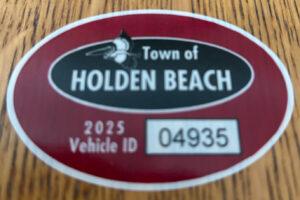 Hurricane Vehicle Decals
Property owners were provided with four (4) decals that were included in this month’s water bill. It is important that you place your decals in your vehicle or in a safe place. A $10 fee will be assessed to anyone who needs to obtain either additional or replacement decals. Decals will not be issued in the 24-hour period before an anticipated order of evacuation.
The decals are your passes to get back onto the island to check your property in the event that an emergency would necessitate restricting access to the island. Decals must be displayed in the driver side lower left-hand corner of the windshield, where they are not obstructed by any other items. Officials must be able to clearly read the decal from outside the vehicle.
Property owners without a valid decal will not be allowed on the island during restricted access. No other method of identification is accepted in an emergency situation. Click here to visit the Town website to find out more information regarding decals and emergency situations.
NC General Statute 166A-19.22
Power of municipalities and counties to enact ordinances to deal with states of emergency.
Synopsis – The governing body may impose by declaration or enacted ordinance, prohibitions, and restrictions during a state of emergency. This includes the prohibition and restriction of movements of people in public places, including imposing a curfew; directing or compelling the voluntary or mandatory evacuation of all or part of the population, controlling ingress and egress of an emergency area, and providing for the closure of streets, roads, highways, bridges, public vehicular areas. All prohibitions and restrictions imposed by declaration or ordinance shall take effect immediately upon publication of the declaration unless the declaration sets a later time. The prohibitions and restrictions shall expire when they are terminated by the official or entity that imposed them, or when the state of emergency terminates.
Violation – Any person who violates any provisions of an ordinance or a declaration enacted or declared pursuant to this section shall be guilty of a Class 2 misdemeanor.
Hot Button Issues
Subjects that are important to people and about which they have strong opinions

Climate
For more information » click here.
There’s something happening here
What it is ain’t exactly clear

Flood Insurance Program
For more information » click here
National Flood Insurance Program: Reauthorization
Congress must periodically renew the NFIP’s statutory authority to operate. On November 12, 2025, the president signed legislation passed by Congress that extends the National Flood Insurance Program’s (NFIP’s) authorization to January 30, 2026.
Congress must now reauthorize the NFIP
by no later than 11:59 pm on January 30, 2026.

GenX
For more information » click here

Homeowners Insurance
For more information » click here
Hearing set for proposed 68% increase in NC dwelling insurance rates
North Carolina Insurance Commissioner Mike Causey has scheduled a public hearing to review a proposed 68.3% increase in dwelling insurance rates across the state. The hearing is set for May 4, 2026, and will begin at 10 a.m. in the second-floor hearing room at the Department of Insurance, located at 3200 Beechleaf Court in Raleigh. Causey said the hearing is the next required step after the North Carolina Rate Bureau filed its proposed increases earlier this fall. “We are not in agreement with the Rate Bureau’s proposed increases,” Causey said. “It is now necessary to schedule a hearing in order to work toward a resolution that will make the most financial sense for our residents and insurance companies.” The hearing will move forward unless the Department of Insurance and the Rate Bureau reach a settlement beforehand. State law gives the insurance commissioner 45 days to issue a ruling after the hearing concludes. The Rate Bureau could then appeal the decision to the North Carolina Court of Appeals, and potentially to the state Supreme Court. The Rate Bureau filed the proposed increase on Oct. 30, requesting an average 68.3% hike in dwelling insurance rates statewide. Dwelling policies cover fire and extended coverage for non-owner-occupied properties of up to four units, including rental and investment properties. They are not the same as standard homeowners insurance policies. Under the proposal, most policyholders would see double-digit increases, though the exact impact would vary by region. The last time the Rate Bureau sought a major dwelling insurance rate increase was in July 2023, when it requested an average 50.6% increase. That filing was ultimately settled at an average 8% increase, which took effect on Nov. 1, 2024.
Read more » click here
Previously reported – January 2025
Insurance rates to increase in 2025, and 2026, with Cape Fear beach communities among hardest hit
Insurance Commissioner Mike Causey announced today that the N.C. Department of Insurance has ended its legal dispute with insurance companies about their proposed homeowners’ insurance rate increase filed in January 2024. The N.C. Rate Bureau originally requested an average 42.2% increase last year, with proposed increases of up to 99.4% in the beach areas in Brunswick, Carteret, New Hanover, Onslow and Pender Counties. Under the agreement signed by Commissioner Causey and the Rate Bureau, the average statewide base rate will increase by 7.5% on June 1, 2025, and 7.5% on June 1, 2026. The beach areas in Brunswick, Carteret, New Hanover, Onslow and Pender Counties will see a 16% increase on June 1, 2025, and a 15.9% increase on June 1, 2026. Eastern Coastal areas of Brunswick, Carteret, New Hanover, Onslow & Pender Counties will see a 10.5% increase on June 1, 2025, and a 10.1% increase on June 1, 2026. “The insurance companies wanted to raise our homeowners’ rates up to 99.4% in some areas and an average 42.2% statewide in a single year,” Commissioner Causey said. “I fought for consumers and knocked them back to 7.5% increases over two years with a maximum of 35% in any territory. We consider this settlement a big win for both homeowners and North Carolina.” The Rate Bureau is not a part of the Department of Insurance and represents homeowners’ insurance companies in North Carolina, and the agreement prohibits the Rate Bureau from undertaking an effort to increase rates again before June 1, 2027. “North Carolina homeowners will save approximately $777 million in insurance premiums over the next two years compared to what the insurance companies requested. This also protects homeowners from future base rate increase requests until June 2027,” said Commissioner Causey. “These rates are sufficient to make sure that insurance companies, who have paid out large sums due to natural disasters and face increasing reinsurance costs due to national catastrophes, have adequate funds on hand to pay claims.
Read more » click here
Hurricane Season
For more information » click here
Hurricane season runs from June 1 through November 30
Inlet Hazard Areas
For more information » click here
.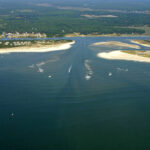
Lockwood Folly Inlet
For more information » click here.

Seismic Testing / Offshore Drilling
For more information » click here.

Offshore Wind Farms
For more information » click here
Trump Halts 5 Wind Farms Off the East Coast
The Interior Department said the projects posed national security risks, without providing details. The decision imperils billions of dollars of investments.
The Trump administration on Monday said it would pause leases for five wind farms under construction off the east coast, essentially gutting the country’s nascent offshore wind industry in a sharp escalation of President Trump’s crusade against the renewable energy source. The decision injected uncertainty into $25 billion worth of projects that were expected to power more than 2.5 million homes and businesses across the Eastern United States, according to Turn Forward, an offshore wind advocacy group. The five wind farms were projected together to create together about 10,000 jobs. The move left intact just two operational wind farms in U.S. coastal waters — one small project off Rhode Island that began running in 2016 and a larger project off New York that has been fully operational since 2023. The five wind farms targeted on Monday had obtained leases from the Biden administration. Citing unspecified national security concerns, the Trump administration said it would freeze those leases, effectively blocking construction or operations and jeopardizing billions of dollars that had already been invested. One project, Vineyard Wind 1 off Massachusetts, is already partly running, with about half of the project’s 62 turbines sending power to the electric grid. In announcing the pause, Doug Burgum, the secretary of the interior, said in a statement that “the prime duty of the United States government is to protect the American people.” He said the decision addressed emerging national security risks as well as “vulnerabilities created by large-scale offshore wind projects with proximity near our East Coast population centers.” In a letter to the wind farm developers, Matthew Giacona, the acting director of the Bureau of Ocean Energy Management, declined to explain the national security concern but wrote that the danger posed by the projects could be averted only by suspending them. Mr. Trump has repeatedly called offshore wind turbines ugly, costly and inefficient. He has disparaged the clean energy source ever since, 14 years ago, he failed to stop an offshore wind farm visible from of one of his golf courses in Scotland. In addition to Vineyard Wind 1, other projects affected by the pause are Coastal Virginia Offshore Wind off Virginia, Sunrise Wind and Empire Wind off New York, and Revolution Wind off Rhode Island and Connecticut. The abrupt announcement left the wind farm builders sputtering. David Schoetz, a spokesman for Equinor, the developer of Empire Wind, said the company was reviewing the stop-work order and seeking more information from the government. Jeremy Slayton, a spokesman for Dominion Energy, which is building the Coastal Virginia Offshore Wind project, called it “essential for American national security and meeting Virginia’s dramatically growing energy needs.” Mr. Slayton argued that stopping the project for any length of time would threaten grid reliability “for some of the nation’s most important war fighting, A.I. and civilian assets.” He also dismissed the administration’s national security concerns, saying the wind farm was developed “in close coordination with the military.” The project’s two pilot turbines had been operating for five years without causing any impacts to national security, he said. “We stand ready to do what is necessary to get these vital electrons flowing as quickly as possible,” Mr. Slayton said. Orsted, the Danish energy giant that is building Sunrise Wind and Revolution Wind, said it was weighing its options, including discussions with the Trump administration “as well as the evaluation of legal proceedings.” The Interior Department said that the Pentagon had produced classified reports that found the wind farms posed national security risks and that an unclassified report from the Energy Department had found that wind farms could interfere with radar systems. Coastal Virginia Offshore Wind had escaped attention from the Trump administration for months, in part because of strong support from Gov. Glenn Youngkin, Republican of Virginia. But its fate became uncertain after Abigail Spanberger, a moderate Democrat, won the Virginia governor’s race in November to succeed Mr. Youngkin. In New York, Empire Wind has had an on-again, off-again relationship with the Trump administration. In April, the Interior Department ordered that construction on Empire Wind be stopped, pushing the $5 billion project to the brink of collapse. After several weeks and negotiations with Gov. Kathy Hochul, a Democrat, the administration allowed the project to proceed, at least until now. White House officials suggested they had relented only after Ms. Hochul agreed to approve new gas pipelines in the state, although the governor denied that any such deal had been made. New York’s lieutenant governor, Antonio Delgado, who is challenging Ms. Hochul in next year’s Democratic primary, said on social media on Monday: “Hochul got played. She sold out New Yorkers by fast tracking Trump’s fracked gas pipeline, thinking Trump would fund wind projects here in NY. There is no deal making with someone like Trump.” Representatives for Ms. Hochul did not respond to Mr. Delgado’s remarks. At a news conference on Monday, the governor lamented the impact of the pause. “Labor unions who very likely support the president are now having their holiday ruined because they’re now going to be losing their jobs,” she said. Mayor John Mitchell of New Bedford, Mass., a hub for the Vineyard Wind 1 project, said local officials were scrambling to understand the Trump administration’s order, but believed it could require “shutting down an operating power plant in the middle of the ocean.” The wind farm was expected to power nearly 200,000 homes this winter when its final turbines were connected. “It has the immediate effect, as far as we can tell, of throwing people who were working on our waterfront out of work three days before Christmas,” Mr. Mitchell said. The financial consequences for the companies behind the five offshore wind farms could be dire. When work on Empire Wind was initially paused in April, Equinor said it was losing $50 million a week. Delays to Revolution Wind were estimated to cost its developer, Orsted, approximately $15 million per week. In October, Orsted said it would cut about 2,000 jobs, or around 25 percent of its work force, over the next two years — a decision fueled by the Trump administration’s actions as well as tariffs, high inflation and interest rates. Offshore wind farms are generally expensive to build because they require specialized equipment and economies of scale are difficult to achieve. But at a moment when affordability has become a national concern, the five paused projects were largely expected to save consumers money on their electric bills, since many of the developers had locked in contracts with utilities to purchase the power at lower prices. At the same time, electricity demand is spiking, partly because of the growth of data centers, and power companies are struggling to keep up. “It is very hard to square this with the rising demand that so much of the government and industry is scrambling to address,” said Seth Kaplan, a vice president at Grid Strategies, a consulting firm. On the first day of his second presidential term, Mr. Trump issued an executive order halting all leasing of federal lands and waters for new wind farms. His administration has since gone after wind farms that had received permits from the Biden administration and were either under construction or about to start operation, using shifting explanations. The administration’s approach has suffered some legal setbacks. A federal judge this month struck down the halt on leasing mandated by the January order, saying it was “arbitrary and capricious” and violated federal law. Attorney General William Tong of Connecticut, a Democrat, said in a statement that the new order to pause Revolution Wind was “even more lawless and erratic” than the first. “We went to court over this before,” Mr. Tong said, noting that a court order was in place blocking the administration’s previous attempt to stop the wind farm. “Every day this project is stalled is another day of lost work, another day of unaffordable energy costs and other day burning fossil fuels when American-made clean energy is within reach,” he said. Executives in the offshore wind industry called the administration’s move on Monday harmful to the U.S. economy. “America’s offshore energy industry has put thousands of Americans to work in high-paying jobs in the construction of offshore projects that will effectively meet burgeoning demand for power throughout the Northeast,” said Erik Milito, the president of the National Ocean Industries Association, which represents offshore oil drilling firms and offshore wind developers. Cmdr. Kirk Lippold, who retired from the U.S. Navy in 2007, disputed the Trump administration’s claim that offshore wind projects threaten national security. He noted that all five projects halted on Monday had undergone rigorous reviews, including by the Defense Department. “Ironically, these projects will actually benefit our national security by diversifying America’s energy supplies, providing much-needed reliable power for the grid and helping our economy,” Mr. Lippold said.
Read more » click here
Trump administration suspends 5 wind projects off the East Coast, cites national security concerns
The Trump administration is suspending leases for five large-scale offshore wind projects under construction on the East Coast due to what it said were national security risks identified by the Pentagon
The Trump administration on Monday suspended leases for five large-scale offshore wind projects under construction along the East Coast due to what it said were national security risks identified by the Pentagon. The suspension, effective immediately, is the latest step by the administration to hobble offshore wind in its push against renewable energy sources. It comes two weeks after a federal judge struck down President Donald Trump’s executive order blocking wind energy projects, calling it unlawful. The administration said the pause will give the Interior Department, which oversees offshore wind, time to work with the Defense Department and other agencies to assess the possible ways to mitigate any security risks posed by the projects. The statement did not detail the national security risks. It called the move a pause but did not specify an end date. “The prime duty of the United States government is to protect the American people,” Interior Secretary Doug Burgum said in a statement. “Today’s action addresses emerging national security risks, including the rapid evolution of the relevant adversary technologies, and the vulnerabilities created by large-scale offshore wind projects with proximity near our east coast population centers.” Wind proponents slammed the move, saying it was another blow in an ongoing attack by the administration against clean energy. The administration’s decision to cite potential national security risks could complicate legal challenges to the move, although wind supporters say those arguments are overstated.
Projects paused over national security concerns
The administration said leases are paused for the Vineyard Wind project under construction in Massachusetts, Revolution Wind in Rhode Island and Connecticut, Coastal Virginia Offshore Wind, and two projects in New York: Sunrise Wind and Empire Wind. The Interior Department said unclassified reports from the U.S. government have long found that the movement of massive turbine blades and the highly reflective towers create radar interference called “clutter.” The clutter caused by offshore wind projects can obscure legitimate moving targets and generate false targets in the vicinity of wind projects, the Interior Department said. National security expert and former Commander of the USS Cole Kirk Lippold disputed the administration’s national security argument. The offshore projects were awarded permits “following years of review by state and federal agencies,” including the Coast Guard, the Naval Undersea Warfare Center, the Air Force and more, he said. “The record of decisions all show that the Department of Defense was consulted at every stage of the permitting process,” Lippold said, arguing that the projects would benefit national security because they would diversify the country’s energy supply. Sen. Sheldon Whitehouse, D-R.I, said Revolution Wind was thoroughly vetted and fully permitted by the federal government, “and that review included any potential national security questions.” Burgum’s action “looks more like the kind of vindictive harassment we have come to expect from the Trump administration than anything legitimate,’’ he said.
A judge ruled blocking wind projects was unlawful
The administration’s action comes two weeks after a federal judge struck down Trump’s executive order blocking wind energy projects, saying the effort to halt virtually all leasing of wind farms on federal lands and waters was “arbitrary and capricious” and violates U.S. law. Judge Patti Saris of the U.S. District Court for the District of Massachusetts vacated Trump’s Jan. 20 executive order blocking wind energy projects and declared it unlawful. Saris ruled in favor of a coalition of state attorneys general from 17 states and Washington, D.C., led by New York Attorney General Letitia James, that challenged Trump’s Day One order that paused leasing and permitting for wind energy projects. Trump has been hostile to renewable energy , particularly offshore wind, and prioritizes fossil fuels to produce electricity . Trump has said wind turbines are ugly, expensive and pose a threat to birds and other wildlife.
Wind proponents slam the move
Wind supporters called the administration’s actions illegal and said offshore wind provides some of the most affordable, reliable electric power to the grid. “For nearly a year, the Trump administration has recklessly obstructed the build-out of clean, affordable power for millions of Americans, just as the country’s need for electricity is surging,” said Ted Kelly of the Environmental Defense Fund. “Now the administration is again illegally blocking clean, affordable energy,” Kelly said. “We should not be kneecapping America’s largest source of renewable power, especially when we need more cheap, homegrown electricity.’’ The administration’s actions are especially egregious because, at the same time, it is propping up aging, expensive coal plants “that barely work and pollute our air,” Kelly said. Connecticut Attorney General William Tong called the lease suspension a “lawless and erratic stop-work order” that revives an earlier, failed attempt to halt construction of Revolution Wind. “Every day this project is stalled is another day of lost work, another day of unaffordable energy costs and burning fossil fuels when American-made clean energy is within reach,” Tong said. “We are evaluating all legal options, and this will be stopped just like last time.”
Suspension is praised by anti-wind group
A New Jersey group that opposes offshore wind hailed the administration’s actions. “Today, the president and his administration put America first,’’ said Robin Shaffer, president of Protect Our Coast New Jersey, a nonprofit advocacy group. “Placing largely foreign-owned wind turbines along our coastlines was never acceptable,” he said, arguing that Empire Wind, in particular, poses a threat because of its close proximity to major airports, including Newark Liberty, LaGuardia and JFK. Offshore wind projects also pose a threat to commercial and recreational fishing industries, Shaffer and other critics say. Developers of U.S. offshore projects include Denmark-based Orsted, Norway-based Equinor and a subsidiary of Spanish energy giant Iberdrola. Orsted, which owns two of the projects affected, saw stock prices decline by more than 11% Monday. Richmond-based Dominion Energy, which is developing Coastal Virginia Offshore Wind, said its project is essential for national security and meeting Virginia’s dramatically growing energy needs, driven by dozens of new data centers. “Stopping CVOW for any length of time will threaten grid reliability … lead to energy inflation and threaten thousands of jobs,” the company said in a statement. Pausing the Virginia project, which is nearly 70% complete, creates a “perfect storm” to harm customer affordability and grid reliability, said David Shepheard, an energy expert at Baringa, a global consulting firm. East Coast residents are familiar with winter storms that can devastate local economies, Shepheard said, adding: “This is a new one for the area: a Washington-borne nor’easter where the political winds are going to stop the blades from spinning.”
Read more » click here
Trump administration pauses 5 wind projects off the East Coast
The Trump administration said Monday it is pausing leases for five large-scale offshore wind projects under construction along the East Coast due to what it said were national security risks identified by the Pentagon. The pause, effective immediately, is the latest step the administration has taken to hobble offshore wind in its push against renewable energy sources. It comes two weeks after a federal judge struck down President Donald Trump’s executive order blocking wind energy projects, calling it unlawful. The administration said the pause will give the Interior Department, which oversees offshore wind, time to work with the Defense Department and other agencies to assess the possible ways to mitigate any security risks posed by the projects. “The prime duty of the United States government is to protect the American people,” Interior Secretary Doug Burgum said in a statement. “Today’s action addresses emerging national security risks, including the rapid evolution of the relevant adversary technologies, and the vulnerabilities created by large-scale offshore wind projects with proximity near our east coast population centers.” The statement did not detail the national security risks. Wind proponents slammed the move, saying it was another blow by the administration against clean energy. The administration said leases are paused for the Vineyard Wind project under construction in Massachusetts, Revolution Wind in Rhode Island and Connecticut, Coastal Virginia Offshore Wind, and two projects in New York: Sunrise Wind and Empire Wind. The Interior Department said unclassified reports from the U.S. government have long found that the movement of massive turbine blades and the highly reflective towers create radar interference called “clutter.” The clutter caused by offshore wind projects obscures legitimate moving targets and generates false targets in the vicinity of wind projects, the Interior Department said. National security expert and former Commander of the USS Cole Kirk Lippold said the projects were awarded permits “following years of review by state and federal agencies,” including the Coast Guard, the Naval Undersea Warfare Center, the Air Force and more. “The record of decisions all show that the Department of Defense was consulted at every stage of the permitting process,” he said, arguing that the projects would benefit national security because they would diversify the country’s energy supply. The action comes two weeks after a federal judge struck down Trump’s executive order blocking wind energy projects, saying the effort to halt virtually all leasing of wind farms on federal lands and waters was “arbitrary and capricious” and violates U.S. law. Judge Patti Saris of the U.S. District Court for the District of Massachusetts vacated Trump’s Jan. 20 executive order blocking wind energy projects and declared it unlawful. Saris ruled in favor of a coalition of state attorneys general from 17 states and Washington, D.C., led by New York Attorney General Letitia James, which challenged Trump’s Day One order that paused leasing and permitting for wind energy projects. Trump has been hostile to renewable energy, particularly offshore wind, and prioritizes fossil fuels to produce electricity. Wind supporters called the administration’s actions illegal and said offshore wind provides some of the most affordable, reliable electric power to the grid. “For nearly a year, the Trump administration has recklessly obstructed the build-out of clean, affordable power for millions of Americans, just as the country’s need for electricity is surging,” said Ted Kelly of the Environmental Defense Fund. “Now the administration is again illegally blocking clean, affordable energy,” Kelly said. “We should not be kneecapping America’s largest source of renewable power, especially when we need more cheap, homegrown electricity.” The administration’s actions are especially egregious because, at the same time, it is propping up aging, expensive coal plants “that barely work and pollute our air,” Kelly said. The Conservation Law Foundation, a Boston-based environmental group, called the pause “a desperate rerun of the Trump administration’s failed attempt to kill offshore wind,” noting that courts have already rejected the administration’s arguments. “Trying again to halt these projects tramples on the rule of law, threatens jobs and deliberately sabotages a critical industry that strengthens — not weakens — America’s energy security,” said Kate Sinding Daly, senior vice president for law and policy at the law foundation.
Read more » click here
What to know about wind power in the US as Trump administration pauses leases
Billions of taxpayers’ dollars will be wasted as a result, energy experts say.
The Trump administration’s decision to pause five offshore wind projects will have reverberating impacts on the nation’s energy sector, according to experts in renewable energy. “The U.S. is facing a historic increase in electricity demand,” Lara Skinner, executive director of the Climate Jobs Institute at Cornell University, told ABC News. “One of the main reasons electricity prices are increasing in the U.S. is because we’re not building and producing enough electricity.” On Monday, Interior Secretary Doug Burgum announced that the Department of Defense had identified “emergency national security concerns” to warrant the halting of offshore wind projects along the East Coast. The administration did not disclose the national security risks, only saying the Department of Defense found the threats in “completed classified reports.” In a post on X, Burgum described the projects as “expensive, unreliable, heavily subsidized offshore wind farms.” The “national security” issue could be related to the interference with radar signal, Elizabeth Wilson, a professor of environmental studies at Dartmouth College, told ABC News. The large towers and moving blades on wind towers reflect electromagnetic radiation, which can cause interference for radar systems, according to the Department of Energy. This can create clutter, reduce detection sensitivity, interfere with target tracking and impede critical weather forecasting, according to the DOE. A 2022 report by the National Academies of Science, Engineering and Medicine found that offshore wind farms can have “significant” electromagnetic reflectivity and interfere with radar systems operating nearby. Countries like the U.K and Denmark have been using offshore wind for decades without any national security issues, Skinner noted. Separately, not providing enough reliable energy to power the energy needs of U.S. citizens could also be seen as a “national security issue,” according to Julie Lundquist, a Bloomberg distinguished professor of atmospheric science and wind energy at Johns Hopkins University.
Here is what to know about the wind power industry in the U.S.
Wind is the largest and most reliable source of renewable energy, experts say
About 10% of electricity generated annually in the U.S. comes from wind power, according to the Department of Energy. There are currently about 75,000 wind turbines in the U.S., according to the Geological Survey’s wind turbine database. The majority of wind farms are located onshore in the Great Plains, with Texas, Kansas, Oklahoma, Iowa and Illinois, Matthew Lackner, a professor of mechanical and industrial engineering at the University of Massachusetts Amherst, told ABC News. In these regions, the winds are “steady and consistent,” Lundquist said. But in the eastern U.S., the wind supply is located offshore, Wilson said. “Offshore wind farms would be valuable because they’re generating a lot of domestic energy close to population sources, and we need that,” Lundquist said.
Experts condemn administration’s decision to cancel offshore wind leases
The halting of these offshore wind projects would waste billions of taxpayer dollars as well as eliminate 6 to 8 gigawatts of annual power, Wilson said. “That’s like the Vogtle nuclear power plant times three,” she said. Vogtle, located in Georgia, is the largest nuclear power plant in the country. And unlike nuclear energy, wind power does not create radioactive waste. Put together, the five halted projects would have produced enough energy to power millions of homes in the U.S., according to Skinner. “At a time when the U.S. needs to produce more electricity to lower utility costs for American families, President Trump’s decision to stop projects that are close to completion is puzzling and concerning,” she said. Many of the administration’s energy policies have focused on oil and gas production. This year, Republican-led Senate voted to overturn Biden-era Arctic protections and open the National Petroleum Reserve in Alaska to drilling. In addition, Trump has been touting the idea of a looming energy crisis in the U.S., campaigning heavily on the promise of increasing fossil fuel production. Immediately upon taking office for his second term in January, Trump declared a “national energy emergency,” claiming that leasing, development, production, transportation, refining and generation capacity of energy in the U.S. is “far too inadequate” to meet the nation’s needs. Offshore wind is an easy target “since siting is invariably in federal waters,” James F. Manwell, founding director of the University of Massachusetts Amherst’s Wind Energy Center, told ABC News. Canceling the offshore wind leases will be detrimental for both the overall energy supply in the U.S. as well as the transition from fossil fuels to renewable energy, experts and advocates told ABC News. “The Trump Administration’s decision to stop construction of five major energy projects demonstrates that they either don’t understand the affordability crises facing millions of Americans or simply don’t care,” Jason Grumet, CEO of American Clean Power, said in a statement. Elie Bou-Zeid, a professor of civil and environmental engineering at Princeton University, described the move as “a terrible decision that is made for purely ideological reasons.” “Without offshore wind, net-zero in the U.S. would be more expensive and complex,” Bou-Zeid told ABC News. “More worryingly, with this decision, no investor or company will ever again trust the U.S. government again and make investments in green energy infrastructure.” Despite political challenges in the U.S., renewable energy has continued to grow worldwide, according to a report released by the International Energy Agency in October. Last year, more than 90 percent of new electric power worldwide was from renewable sources, according to the data collected by the World Resources Institute.
Trump has long criticized wind turbines
Trump has been critical of wind power since his first term. In 2019, the president claimed that the noises from wind turbines “cause cancer,” and in May 2024 he stated that turbines “kill whales.” Trump has continued to make his distaste toward wind mills clear during his second term. At a speech in Pennsylvania earlier this month, he said, “wind is the worst,” adding, “We don’t want — we don’t approve windmills. We don’t approve it. I’m sorry.” There are no case series, clinical studies or epidemiological studies reliably documenting a link between wind turbine exposure and cancer. According to the National Oceanic and Atmospheric Administration, “There are no known links between large whale deaths and ongoing offshore wind activities.” A federal judge in December struck down an executive order signed by Trump on the first day of his second term that would have blocked wind energy projects, saying the effort to halt virtually all leasing of wind farms violates U.S. law and is “arbitrary and capricious.”
Read more » click here
Offshore Wind Projects Challenge Trump Administration’s Order to Stop Work
The developers of Revolution Wind off Rhode Island and Empire Wind off New York are the latest to sue the Trump administration.
Developers of five offshore wind farms that were ordered last week by the Trump administration to halt construction are suing to restart work on at least three of the projects. The Interior Department on Dec. 22 ordered companies to halt work on five wind farms in various stages of construction along the East Coast. They were: Sunrise Wind and Empire Wind, both off the coast of New York; Revolution Wind off Rhode Island and Connecticut; Vineyard Wind 1 off the coast of Massachusetts; and Coastal Virginia Offshore Wind off Virginia. The administration cited unspecified national security concerns about the projects. On Thursday, Orsted, the Danish energy giant that is building Revolution Wind, filed a lawsuit in the U.S. District Court for the District of Columbia. On Friday Equinor, the developer of Empire Wind, did the same. Both companies said they are seeking preliminary injunctions that would allow construction to continue as the litigation proceeds. Orsted is also building Sunrise Wind and said it was considering a similar legal challenge to restart work on that project, too. The action this week comes after Dominion Energy, the developer of Coastal Virginia Offshore Wind, filed the first legal challenge, on Dec. 23. In its complaint in federal court in Virginia, Dominion said the administration’s actions were causing “immediate, irreparable harm” and $5 million in losses per day. The Virginia project is the largest of the five. A judge has scheduled a hearing for Jan. 9. Avangrid, the developer of the fifth wind farm, Vineyard Wind 1 off the Massachusetts coast, has not indicated whether it plans to fight the administration. Vineyard Wind is already partly running, with about half of the project’s planned 62 turbines sending power to the electric grid. The Interior Department did not respond to a request for comment. At stake overall is about $25 billion of investment in the five wind farms. The projects were expected to create 10,000 jobs and to power more than 2.5 million homes and businesses. Revolution Wind is more than 87 percent complete, and the company has already installed all offshore foundations as well as 58 of 65 wind turbines. Empire Wind is more than 60 percent complete and is slated to deliver power to the grid in 2027. Orsted and Equinor said their projects went through lengthy federal reviews that included addressing any concerns about national security before they received permits under the Biden administration. They said they are working with Trump officials to address whatever new issues have arisen but described the suspensions as illegal. “Litigation is a necessary step to protect the rights of the project” and avoid “substantial harm” to the project if the suspension order remained in place, Orsted said in a statement. In its lawsuit, Equinor said the Interior Department’s Bureau of Ocean Energy Management ordered it to halt work “with no meaningful explanation or attempt to first engage Empire Wind in addressing new concerns that it alleges have arisen.” The company said the administration claimed it has a classified report containing new information about security threats posed by offshore wind for more than a month before ordering the suspension. “The United States’ non-explanation for its about-face is as hollow as it is pretextual,” the lawsuit said. The court filings this week are the latest in a series of legal disputes between the Trump administration and the offshore wind industry. Mr. Trump has falsely claimed that wind farms kill whales (scientists have said there is no evidence to support that) and that turbines “litter” the country and are like “garbage in a field.” Immediately upon returning to the White House last January, Mr. Trump issued a moratorium on federal approvals for new offshore wind projects. In April, Mr. Trump halted work on Empire Wind and Revolution Wind. After weeks of negotiations with Gov. Kathy Hochul, Democrat of New York, the administration allowed construction to resume. White House officials suggested they had relented only after Ms. Hochul agreed to approve new gas pipelines in the state. She has denied that any such agreement was made, saying her recent approval of a gas pipeline was part of a broader effort to bring more energy to the state. A federal judge lifted the administration’s order to stop work on Revolution Wind. “It is literally weeks away from beginning to deliver power,” Senator Jack Reed, Democrat of Rhode Island, said on Friday about Revolution Wind. He said he called the deputy secretary of defense to ask for information about what national security concerns offshore wind creates and was told it was classified. “Which means, we don’t have a reason, we just want to do it,” the senator said. This week President Trump posted on social media a photo of a bird beneath a windmill and suggested it was a bald eagle killed in the United States by a wind turbine. “Windmills are killing all of our beautiful Bald Eagles,” the president wrote. It was also posted by the White House and the Department of Energy. The post turned out to be a 2017 image from Israel, and the animal was likely a kestrel. On Friday Mr. Trump posted on Truth Social again, this time an image of birds flying around a wind turbine, that read, “Killing birds by the millions!” Wind energy is responsible for less than 0.01 percent of human-caused bird fatalities, per federal data, significantly less than buildings, cats or oil pits. The Audubon Society says that climate change poses a bigger threat to birds than wind power.
Read more » click here
Billions at Stake in the Ocean as Trump Throttles Offshore Wind Farms
The Trump administration has repeatedly ordered work to stop on offshore wind farms along the East Coast, pushing at least two projects to the brink of collapse.
It was three days before Christmas, and Patrick Crowley was getting ready for a holiday party when he got a shocking text. Mr. Crowley, the president of the Rhode Island A.F.L.-C.I.O., learned that the Trump administration had halted construction on Revolution Wind, a nearly completed $6.2 billion wind farm off the coast of Rhode Island that employed hundreds of his members. Again. The same thing had happened in August, stunning leaders in Connecticut and Rhode Island, where the wind farm was expected to power more than 350,000 homes and businesses once completed. But the two states and Orsted, the Danish energy giant behind Revolution Wind, had sued and in September a federal judge had allowed construction on the project to resume.
Months had passed since that initial disruption. Construction was now 87 percent complete, with 58 of 65 wind turbines installed. “People at the Christmas party were really in shock,” Mr. Crowley said. “We had already gone through this in August.” Businesses around the world have been roiled by President Trump’s sudden policy shifts. But few have had it worse than offshore wind companies. In its abrupt Dec. 22 announcement, the Trump administration halted work on all five wind farms currently under construction off the East Coast. They are collectively worth $25 billion and were expected to power more than 2.5 million buildings and create around 10,000 jobs. The five wind farms were pioneers in what President Joseph R. Biden Jr. had hoped would be a new era of offshore wind power in the United States. The Biden administration had vetted the projects and awarded the permits, allowing the developers to secure financing, sign contracts to sell the electricity to states and utilities, hire workers, lease equipment and begin construction. The projects — Revolution Wind, Empire Wind and Sunrise Wind off New York, Vineyard Wind off Massachusetts and Coastal Virginia Offshore Wind off Virginia — would join two smaller operating offshore wind farms in U.S. coastal waters. But as it did in August, the Trump administration said last month that the projects posed undisclosed risks to national security, even though the federal judge had previously rejected a similar claim. Now, workers are idled in the middle of winter when other construction jobs are scarce. The companies building the wind farms are hemorrhaging tens of millions of dollars a day. Some have said that if the work stoppage lasts much longer, they may have to abandon their projects altogether, absorbing billions of dollars in losses and laying off thousands of workers. Developers of four of the five wind farms, along with the states of Connecticut, New York and Rhode Island, are suing to try to restart construction. Court hearings start on Monday and rulings could come as soon as next week. This account of the turbulence in the country’s nascent offshore wind industry is based on interviews with more than a dozen union workers, energy lobbyists and politicians in both parties as well as a review of hundreds of pages of court filings. Some of the individuals spoke on the condition of anonymity to describe sensitive deliberations. Several people used the word “whiplash” to describe the shifting status of the five wind farms in the Atlantic Ocean. The Interior Department notified developers of the latest halt just minutes before Interior Secretary Doug Burgum announced it on Fox News. And Gov. Ned Lamont, a Democrat of Connecticut, found out from a call from Mr. Burgum soon afterward. Mr. Lamont said that he told the secretary, “You’re a business guy. I thought this was a pro-business administration. This is incredibly anti-business. It’s so erratic, helter-skelter, back-and-forth, on-again, off-again.” White House officials say their stance on offshore wind power has not changed since Mr. Trump’s first day back in office, when he issued a memorandum freezing approvals of all new wind projects on federal lands and waters. The president has repeatedly called wind turbines ugly, expensive and inefficient. “President Trump’s position on offshore wind has been consistent for years — from his first-term actions to his campaign trail messaging to his day-one executive order that scrapped offshore wind leases,” Taylor Rogers, a White House spokeswoman, said in an email.
A brief reprieve
In the months leading up to the December stoppage, many lobbyists and executives at offshore wind companies had thought the political turmoil was over and the projects could safely proceed. The outlook seemed stable enough for Equinor, the developer of the $5 billion Empire Wind project off the coast of Long Island, N.Y., to pour an additional $1.5 billion into the project since May, court filings show. The Trump administration had paused construction on Empire Wind in April but allowed it to restart in May after weeks of negotiations with Gov. Kathy Hochul, Democrat of New York. The administration suggested it had relented only after Ms. Hochul agreed to approve new gas pipelines in the state, although Ms. Hochul has denied that such a deal was made. Everything seemed to have returned to normal throughout the fall. Even on Friday, Dec. 19, just three days before the latest stoppage, many developers thought their projects were in the clear, according to two Republican energy lobbyists briefed on the matter. But that day, senior administration officials met to discuss a classified report by the Defense Department that found the projects could threaten national security by interfering with radar systems, the two lobbyists said. By Monday, the administration announced it was pausing the leases that all five projects hold to build and operate in federal waters. Representatives for Orsted and Equinor, who had been meeting regularly with officials from the Interior Department and the Coast Guard throughout the fall, were blindsided. Not once had any national security concerns ever come up, the companies both said in legal filings. The Defense Department had repeatedly reviewed the plans for all five wind farms for years after they were proposed, and the companies had taken steps requested by the military to reduce impacts on radar systems. Dominion Energy, the developer of the largest stalled wind farm off Virginia, had paid $250,000 to upgrade military radar in the area. Orsted, Equinor and Dominion have asked the Trump administration to give classified briefings on its concerns to representatives who hold national security clearances. But to date the Pentagon has not granted these requests, the companies said in legal filings. “We have been clear and consistent that we are ready to address any additional national security concerns that were not already addressed over our lengthy engagement with defense agencies,” said Molly Morris, a senior vice president at Equinor overseeing Empire Wind. “So this does come as a surprise to us,” she added, “and we have not been given access to the top secret evidence that apparently is available now.” Orsted and Dominion declined to comment beyond what was in their public court filings. Representative Jeff Van Drew, a Republican of New Jersey and a leading critic of offshore wind power on Capitol Hill, said he thought the national security concerns were legitimate. “If someone were to try to suggest that Trump is just using the Department of Defense as a vehicle or a tool in order to stop wind, I don’t think that’s accurate,” he said. But experts who have researched radar interference from offshore wind farms have found that it can be addressed with technological fixes and training for boat captains. “It is a known problem and it has been studied, but it doesn’t seem like the problem can’t be resolved,” said Frank Rusco, the director of natural resources and environment at the Government Accountability Office and an author of an April 2025 report on the topic.
From ‘dire’ to ‘near terminal’
Shutting down a partly built, multibillion-dollar wind farm in the middle of the ocean is neither cheap nor easy. That’s because these projects involve a careful choreography of specialized workers, equipment and ships. Any delays can cause the entire timeline to unravel. At Revolution Wind, Orsted is using a 450-foot-long ship called the Wind Scylla to install towering steel turbines. The ship is only under contract until Feb. 22 and then is scheduled to depart for other projects around the world. Off the shores of Long Island, Empire Wind is in an even more precarious position. Initially, the Interior Department allowed Equinor to conduct activities deemed necessary for health and safety, such as its work installing a 3,000-ton electrical substation in the ocean that would include lighting systems to help ships and aircraft avoid collisions in the area. But the agency ordered a halt to most of these activities, too, on Jan. 5 with little explanation. “This development turned a dire situation for Empire Wind into a near terminal one,” lawyers for Equinor wrote in a court filing. The company said that if it could not resume work by Jan. 16, it would likely have to cancel Empire Wind altogether because the vessel needed to lift the substation onto its foundations has to leave this month and would not become available for at least another year. Three court hearings are scheduled for next week to determine whether the stop-work orders should be lifted. Judge Royce Lamberth of the U.S. District Court for the District of Columbia, who previously ruled that construction could restart on Revolution Wind, will preside over the first hearing on Monday. The fate of workers like Nick Reynolds, 35, an industrial painter who has been laid off since the first halt to Revolution Wind in August, now rests with Judge Lamberth, a Reagan appointee. “There is no work for me in Providence right now,” Mr. Reynolds said. “Hopefully this illegal order doesn’t stand up in court.” Hillary Bright, the executive director of Turn Forward, an offshore wind advocacy group, said that if the Trump administration prevails in its quest to quash the five wind farms, it could feel emboldened to stop a range of other projects, even if they are already approved and nearly complete. “This is whiplash that could easily be seen by a lot of different industries,” she said.
Read more » click here
Judge Strikes Down Trump’s Latest Effort to Stop Offshore Wind Project
The ruling means that construction can continue on Revolution Wind, a $6.2 billion project off the coast of Rhode Island, at least for now.
A federal judge on Monday ruled that construction could resume on a $6.2 billion wind farm off the coast of Rhode Island, striking down the Trump administration’s decision last month to halt work on the Revolution Wind project. Judge Royce Lamberth of the U.S. District Court for the District of Columbia ruled that the Interior Department’s suspension order was “arbitrary and capricious” in violation of federal law. Revolution Wind is one of five offshore wind projects under construction along the East Coast that were ordered to stop work last month by the Trump administration, which cited unspecified national security concerns. Several states, as well as developers of four of the projects, have challenged the move in court. The case involving Revolution Wind was the first complaint to be heard. The decision is a temporary victory for Revolution Wind and the offshore wind industry, which has been roiled by the Trump administration’s efforts to block offshore wind farms that had received permits under the Biden administration. Orsted, the Danish energy giant that is building Revolution Wind, can now continue with construction as litigation it has filed against the Trump administration proceeds. In his ruling, Judge Lamberth said the Interior Department’s Bureau of Ocean Energy Management did not adequately explain how the project posed security risks or why halting construction of Revolution Wind would address these concerns. “Purportedly new classified information does not constitute a sufficient explanation for the bureau’s decision to entirely stop work on the Revolution Wind project,” Judge Lamberth, a Reagan appointee, said while ruling from the bench. Representatives for the Interior Department did not immediately respond to requests for comment. Orsted issued a statement saying Revolution Wind would resume construction work “as soon as possible” to deliver power to the Northeast. Revolution Wind is roughly 87 percent complete, with 58 of 65 wind turbines installed. It was scheduled to be fully operational by the second half of this year, delivering power to more than 350,000 homes and businesses in Connecticut and Rhode Island by year’s end. This is the second time the administration has tried to stop the project. In August, the administration initially ordered work to halt on Revolution Wind, citing unspecified national security concerns. But Connecticut, Rhode Island and Orsted sued, and in September, Judge Lamberth allowed construction to continue. On Dec. 22, the Interior Department again ordered Revolution Wind to halt. The suspension order also applied to Sunrise Wind and Empire Wind, both off the coast of New York; Vineyard Wind 1 off the coast of Massachusetts; and Coastal Virginia Offshore Wind off Virginia. Together the projects represented $25 billion of investment and about 10,000 jobs and were expected to power more than 2.5 million homes and businesses. During the court hearing on Monday, Janice Schneider, a partner at the law firm Latham & Watkins, argued on behalf of Revolution Wind that the suspension order was costing Orsted “at least $1.44 million per day.” She said the earlier stop-work order, in August, had cost the company a total of around $100 million over the several weeks that order had remained in effect. Ms. Schneider said the Defense Department had refused to share the classified Pentagon report with Orsted employees who have national security clearance. “We’re flying blind, admittedly, because we’ve not had access to the classified material,” she said. Peter Torstensen, a deputy assistant attorney general in the Justice Department’s Environment and Natural Resources Division, defended the government’s handling of the classified information. He said that “protecting against the new national security risk outlined in the classified materials outweighs any alleged irreparable harm” to the offshore wind developers and states. Kevin Book, managing director of ClearView Energy Partners, a research firm, said the ruling could reverberate. It offers a window into how the same judge is likely to view a similar upcoming legal challenge being brought by Sunrise Wind, and “could suggest favorable outlooks” for other challenges as well, Mr. Book said in a note to clients Monday. William Tong, the attorney general of Connecticut, praised the ruling. “This project is on the finish line to begin delivering clean, affordable energy to Connecticut families,” Mr. Tong said in a statement. “With yet another clear defeat, it is my hope that Donald Trump will drop his lawless and erratic attacks for good. We’re prepared to keep fighting — and winning — for as long as it takes to protect Connecticut ratepayers, workers and our environment.” President Trump has been hostile to offshore wind since he failed to stop an offshore wind farm visible from of one of his golf courses in Scotland 14 years ago. He has called wind farms ugly and inefficient and when he returned to the White House last year, he ordered the Interior Department to halt new leases in federal waters for wind farms. “My goal is to not let any windmill be built,” Mr. Trump said on Friday at a meeting of oil executives at the White House. Proponents of the offshore wind projects called the ruling evidence that the Trump administration was putting politics over the country’s energy needs. “Allowing these projects to move forward is good news, not just for the project developers but also for the rest of us who pay bills and depend on the grid to power our homes and offices,” said Seth Kaplan, a vice president at Grid Strategies, a consulting firm. Additional court hearings are scheduled this week in cases where developers of other projects are challenging the suspension orders. The next hearing is scheduled for Wednesday and will center on Equinor’s challenge to the halt to Empire Wind off Long Island, N.Y.
Read more » click here
Things I Think I Think
 Eating out is one of the great little joys of life.
Restaurant Review:
The Dinner Club visits a new restaurant once a month. Ratings reflect the reviewer’s reaction to food, ambience and service, with price taken into consideration.
///// October 2025
Name: Inlet View
Cuisine: Seafood
Location: 1800 Village Point Road, Shallotte NC
Contact: 910.754.6233 / https://inletview.com
Food: Average / Very Good / Excellent / Exceptional
Service: Efficient / Proficient / Professional / Expert
Ambience: Drab / Plain / Distinct / Elegant
Cost: $26 Inexpensive <=20 / Moderate <=26 / Expensive <=35 / Exorbitant <=60
Rating: Two Stars
Family owned and operated since 1978, The Inlet View is a three-story bar and grill on the Intracoastal with spectacular panoramic views. Nothing fancy here. The atmosphere is casual, easy-going and comfortable, with indoor or outdoor dining options. The pace is usually a bit leisurely, so don’t be in a hurry if you go, relax and enjoy the view. They are a member of the “Brunswick Catch” program so the menu focuses on locally sourced fresh seafood although there is something for everyone on the menu. They don’t accept reservations, but they do offer a convenient phone ahead seating policy. They are definitely located off the beaten path but whether you come on the road or by water, it should be on the top of your list of places to go to eat.
One of the oldest restaurants in the area:
This spot was a grill / motel / marina even before C.W Hughes, Jr. and his wife Allison bought the property in 1978. It became the Hughes Marina and home to a small restaurant and tackle shop with 13 bar stools. Their daughters took over the business in 1992. It reopened as the seasonal Inlet View with a bigger restaurant serving local seafood in 2009.
PinPoint Restaurant: The owner of this farm-to-table restaurant at 114 Market St. in downtown Wilmington restaurant announced on social media that, after a difficult year, he decided to sell the business. Something new is already in the works, Nil’s Mediterranean Cuisine, is opening in the former PinPoint Restaurant space in downtown Wilmington. This will be the third location for Chef Tan Uckan, who specializes in dishes from Turkey, the Middle East, and Europe.
Dining Guide – Local
Old places, New faces
Name: Salty Cow
Location: 4812 Main Street, Shallotte NC
Contact: 910.755.9414 / https://www.saltycowtavern.com/
This spot on the Shallotte river was most recently known as Smoke’d which has permanently closed. They weren’t closed long before this new riverside tavern serving classic comfort food was announced for the space.
Dining Guide – Local * Lou’s Views
Dining Guide – North * Lou’s Views
Dining Guide – South * Lou’s Views
Restaurant Reviews – North * Lou’s Views
Restaurant Reviews – South * Lou’s Views
Book Review:
Read several books from The New York Times best sellers fiction list monthly
Selection represents this month’s pick of the litter
 THE INTRUDER by Freida McFadden
This psychological thriller uses a dual-timeline structure to build suspense. The story follows Casey, a former teacher seeking solitude in a remote cabin to escape a traumatic past. Her isolation is shattered when, during a stormy night, she discovers a blood-soaked, knife-wielding teenage girl hiding in her toolshed. As their stories unfold through shifting timelines, buried secrets surface and the boundaries of trust are tested, turning every interaction into a dangerous gamble.
That’s it for this newsletter
See you next month
Lou’s Views . HBPOIN
-
-
-
-
-
-
-
-
-
- Gather and disseminate information
- Identify the issues and determine how they affect you
- Act as a watchdog
- Grass roots monthly newsletter since 2008
-
-
-
-
-
-
-
-