

Lou’s Views
News & Views / September Edition
Calendar of Events
Z
U.S. Open King Mackerel Fishing Tournament
October 2nd thru 4th
Southport
The U.S. Open King Mackerel Tournament has taken place since 1979 and is held annually the first week in October. The U.S. Open is one of the largest king mackerel tournaments on the East Coast and part of the SKA (Southern Kingfish Association) Tournament Trail. The tournament now attracts almost 400 boats annually.
For more information » click here

Riverfest
October 4th & 5th
Wilmington
.
.
Wilmington’s Riverfest is celebrated in October since 1979 and runs from the foot of Market Street to Cape Fear Community College over a half mile of free family entertainment.
For more information » click here

Sunset at Sunset
October 4th
Sunset Beach
Held the first Saturday in October each year, Sunset at Sunset is the Town of Sunset Beach’s Community Block Party. The annual autumn event has been celebrated since 2007, and is scheduled to happen again this year, in front of Ingram Planetarium on Sunset Boulevard in Sunset Beach.
For more information » click here

.
N.C. Oyster Festival
October 18th & 19th
Ocean Isle Beach
.
.
.
The annual North Carolina Oyster Festival has been taking place since 1978. Come celebrate everything Oyster with a variety of foods, crafts, contests, children’s activities,and musical performances at Mulberry Park in Shallotte. Signature Festival events include the Oyster Shucking Contest, Oyster Eating Contest, and Oyster Stew Cook-off.
For more information » click here

N.C. Festival by the Sea
October 25th & 26th
Holden Beach
Hosted by the Holden Beach Merchants Association this annual two-day festival which started in the 1980’s occurs on the last full weekend in October. The festival is kicked off with a parade down the Holden Beach causeway. There is a fishing tournament, horseshoe tournament, and a sandcastle building contest. Vendors provide food, arts and crafts, amusement rides and other activities. There is live musical entertainment both days at the Holden Beach’s Pavilion.
For more information » click here
 Discover a wide range of things to do in the Brunswick Islands for an experience that goes beyond the beach.
For more information » click here.
Calendar of Events Island

Meet the Candidates Night
The League of Women Voters of Lower Cape Fear will be hosting Candidates Night Friday, October 17th at 6:00 at the Holden Beach Town Hall. The objective of a Candidates Night event is to help the electorate make an informed choice when they vote for Town leaders.
Submit up to five (5) questions for the candidates
Deadline to submit questions is no later than September 27th
Submit Questions » click here
 Barktoberfest
The Town of Holden Beach will hold Barktoberfest on Friday, October 24th. Owners and their dogs should meet at Bridgeview Park Picnic shelter at 5:00 p.m. where we will do a trick-or-trot around the block.There will be a doggie costume contest and fall pictures.Registration is required by October 4th. Email Christy at christy.ferguson@hbtownhall.com to register.
 Monster Mash Trunk-or-Treat
The Town of Holden Beach will hold a trunk-or-treat on Friday, October 31st from 5:30-7:00 p.m. at Bridgeview Park. Residents, property owners, and businesses may register by October 11th to decorate your trunk and pass out candy.Trunks must be ready by 5:00 p.m. No political activity may be represented at the booth displays. There will be a prize for best decorated trunk and a costume contest held at 6:00 p.m. Categories include 3 and under, 4-7, 8-11, 12-15 and adult. Register by emailing Christy at christy.ferguson@hbtownhall.com. Those planning to attend the event may also email so that there is a headcount for candy purposes. In the email, please indicate whether you will be setting up a truck or trick-or-treating.

 SBI Three Bridge Tour
The South Brunswick Islands Rotary Club SBI Three Bridge Tour is set to take place on Saturday, November 8th, in Ocean Isle Beach, North Carolina. This event offers a unique opportunity for cyclists to ride across the three bridges of Sunset Beach, Ocean Isle Beach, and Holden Beach. Participants can choose from various ride options, including family-friendly routes and more challenging distances, ensuring a memorable experience for everyone. The tour supports local and international Rotary projects, enriching the lives of children and youth in Brunswick County. Proceeds from the event will be used to fund these projects, providing experiences and learning opportunities that will benefit the community.
 Veterans Appreciation Luncheon
The Town of Holden Beach will hold its Veterans Appreciation Luncheon on Monday, November 10th. The event will be held at 11:30 a.m. in the Town Hall Board Room. Please RSVP by emailing Christy at christy.ferguson@hbtownhall.com prior to Friday, November 1st with your name and the name of your guest.

Volunteer Appreciation Luncheon
The Town of Holden Beach will hold its annual Volunteer Appreciation Luncheon on Friday, November 14th at noon.Town board and committee members are invited to attend and bring a guest. Please RSVP by emailing Christy at christy.ferguson@hbtownhall.com with your name and the total number in your party.
Tentative Schedule – dates are still to be determined
 Contractors Information Seminar
The Planning & Inspections Department, supported by the town staff, will be hosting the fourteenth annual Contractors Information Seminar on Thursday, November 6th.
 Turkey Trot
The Town of Holden Beach will hold its annual Turkey Trot on Thanksgiving morning Thursday, November 27th at 8:00 a.m. All individuals interested in participating should call 910.842.6488 to register. Please bring a canned food item to donate to the local food pantry.
 Tree Lighting
The Town of Holden Beach will hold its annual tree lighting ceremony on Thursday, December 4th at 6:00 p.m.
Parks & Recreation / Programs & Events
For more information » click here
Reminders
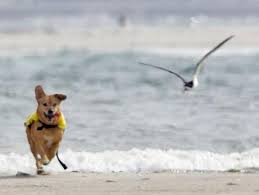
Pets on the Beach Strand
Pets – Chapter 90 / Animals / 90.20
Effective September 10th
-
-
- Pets allowed back on the beach strand during the hours of 9:00am through 5:00pm
- Dog’s need to be on a leash
- Owner’s need to clean up after their animals
-
 Free Cleanup Week
The Brunswick County Solid Waste and Recycling Division hosts two free clean up weeks a year, the third week in April and September. The next Free Cleanup Week at the Brunswick County Landfill will take place September 22nd THRU 27th. Brunswick County property owners and residents can dispose of all materials, except for regular household trash and hazardous waste, at the Brunswick County Landfill free of charge during Free Cleanup Week events. Individuals can dispose of metal, tires, electronics, appliances, latex paint, clothing, shoes, used oil, oil filters, antifreeze, gasoline, fluorescent bulbs, used cooking oil, smoke detectors, household batteries, and yard debris in their designated areas at the landfill during this week. Participants must show proof of Brunswick County property ownership or residency.
Businesses and commercial vehicles will be charged normal tipping fees.
For questions, email Brunswick County Operation Services or call 910-253-2520.
LOCATION
Brunswick County Landfill
172 Landfill Rd NE
Bolivia, NC 28422
HOURS OF OPERATION
Monday through Friday :30 a.m. until 5:00 p.m.
Saturday 7:30 a.m. until 3:00 p.m.
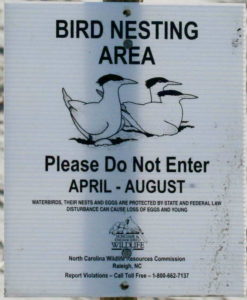
Bird Nesting Area
NC Wildlife Commission has posted signs that say – Bird Nesting Area
The signs are posted on the west end beach strand around 1335 OBW.
People and dogs are supposed to stay out of the area from April through November
. 1) It’s a Plover nesting area
. 2) Allows migrating birds a place to land and rest without being disturbed
 News from Town of Holden Beach
The town sends out emails of events, news, agendas, notifications, and emergency information. If you would like to be added to their mailing list, please go to their web site to complete your subscription to the Holden Beach E-Newsletter.
For more information » click here
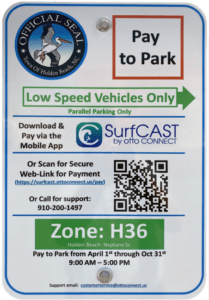 Paid Parking
Paid parking in Holden Beach
Paid parking will be enforced from 9:00 a.m. to 5:00 p.m. daily with free parking before and after that time. All parking will use license plates for verification.
Rates
Parking rates for a single vehicle in all designated areas will be:
$5 per hour for up to four hours
$20 per day for any duration greater than four hours
$80 per week for seven consecutive days
Handicap Parking
A vehicle displaying a handicap license plate and/or hang tag parked in a designated handicap space is free. Any other parking space will require a parking permit via the app.
Annual Passes
Annual permits for the calendar year allow vehicles (this includes low-speed vehicles and trailers) access to designated parking.
$175 for a single vehicle
Passes can be purchased via the app, website or by telephone.
Where to Park
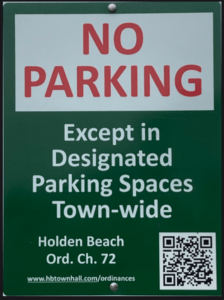
Per ordinance, there is no parking on the streets or rights-of-way except in designated parking spaces identified by Pay-to-Park signs. Click here to view an interactive map. The table with authorized parking can be viewed below.
Citations will be issued for:
-
-
- Parking without an active paid permit in a designated parking area
- Parking within 40 feet of a street intersection
- Parking in a crosswalk, sidewalk, or pedestrian access ways
- Parking blocking a driveway or mailbox
- Parking facing opposing traffic
- Parking in a no parking zone, or within right-of-way
- Parking on any portion of the roadway or travel lane
- Parking a non-LSV vehicle in an authorized LSV location
-
How Do I Pay to Park
The Town uses the SurfCAST by Otto Connect Mobile Solution. This is a mobile app downloadable for Apple and Android devices. Download the app today. Users will setup their account, enter their license plate details and pay for parking directly on the app. Alternatively, users can scan the QR Code located on the parking signs to access a secure website.
The Otto Connect customer service team will be available to help via phone and email.

Solid Waste Pickup Schedule
GFL Environmental change in service, October through May trash pickup will be once a week. This year September 27th will be the the last Saturday trash pick-up until June. Trash collection will go back to Tuesdays only.
Please note:
Trash carts must be at the street by 6:00 a.m. on the pickup day
BAG the trash before putting it in the cart
Carts will be rolled back to the front of the house
GFL Refuse Collection Policy
GFL has recently notified all Brunswick County residents that they will no longer accept extra bags of refuse outside of the collection cart. This is not a new policy but is stricter enforcement of an existing policy. While in the past GFL drivers would at times make exceptions and take additional bags of refuse, the tremendous growth in housing within Brunswick County makes this practice cost prohibitive and causes drivers to fall behind schedule.
Solid Waste Pickup Schedule
starting October once a week
Recycling
starting October every other week pick-up
 Yard Waste Service
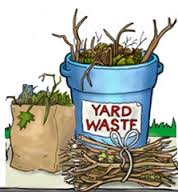
Yard debris is collected on the second (2nd) and fourth (4th) Fridays during the months of October, November, and December.Yard debris needs to be secured in a biodegradable bag (not plastic) or bundled in a maximum length not to exceed five (5) feet and fifty (50) pounds in weight. Each residence is allowed a total of ten (10) items, which can include a combination of bundles of brush and limbs meeting the required length and weight and/ or biodegradable bags. Picks-ups are not provided for vacant lots or construction sites.
Curbside Recycling – 2025
GFL Environmental is now offering curbside recycling for Town properties that desire to participate in the service. The service cost per cart is $119.35 annually paid in advance to the Town of Holden Beach. The service consists of a ninety-six (96) gallon cart that is emptied every other week during the months of October – May and weekly during the months of June – September.
Curbside Recycling Application » click here
Curbside Recycling Calendar » click here

Trash Can Requirements – Rental Properties
GFL Environmental – trash can requirements
Ordinance 07-13, Section 50.08
Rental properties have specific number of trashcans based on number of bedrooms.
* One extra trash can per every 2 bedrooms
..
§ 50.08 RENTAL HOMES.
(A) Rental homes, as defined in Chapter 157, that are rented as part of the summer rental season, are subject to high numbers of guests, resulting in abnormally large volumes of trash. This type of occupancy use presents a significantly higher impact than homes not used for summer rentals. In interest of public health and sanitation and environmental concerns, all rental home shall have a minimum of one trash can per two bedrooms. Homes with an odd number of bedrooms shall round up (for examples one to two bedrooms – one trash can; three to four bedrooms – two trash cans; five – six bedrooms – three trash cans, and the like).
Building Numbers
Ocean front homes are required to have house numbers visible from the beach strand.
Please call Planning and Inspections Department at 910.842.6080 with any questions.
§157.087 BUILDING NUMBERS.
(A) The correct street number shall be clearly visible from the street on all buildings. Numbers shall be block letters, not script, and of a color clearly in contrast with that of the building and shall be a minimum of six inches in height.
(B) Beach front buildings will also have clearly visible house numbers from the strand side meeting the above criteria on size, contrast, etc. Placement shall be on vertical column supporting deck(s) or deck roof on the primary structure. For buildings with a setback of over 300 feet from the first dune line, a vertical post shall be erected aside the walkway with house numbers affixed. In all cases the numbers must be clearly visible from the strand. Other placements may be acceptable with approval of the Building Inspector.
Upon Further Review

A Second Helping
They just completed the twenty-first year of the program. For the last fifteen (15) weeks they have collected food on Saturday mornings in front of Beach Mart; the food is distributed to the needy in Brunswick County. During this summer season, they collected 10,057 pounds of food and $1,360 in monetary donations. Their food collections have now exceeded three hundred and seventeen thousand (317,000) pounds of food since this program began in June of 2005. Hunger exists everywhere in this country. Thanks to the Holden Beach vacationers for donating again this year! Cash donations are gratefully accepted. One hundred percent (100%) of these cash donations are used to buy more food. You can be assured that the money will be very well spent.
Mail Donations to:
A Second Helping
% Sharon United Methodist Church
2030 Holden Beach Road
Supply, NC 28462
 ReadyBrunswick Emergency Notifications Alerts
Brunswick County uses ReadyBrunswick as part of the County’s effort to continuously improve communications during emergency situations within our area. Powered by Everbridge, the ReadyBrunswick notification system sends emergency notifications in a variety of communication methods such as:
-
-
-
- Landline (Voice)
- VoIP (Voice over Internet Protocol)
- Mobile (Voice)
- Mobile SMS (Text Messaging)
-
-
In the case of an emergency, you may choose to receive notifications via one or all of these communication methods. It’s recommended that you register several media options to receive messages in the event a particular communication device is unavailable.
For more information » click here
Corrections & Amplifications
 Carolina Bays Parkway project S.C. 31
OCEAN RIDGE MASTER ASSOCIATION COMMUNITY IMPACT COMMITTEE
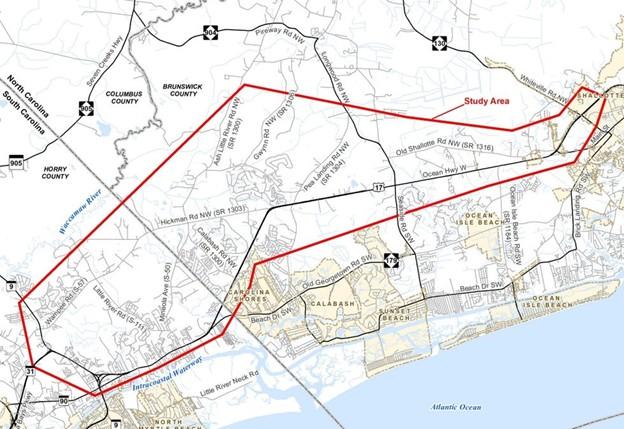
The North Carolina Department of Transportation (NCDOT) is implementing several initiatives to relocate the Carolina Bays Parkway Extension to Brunswick County. Following extensive planning and anticipation, a recent environmental assessment has identified a suitable location for the significant highway project and initiated a public comment period. The NCDOT and the South Carolina Department of Transportation (SCDOT) are collaborating to extend South Carolina Highway 31 (SC 31), commonly referred to as the Carolina Bays Parkway, from South Carolina Highway 9 (SC 9) in Horry County to U.S. Route 17 (US 17) in Brunswick County. Should the project secure funding and proceed with construction, it will result in a newly constructed multi-lane full-access freeway that will connect the Carolinas. The route will be constructed in phases, potentially enhancing evacuation routes as Brunswick County experiences population growth. The Carolina Bays Parkway Extension project commenced in 2006 with a feasibility study that evaluated conceptual alternative routes. The construction of the road would have a significant impact on areas situated on either side of U.S. 17 in southern Brunswick County. The North Carolina Department of Transportation (NCDOT) had prepared seven alternative maps for preferred routes in Brunswick County, which ultimately converge onto U.S. 17. However, five alternatives have been eliminated, and the options have been reduced to Routes 4 and 4a. Attached are the maps for each route. The North Carolina Department of Transportation (NCDOT) website, updated on August 22, indicates that the $797 million project is currently in development with an anticipated commencement date of 2028. North Carolina’s portion of the project is projected to incur a cost of $610.9 million. South Carolina has secured the necessary funding and intends to initiate the process to connect Carolina Bays 31 from Route 9 to the state line at Hickman Road. Currently, North Carolina has secured funding for only the planning document, but not for the right-of-way or construction phases. Public hearings for the North Carolina side of the extension have been postponed on several occasions as the NCDOT awaited the availability of the draft environmental impact statement. However, the draft environmental impact statement is now available, and public hearings have been scheduled. The proposed project will involve two pre-hearing open houses and corridor public hearings. During these events, information will be presented, and NCDOT representatives will be available to address inquiries. The first public hearing will be from 5-8 p.m. on Sept. 29 at the Sea Trail Convention Center in Sunset Beach. The second hearing will be 5-8 p.m. on Sept. 30 at the North Strand Recreation Center in Longs, South Carolina. Alternative map 4 is identified in the Draft Environmental Impact Statement as the preferred alternative. Alternative map 4 crosses through Hickmans Crossroads and the Longwood area and continuing out to connect to Route 17 at the intersection of Route 904 and Route 17. Following the public hearing, the merger team will meet to select the preferred/ least environmentally damaging practicable alternative corridor, also called LEDPA, in accordance with the National Environmental Policy Act/ Section 404 Merger Process. This includes consideration of public comments and the local sponsors’ preferred alternative, potential impacts to noise, low income and disadvantaged populations, cultural resources and the environment are considered when selecting the least environmentally damaging and practicable alternative route. According to the merger process, the preferred/LEDPA corridor is the best solution to the problem satisfying the transportation need and considering environmental and community resources.
Landing spot identified for new highway connecting Brunswick County to SC
The North Carolina Department of Transportation is taking several steps toward moving the Carolina Bays Parkway Extension into Brunswick County. After years of planning and hoping, a recent environment statement has identified a landing spot for the major highway project and kickstarted a public comment period. The NCDOT and the South Carolina Department of Transportation are working together to extend S.C. 31, known as Carolina Bays Parkway, from S.C. 9 in Horry County, South Carolina, to U.S. 17 in Brunswick County. If funded and constructed, the proposed project will result in a new multi-lane full access freeway connecting the Carolinas. The route will be built in phases and could enhance evacuation routes as Brunswick County continues to grow in population.
Carolina Bays Parkway Extension project history
The Carolina Bays Parkway Extension project began in 2006 with a feasibility study with conceptual alternative routes. The road, if constructed, could impact places on each side of U.S. 17 in southern Brunswick County. NCDOT has seven alternative maps for preferred routes in Brunswick County that will eventually dump onto U.S. 17. However, five alternatives cross on the northern side of U.S. 17 around Hickman Crossroads along Hickman Road in Calabash. Interactive maps of the alternatives can be viewed on NCDOT’s website. “The primary purpose of the project is to improve transportation in the area by enhancing mobility and connectivity for traffic moving in and through the project area,” per NCDOT website.
New movement on the nearly $800 million project
The NCDOT website, updated Aug. 22, states the $797 million project is in development with an anticipated start date of 2028. The project is also part of NCDOT and SCDOT’s state transportation improvement program. North Carolina’s portion is expected to cost ​$610.9 million, per the website. “In North Carolina, this project is currently funded for the planning document, but not for right-of-way or construction,” Jenkins said.
Read more » click here
Previously reported – June 2025
To fast-track highway extension into Brunswick, leaders push for toll study
A toll could be the only way to fund a new highway connecting North and South Carolina. After years of waiting, one local transportation organization is pressing the gas on a new highway in Brunswick County as the clock continues to tick by without funding.
Here’s what to know.
A new highway?
The N.C. Department of Transportation and the S.C. Department of Transportation are working together to extend S.C. 31, known as Carolina Bays Parkway, from S.C. 9 in Horry County, South Carolina, to U.S. 17 in Brunswick County. The Carolina Bays Parkway Extension project began in 2006 with a feasibility study with conceptual alternative routes and has evolved into seven potential​routes being studied. Interactive maps of the alternatives can be viewed on NCDOT’s website.
Funding troubles for North Carolina
The NCDOT’s website, last updated in October 2024, has the total project cost estimated at $552 million with North Carolina’s portion costing $367 million. However, the Federal Infrastructure Projects Permitting Dashboard lists the estimated project cost at $797 million.
Read more » click here
Previously reported – February 2025
Boom or doom: How a new highway could transform rural Brunswick County
A new road in southern Brunswick County will open the flood gates of opportunity for some but could close the
Read more » click here
 OIB Terminal Groin
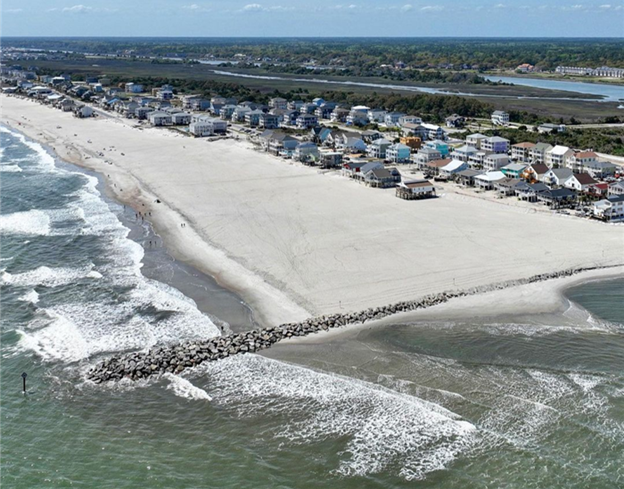
Ocean Isle Beach completed construction of a terminal groin on its east end in April 2022 to help protect the beach immediately behind it. However, this structure has contributed to significant erosion at the east end near Shallotte Inlet by interrupting natural longshore drift, prompting ongoing efforts such as sandbag use to prevent ocean encroachment on properties in that area.

View of OIB east of the terminal groin after Hurricane Erin passed offshore
2024 OIB SHORELINE AND INLET ANNUAL MONITORING REPORT
On Holden Beach, the recent volume change rates (May 2024 to November 2024) along the oceanfront shoreline indicated erosion at 12 of the 21 monitoring stations. Similarly, the MHW shoreline change rates indicated a shoreline retreat at 15 of the 21 monitoring stations. The long-term post-construction linear shoreline changes along the Holden Beach oceanfront shoreline indicated landward retreat. However, volumetric changes indicated slight accretion (0.2 cy/ft./yr.) within this area over the long-term period. The shoreline threshold analysis results along the Holden Beach oceanfront shoreline show that the post-construction shoreline change threshold was exceeded at only one monitoring station. This is the first time a threshold has been exceeded at Holden Beach since this annual analysis started in 2022. In addition, the analysis of May 2024 aerial imagery-derived wet/dry line revealed an 885 ft. section of Holden Beach’s inlet shoreline that exceeded the inlet shoreline threshold by a maximum distance of 100 feet. The inlet shoreline threshold on Holden Beach was also exceeded in Year-2. This marks two straight years where this threshold was exceeded. The inlet shoreline recession is believed to likely be attributed to a combination of morphological changes within Shallotte Inlet including the position and orientation of the main channel through Shallotte Inlet and the formation of a flood channel on the inlet shoulder of Holden Beach. Regardless, as stated in the Plan, because the shoreline changes in this area exceeded the threshold over the entire 2-year confirmation period, an assessment of the proper responsive measures will be made through coordination with State and Federal regulatory officials.
Odds & Ends –
Brunswick County 2024 Visitor Impact released
Domestic and international visitors in Brunswick County spent over $1.22 billion in 2024, an increase of 4.8% from 2023. Brunswick County ranked No. 6 among North Carolina’s 100 counties in visitor spending in 2024. This data comes from an annual study commissioned by Visit North Carolina, a unit of the Economic Development Partnership of North Carolina. “We’re pleased to see that 2024 marked another year of continued growth in the economic impact of visitor spending in Brunswick County,†said Whitney Sauls, chair of the Brunswick County Tourism Development Authority. “The latest data released by Visit North Carolina reinforces what we know. The money spent by visitors in our county creates jobs, helps to support our small businesses and generates funds for beach renourishment.â€
Brunswick County tourism impact highlights for 2024:
-
- The travel and tourism industry directly employed approximately 5,838 people in Brunswick County, up 4% from 2023.
- Total payroll directly generated by the tourism industry in Brunswick County was $240.97 million, up 4.5% from 2023.
- State tax revenue generated in Brunswick County totaled $36.68 million through state sales and excise taxes, and taxes on personal and corporate income. About $51.41 million in local taxes were generated from occupancy and sales and property tax revenue from travel-generated and travel-supported businesses.
- Each Brunswick County resident saved $523.96 in state and local taxes as a result of visitor spending in the county.
These statistics come from the “Economic Impact of Travel on North Carolina Counties,†which can be accessed at partners.visitnc.com/economic-impact-studies. The study was prepared for Visit North Carolina by Tourism Economics. Statewide, visitor spending in 2024 rose 3.1% to reach a record $36.7 billion. Direct tourism employment increased 1.4% to 230,338 people. “Scenic beauty, outdoor adventure, culinary innovation and authenticity help North Carolina remain a top choice for travelers,†said Wit Tuttell, executive director of Visit NC. “That appeal might be hard to quantify, but as we follow the numbers, we see the payoff in terms of the money that goes to businesses as well as state and local tax bases.â€
NC tourism facts:
-
- Total spending by domestic and international visitors in North Carolina reached $36.7 billion in 2024. That sum represents a 3.1% increase over 2023 expenditures.
- Visitors to North Carolina generated nearly $4.6 billion in federal, state and local taxes in 2024. The total represents a 2.9% increase from 2023.
- State tax receipts from visitor spending rose 1.1% to $1.36 billion in 2024.
- Local tax receipts grew 4.3% to $1.29 billion.
- Direct tourism employment in North Carolina increased 1.4% to 230,338 people.
- Direct tourism payroll increased 2.6% to over $9.5 billion.
- Each North Carolina resident saved $242.37 on average in state and local taxes as a direct result of visitor spending in the state.
Read more » click here
This and That

These crabs probably saved your life. Can we save theirs?
The medical world relies on horseshoe crab blood in the production of vaccines and equipment. A synthetic is available, but companies have been slow to adopt it.
Susan Linder was hunting for buried treasure. Kneeling at low tide, the biologist dug up small shovelfuls of sand, scanning each scoop for tiny jewels. One yielded a cluster of jade-colored beads. Another, from a few feet away, contained a clutch the color of amethyst. They were eggs. In a few weeks, they would hatch into horseshoe crabs, one of the most ancient and important animals in the United States. The crabs in the Delaware Bay are the stars of an annual ecological opera involving sex, binge eating and literal bloodlust. Every spring, the crabs clickety-clack ashore for a massive orgy timed to the rise and fall of the tides, depositing millions of eggs in the sand. “They’re easy to miss, really,†Linder said, digging the day after a new moon, one of the biggest breeding days of the year. Her job is to help conduct an egg census. She returns all the clutches she finds carefully to the holes. She knows, year after year, the numbers have been diminishing. For decades, the biomedical industry has relied on a compound in horseshoe crab blood to protect medical equipment from contamination, saving untold human lives. The surge in vaccine use during the coronavirus pandemic, as well as the growing popularity of injectable weight loss and diabetes drugs, has further fueled the blood harvest. But conservationists say modern medicine’s dependence on this bloodletting is upending a globe-spanning ecosystem in which birds bulk up on fatty crab eggs to fuel epic migrations. “We’re in this battle over horseshoe crab blood,†said Larry Niles, a wildlife biologist and co-founder of the Horseshoe Crab Recovery Coalition, a campaign trying to stop overharvesting. Now, finally, the crabs have a chance at a reprieve. A key group that sets standards for U.S. drugmakers has officially recognized a human-made alternative as safe and effective, opening the way for pharmaceutical companies to widely adopt alternatives and wean themselves off of crab blood. But only a handful of drugmakers have begun to adopt it. “We’re trying to encourage the pharmaceutical companies to switch to the synthetic,†Niles said, “not only to help horseshoe crabs, but also for their own sake.â€
The carnal crabs
It might as well be an extraterrestrial. Its helmet-shaped body is covered with 10 eyes, some sensitive to ultraviolet light so it can follow the phases of the moon and come ashore for a mating frenzy. Its mouth is on its underside and is surrounded by six pairs of legs it uses to test the water composition and to chew its food. When flipped belly-up on a beach, it uses its spear-like tail to pole-vault itself upright. But the crabs’ claim to Earth predates pretty much everything else here. They are what scientists call a “living fossil,†scuttling for hundreds of millions of years before the Atlantic Ocean was even a puddle. “When you think about the genetic diversity and how long these guys have survived, they must be doing something right,†Amanda Dey, a retired zoologist who works with and is married to Niles. Perhaps the best adaptation accumulated over their 445 million years is their blood. It is a haunting blue hue due to copper-based molecules used to transport oxygen. It is also laced with immune cells called amoebocytes that coagulate around bacterial intruders. For a half-century, the biomedical industry has harvested an extract from these immune cells. Known as limulus amebocyte lysate, or LAL, it is used to test for the presence of bacterial contaminants called endotoxins, which could cause a patient’s organ failure and death. Regulators require tests for vaccines, pacemakers, heart stents, surgical tools and other medical devices, as well as water systems used in drug manufacturing. The blood-drawing process involves plucking horseshoe crabs from shores and transporting them miles to bleeding facilities. There, they are inspected, cleaned and bent on racks to expose a membrane for blood extraction. Afterward, they are released back into the water. Companies involved in this work say the crabs are handled with care, with a limited amount of blood taken only from healthy crabs that are subsequently returned to their native waters. “Our processes are designed to preserve and protect horseshoe crabs,†said Nora Blair, a senior manager at Massachusetts-based Charles River Laboratories, a major lysate supplier for the pharmaceutical industry. The company has developed techniques for using crab blood more efficiently for testing, Blair added. As part of a lawsuit settlement with environmentalists in 2023, it also agreed to stop collecting crabs from certain beaches where birds feed and to stop placing female crabs in holding ponds so they can continue spawning. But conservationists say such measures aren’t enough. About 15 percent of the crabs collected each year perish, according to the Atlantic States Marine Fisheries Commission. In 2023 alone, that portion amounted to 178,000 dead crabs. (The bleeding companies contest those figures.) The density of eggs laid on the Delaware Bay beaches has declined by 80 percent, from about 50,000 eggs per square meter in the early 1990s to around just 10,000 today, according to research from Niles, Dey and others. For years, the practice of using horseshoe crab flesh as bait for commercial fishing was responsible for much of the decline. But that practice has become more regulated — while the number of crabs collected for bleeding has swelled, increasing fourfold since 2004. Last year, environmentalists petitioned the federal government to add the American horseshoe crab to the Endangered Species Act list. A decision is pending. The International Union for Conservation of Nature, which also tracks the status of species, has already declared the American horseshoe crab “vulnerable.â€
The binge-eating birds
There used to be more than enough eggs to both perpetuate the horseshoe crab population and provide a fatty feast for hungry shorebirds, establishing this stretch of New Jersey as a key pit stop for ruddy turnstones, sanderlings, short-billed dowitchers, dunlins and other migratory birds. The red knot, in particular, needs the extra calories. It makes one of the longest annual journeys of any bird, flying more than 9,000 miles from the southern tip of South America to its breeding ground in the Arctic tundra — and back again. By the time some arrive in the United States, they will have flown six days without stopping. While Linder counted eggs on the beach, ornithologists Humphrey Sitters and Stephanie Feigin sat at the front of a boat cruising along the New Jersey side of Delaware Bay to tally every shorebird that they could spot. A plane buzzed above to count, as well. “Dead ahead,†Sitters said, pointing across the bow to a flock of red knots on shore, as waves of semipalmated sandpipers darted across the surface of the water. “350 knots,†he announced. Feigin added the tally to her notebook. “Semis?†she asked. “Let’s say 3,000,†he answered. Sitters said he knows from practice what a group of about 50 birds looks like and extrapolates that figure to the size of the flock in front of him. “It’s experience,†he said. “Eventually, you get your eye†for it. There used to be many more knots to tally. The annual bird surveys show the decline in crab eggs has contributed to a staggering 70 percent drop in the average knot count from the early 1980s to 2014, when the U.S. Fish and Wildlife Service listed the bird as threatened under the Endangered Species Act. A quarter-century ago, “the Delaware Bay was one of the top birding destinations in the world,†Niles said as he piloted the boat. “There were so many shorebirds in one place.†Without bulking up on eggs, knots take longer to reach their nesting grounds — and many don’t make it at all, his research suggests. Now, four of the bay’s most abundant shorebirds — red knots, ruddy turnstones, sanderlings and semipalmated sandpipers — are all in decline. “The stopover is becoming unstable,†he said. “One year is good, the next year is not. And it’s all because the level and number of horseshoe crabs are so low.â€
A human-made solution
In the late 1990s, researchers in Singapore patented a lab-made alternative to the lysate in horseshoe crabs’ blood. But that breakthrough has yet to revolutionize the drug-making industry. “Pharma is just inherently conservative,†said Jay Bolden, a senior director at Eli Lilly. “Why change the status quo when it’s been working well for 40 years? But people don’t see the impact outside of our own four walls.†In 2018, the U.S. Food and Drug Administration allowed Eli Lilly to use a synthetic for endotoxin testing for a migraine drug. As both a businessman and amateur birder, Bolden thought the move made sense. One bad year for the crabs, he thought, could stifle drug production if enough blood isn’t harvested. “If we’re not reliant on a wild animal for one of our tests,†he said, “then we’re inherently in a better supply-chain position.†Crab advocates notched another victory when U.S. Pharmacopeia, a nonprofit that sets quality standards for drugs, issued guidelines deeming the synthetic safe and effective. The guidance, approved in July 2024 and made official in May, allows drugmakers to use lab-made alternatives instead of crab-derived lysate for new drugs with less lab testing and paperwork required. “Basically, it leveled the playing field,†Bolden said. But it’s still up to the drugmakers which to use. In May, a coalition of nonprofits that included Horseshoe Crab Recovery released the results of a survey of the 50 largest drugmakers by revenue about their use of horseshoe crab blood. Only 11 responded to acknowledge the need to switch or disclose concrete steps to actually do so. Among those rated highly by the survey were Eli Lilly, GSK, Amgen, Sanofi and Bristol Myers Squibb. One issue is that if a drugmaker wants to switch production of older drugs to a crab-free compound, it needs to do a whole new round of testing to verify that the compound works at catching contamination. “The biggest challenges right now are legacy products,†said Elizabeth Bennett, communications director at Revive & Restore, a conservation nonprofit that helped conduct the survey. For instance, Novo Nordisk, maker of the blockbuster diabetes drug Ozempic that can cause weight loss, has phased out the use of lysate from horseshoe crabs in research, but still uses it to make existing products “due to regulatory requirements.†In a statement to The Washington Post, the company said it has a “road map†for “phasing out the use of any lysate from horseshoe crab.†Johnson & Johnson and Pfizer, two of the biggest drugmakers by revenue, which each developed coronavirus vaccines that relied on crab blood, did not complete the survey. When reached for comment by The Post, Pfizer said it is using synthetics for testing pharmaceutical water systems and has begun implementing it for some products following the U.S. Pharmacopeia decision. Johnson & Johnson did not reply to a request for comment. Eli Lilly, which rated highest in the survey, has 10 products approved that use alternatives to horseshoe crab blood for endotoxin testing. But it still has to convert some of its existing drugs. “It’s been difficult to convert that last 20 percent on legacy molecules,†Bolden said. Horseshoe crabs as a species are survivors. They made it through the asteroid strike that killed the dinosaurs as well as three of Earth’s other mass extinctions. But whether the fragile web of life that depends on them can survive is more uncertain.
Read more » click here
Turtle Watch Program
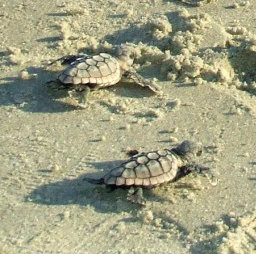
Turtle Watch Program – 2025
The first nest of the 2025 season was on May 22nd
Average annual number of nests is 57
Current nest count (35) as of 09/20/25
Total known eggs = 3,111
Total baby turtles to ocean = 2,313 around 74%
Members of the patrol started riding the beach every morning on May 1 and will do so through October looking for signs of turtle nests.
For more information » click here
Total number of nests historically
-
-
-
-
-
-
-
-
-
-
-
-
- 2012: 48
- 2013: 73
- 2014: 19
- 2015: 53
- 2016: 52
- 2017: 50
- 2018: 30
- 2019: 105
- 2020: 65
- 2021: 68
- 2022: 65
- 2023: 75
- 2024: 67
- 2025: 35
-
-
-
-
-
-
-
-
-
-
-

Only half of states known sea turtle nests hatched before Erin
The North Carolina Sea Turtle Project kept careful watch over incubating nests threatened by the ocean overwash, storm surge and erosion associated with mid-August’s Hurricane Erin. Under the North Carolina Wildlife Resources Commission, the N.C. Sea Turtle Project is a coastwide, collaborative conservation effort that brings together federal, state, conservation and volunteer groups to monitor sea turtle activity, particularly during nesting and hatching season from early May to mid-November. The commission’s sea turtle biologist Matthew Godfrey, who manages the project, explained to Coastal Review that about half of all sea turtle nests laid in the state had finished incubation before Hurricane Erin impacts began to arrive. Of the nests that were still incubating, nearly all experienced at least some overwash because of large waves and wind associated with the hurricane. Coastal flooding and other signs of the storm moving north off the coast began around Aug. 19 and lasted throughout the week as the storm moved north. “Several beaches reported observing entire nests being washed away, and others reported today (Aug. 26) that some remaining nests experienced the emergence of hatchlings overnight,†illustrating that some sea turtle eggs can withstand storm-related inundation and still produce hatchlings, Godfrey said. Loggerhead, green, Kemp’s ridley, leatherback and hawksbill sea turtles all come ashore to lay eggs. The females return to the beach every few weeks to nest, up to four times a season. It usually takes about 55 days for the eggs to hatch. Nests can be excavated after a minimum of three days after the first hatchling emerges, or when the commission grants permission, if the nest is unsuccessful. “We won’t have a full account of how many nests were lost or negatively impacted until the end of the season, but based on experience from other years, it is likely that those lost to Erin will include nests that had been moved from more exposed areas to seemingly safer areas of the beach,†he said. Godfrey explained that sea turtles have been around for millennia, surviving despite impacts from storms and hurricanes on their nests. “Part of the life history strategy of sea turtles is to lay large clutches of eggs in nests on sandy beaches across different locations and times of the summer to spread out the risks associated with egg incubation in a dynamic environment, such as coastal areas,†he said. “While storms like Hurricane Erin may reduce the production of hatchlings from some specific nests, the overall rate of hatchling production from NC nests should remain relatively good this year.†Through the Sea Turtle Project, the Wildlife Resources Commission permits more than 20 different groups that help monitor sea turtle nesting and strandings on North Carolina beaches.
Read more » click here
Washed away:
Officials say Hurricane Erin likely took a big toll on NC sea turtle nests
Days of pounding surf churned up by Erin has likely inundated or washed away a chunk of NC’s sea turtle nests. But officials added that sea turtles are very resilient and would bounce back.
As the approaching Hurricane Erin brought heavy surf and dune-chewing waves crashing ashore all along the N.C. coast, emergency officials warned beachgoers to stay out of the water and, preferably, off the beach all together. But what if you can’t get off the beach? That’s the situation facing hundreds of sea turtle nests along N.C. beaches, and now officials fear many of those could have been lost to Hurricane Erin that battered the state’s coastline from end to end. According to the N.C. Wildlife Resources Commission, the Tar Heel State has seen 1,057 nests so far this season. Statewide, the two national seashores – Cape Hatteras and Cape Lookout – have seen a combined 432 nests. In the Wilmington area, the top beaches for nests are Topsail Island (90); Oak Island (76); Bald Head Island (58); and Caswell Beach (45). But days of heavy surf pushed hundreds of miles ahead of Erin’s eye have pounded the state’s beaches, washing away dunes and chewing up many beaches. That means some sea turtle nests could have been buried under mounds of wet sand, in effect suffocating any hatchlings, while others could have been exposed to the elements and the eggs simply washed away. Kathy Zagzebski, director of the Karen Beasley Sea Turtle Rescue and Rehabilitation Center on Topsail Island, said nests can handle some wave inundation. “Sometimes, in fact, washover can be helpful in cooling nests,” she said. The sex of hatchlings is based on sand temperature, so a warmer beach means more females and fewer males − a growing problem in a world warmed by climate change. But if hatchlings have started to emerge when the nest is overwashed, the baby turtles generally don’t survive since they breathe air, just like humans do. In short, they drown. On Ocean Isle Beach in Brunswick County, that almost happened on Wednesday, Aug. 20, when a nest started to hatch amid Erin’s storm-driven waves. Luckily, visitors saw the nest cavity and some hatchlings on the beach and alerted authorities, said Deb Allen, island coordinator for the Ocean Isle Beach Sea Turtle Protection Organization. She said team members were able to save 136 hatchlings and help them get to the ocean before the nest was completely flooded, which would have trapped the babies in water and heavy sand. But the overall picture for the island’s sea turtle nests, as likely for all beach areas along the N.C. coast, is pretty grim. “Out of 17 nests, maybe three survived,” Allen said. “We might be able to get some live hatchlings out of some of them, but we just don’t know at this point.” Rules for relocating nests are very strict, due to the difficulty of guaranteeing the health of the baby turtles once they’ve started to incubate in the eggs, and a move is only done in very special cases. Hurricanes also are natural events. But what isn’t natural, Allen said, are the many challenges sea turtles face these days − almost all of which are human-induced. From loss of nesting beach areas to artificial light that distracts hatchlings to fishermen catching and eating sea turtles and even their eggs, the deck is stacked against sea turtles, all species of which are considered threatened or endangered in U.S. waters. That’s why volunteers watch over nests, place predator-proof cages on them, educate the public on what to do and not do when they come across a nest or sea turtle on the beach, and help any stranded babies get out of a nest and reach the ocean. “We do our best to keep everything as natural as possible,” Allen said. “But it can be hard, even if hurricanes are natural events. When things like this happen, we cry. We get very upset. No one wants to see a sea turtle die. But we can’t prevent Mother Nature.” Dr. Matthew Godfrey, sea turtle biologist with N.C. Wildlife, said about half of the state’s turtle nests had finished incubation before the arrival of Erin, and nearly all experienced some inundation. While there are reports of nests washing away, he said some beach towns − like Ocean Isle Beach − reported seeing hatchlings emerge overnight during the storm. “This goes to show that some sea turtle eggs can withstand storm-related inundation and still produce hatchlings,” he said via email. “We won’t have a full account of how many nests were lost or negatively impacted until the end of the season, but based on experience from other years, it is likely that those lost to Erin will include nests that had been moved from more exposed areas to seemingly safer areas of the beach.” Godfrey also noted that sea turtles have evolved to spread their location and timing of their nests to mitigate the risk a single storm event can do to the reptile’s overall reproduction success. “While storms like Hurricane Erin may reduce the production of hatchlings from some specific nests, the overall rate of hatchling production from N.C. nests should remain relatively good this year,” he said.
Read more » click here
Holden Beach Turtle Patrol to open T-shirt design contest
Each year since 1994 the members of the Holden Beach Turtle Watch Program have produced and sold a new T-shirt design as the organization’s major fundraiser. Again, this year, you have a chance to design the shirt. The 501(c)(3) nonprofit founded in 1989 monitors, protects and preserves Holden Beach’s sea turtle population, works to foster community-based conservation and education and operates under the authority of the North Carolina Wildlife Resources Commission. The group is also known as the Holden Beach Turtle Patrol.
If you love sea turtles and have a talent for graphic design, consider donating your design. The program’s 2026 T-shirt design contest is open Sept. 15-Oct. 15. The winning 2025 T-shirt design was by Lois Palermo, a local sea turtle lover, and her sister Alyson Natale, of Woodlands, Texas, with “Let the Sea Set you Free.â€
Submissions of original hand-drawn designs for the 2026 season T-shirt must meet the following requirements:
-
- Only one design submission allowed per individual.
- The design must include a sea turtle.
- The design must be an original hand-drawn design.
- The design is limited to two colors.
- The design must be in a PDF format to allow for possible changes in printing constraints.
- The chosen design will become the property of the Holden Beach Turtle Watch Program.
Submit your design to orders www.hbturtlewatch.org by 11:59 p.m. Oct. 15. All submissions will be acknowledged upon receipt. Designs for all past T-shirts can be viewed at www.hbturtlewatch.org; click “Shop Here.â€
Factoid That May Interest Only Me
Why your health insurance may be about to cost a lot more
Insurers blame the popularity of obesity drugs and the possibility of tariffs for rising prices.
Health insurance costs in the United States are on track for their biggest jump in at least five years, according to multiple surveys, adding turbulence to an uncertain economy and boosting expenses for millions of Americans already beset by inflation. In 2026, businesses will be hit with an increase of 9 percent or more and they are expected to push some of the burden onto employees, according to the research. For the 24 million enrollees of Affordable Care Act insurance plans, however, the news is far worse. The end of enhanced federal subsidies for that program means their costs are expected to rise by more than 75 percent next year, according to KFF, the nonpartisan health policy organization. Insurers and employers point to two recent factors to explain the rising prices: the tariffs on pharmaceutical imports being considered by the Trump administration and the high cost of new obesity treatments, called GLP-1 drugs. With inflation top of mind for many Americans, and broad discontent with health care, the spike in prices in both government-sponsored and private health insurance could make the costs of coverage an issue in the 2026 midterm elections. A Gallup poll in December reported that “Americans’ rating of the quality of U.S. healthcare has fallen to the lowest reading in 24 years, and views of healthcare coverage nationally remain broadly negative.†Now, even among Republicans opposed to the government insurance program, the rapid rise in prices and the end of the Obamacare subsidies has created worry. “Voters don’t want to see people losing their health insurance,†according to the pollsters of Fabrizio Ward, a Republican polling firm, which found overwhelming bipartisan support for extending the Affordable Care Act subsidies in a recent poll of 28 competitive congressional districts. Three recent research reports blame the insurance price hikes generally on rising prices and the more liberal use of health care services. All three reports — by Aon, a global consultancy; Mercer, a benefits company; and the Business Group on Health, an industry group — cited the rise of the new obesity drugs as a driver of costs. “We are seeing a continued surge in utilization†of the GLP-1 drugs, said Debbie Ashford, a chief actuary at Aon and an author of the report. She said use of the drugs rose 92 percent in 2023 and another 56 percent in 2024, and the growth continues this year at a similar pace. These drugs can cost as much as $800 a month. As employers seek to limit the bill for GLP-1s, 90 percent of them said they are paying for the drugs only after prior authorization reviews and nearly half are requiring that patients be substantially overweight as determined by BMI, or body mass index, the Business Group survey said. Other cost drivers cited in the forecasts include mental health, chronic conditions and cancer. The other new force behind the price hikes is the expectation of import tariffs, which would boost drug prices. Pharmaceuticals are currently exempt from the tariffs imposed by the Trump administration, but the Commerce Department is investigating the impact of drug imports on national security. The president has also said planned tariffs on the medicines could rise to as much as 250 percent. In a May letter to the Commerce Department, the American Hospital Association warned that the tariffs would significantly impact drug prices. The U.S. gets nearly 30 percent of its active pharmaceutical ingredients from China, the letter said. It also cited a survey indicating that many health care experts expect tariff-related expenses to raise hospital costs by at least 15 percent. Some insurers, in legal filings with regulators, have said explicitly that the expected tariffs were raising insurance prices. A document from United Healthcare of New York states that, to account for “uncertainty regarding tariffs and/or the onshoring of manufacturing and their impact on total medical costs, most notably on pharmaceuticals, a total price impact of 3.6% is built into the initially submitted rate filing.†While the obesity drugs and tariffs are expected to raise health care costs generally, the most urgent political matter is the fate of the extra subsidies for the 24 million people with Affordable Care Act plans, who could see their premium payments double in January if the subsidies go away. About half of adults with such coverage are small-business owners, their employees or are self-employed, according to KFF. The extra subsidies were first provided during the coronavirus pandemic, intended to make HealthCare.gov coverage more affordable, and have been in place the past five years. During that time, the number of enrollees in Obamacare plans has doubled to more than 24 million, helping to reduce the number of Americans without health insurance. The subsidies have come at a significant cost to taxpayers, however, and extending the subsidies another 10 years would cost $335 billion, according to the Congressional Budget Office. Congress has approved the subsidies twice, but now the GOP-controlled House and Senate appear likely to let them expire after December. They previously declined to extend them in the tax and spending bill they passed over the summer. About 4 million people will drop out of Affordable Care Act plans in the first year after the extra subsidies are discontinued, according to estimates from the Congressional Budget Office. That will leave behind sicker, more expensive patients in the marketplaces and could prompt insurers to hike premiums even more in the future. While some critics have predicted a “death spiral†for the marketplaces if such a trend occurred, others have said the original subsidies are enough to support the program. “As long as those original subsidies remain in place, there will be no death spiral,†said Cynthia Cox, a researcher at KFF who focuses on the Affordable Care Act. “But some individuals will face hardship.†There is growing unease among Republicans about the possibility of making Obamacare premiums unaffordable, and they are wary of attacks from Democrats who could accuse them of leaving millions of people without health coverage. Eleven House Republicans, many of them in vulnerable seats, have signed onto a bipartisan bill to extend the subsidies for another year — enough time to move the issue past the 2026 midterm elections. Rep. Jen Kiggans (R-Virginia), the bill’s lead sponsor, warned that if the tax credit ends, a Virginia family of four earning $64,000 could see their premiums jump by more than $2,500 a year. A 60-year-old couple earning $82,800 could face nearly $12,000 in higher annual premiums. “This is the last thing Virginians need and it’s unacceptable,†Kiggans said. Congress could extend the subsidies in a bill to fund the government after Oct. 1. There has also been talk of extending them in a year-end measure, possibly adding them to budget negotiations, but insurers warn that may be too late: At that point, most Healthcare.gov customers will have already selected plans. House conservatives, who have long railed against the Affordable Care Act, are opposed to continuing the extra federal assistance. House Freedom Caucus Chairman Andy Harris (R-Maryland) said it’s time “to end covid-era policies†and predicted “so many Republicans†would vote against it. But Sen. Josh Hawley (R-Missouri), known for his populist overtures during the debate over cutting Medicaid, said “we have to do something†to prevent skyrocketing premiums. “I think anytime somebody’s health care premiums go up by 200 percent when they’re already unaffordable, that’s a problem. We cannot allow that to happen,†he said.
Read more » click here
Health Care Costs for Workers Begin to Climb
A survey shows employers expect a sharp increase in benefit costs for next year, and many will want workers to shoulder more of the burden.
Employees of large and small companies are likely to face higher health care costs, with increases in premiums, bigger deductibles or co-pays, and will possibly lose some benefits next year, according to a large survey of companies nationwide that was released on Thursday. The survey of 1,700 companies, conducted by Mercer, a benefits consultant, indicated that employers are anticipating the sharpest increases in medical costs in about 15 years. Higher drug costs, rising hospital prices and greater demand for care are all contributing factors, experts said. With the projected increases, this is the fourth consecutive year in which employers — and their workers — have faced significantly higher costs for health insurance, with next year representing the biggest jump since 2010. A portion of the increases can still be traced to the lingering effects of the pandemic, but experts say the higher costs could represent a significant challenge. “I think affordability is a real issue for their work force,†said Ellen Kelsay, the chief executive of the Business Group on Health, which represents large employers that provide health insurance to their workers. Without making any changes to benefits — which would involve moves like shifting more costs to workers or reducing benefits — employers said they expected next year’s increases in health costs to reach nearly 9 percent on average. By altering plans, they projected increases overall of 6.5 percent on average in health costs next year. A quarter of those surveyed projected double-digit increases for 2026 even after changes to plans.
What will higher costs mean for workers?
While companies will impose a variety of measures to control health care costs, workers should expect their employers to pass on some of the burden. Some companies will increase the insurance premiums deducted from workers’ paychecks, while others will increase the out-of-pocket costs workers’ pay to see a doctor or get a prescription. “We’re at a point in time where employers are really having to think hard about shifting costs or doing something really disruptive,†said Tracy Watts, a senior partner and U.S. leader for health care policy at Mercer, which is a unit of Marsh McLennan. In recent years, employees have largely been shielded from significant premium hikes. Even as the cost of coverage for a family of four increased to $25,572 in 2024, the share paid by employees has remained relatively stable in recent years — about $6,000 a year, on average, according to KFF, a nonprofit health research group. Employees are likely to feel the pinch more acutely, given the current economic climate. “The context is different because groceries are more expensive,†said Gary Claxton, a senior vice president at KFF. “Everything seems more expensive.†Many people are already struggling to afford medical care — a recent poll found that a third of Americans, about 91 million adults, said that if they were to need medical care, they would not be able to pay for it. “People’s situations are going to worsen,†said Sara R. Collins, a vice president who studies health care coverage and access for the nonprofit Commonwealth Fund. “The drivers are all in the wrong direction in the problems people have in affording health care.†Some companies have become hesitant to ask employees to pay more, worried that workers will skip or delay medical care because they can no longer afford it. “For a lot of employers, they feel they have stretched their employees as far as they can go,†said Shawn Gremminger, the chief executive the National Alliance of Healthcare Purchaser Coalitions, which represents organizations that offer health benefits.
Workers may have fewer options
Some companies are considering changing the design of their benefits to offer less expensive alternatives. Some employers will add a plan that offers tiers of networks in which workers choose to pay less for fewer choices or more for a greater number of options, steering workers to hospitals where care might be less expensive. Others might feature plans in which patients have higher out-of-pocket costs when they get care from certain doctors or hospitals. Roughly a third of employers are considering offering this kind of alternative plan, according to Mercer.
Why are health care costs going up?
Benefit experts say the rising costs are the result of numerous factors, including higher labor costs for health care workers and the introduction of expensive new treatments, including pricey weight-loss drugs. Prescription drug costs are increasingly a concern, with a lot of the blame placed on both the drug manufacturers and the middlemen overseeing drug benefits, the pharmacy benefit managers, for keeping prices high. Some employers are beginning to move toward smaller, independent benefit managers that say they will more aggressively pass on savings to their clients and be more transparent about what employers are actually paying for prescription drugs. Both prices and the amount of care being used by employees are rising, said Sunit Patel, Mercer’s chief actuary for health and benefits in the United States. Roughly a third of the overall increase is the result of higher prices charged by hospitals, doctors and other providers, he said. But there is a higher demand for services, and specialized, expensive treatments for cancer and other diseases are driving medical costs upward. The aging of the population, workers who stay longer in jobs and the ability to receive care more easily through telemedicine and other means has also fueled costs by expanding access and use, said Ms. Watts of Mercer. Patients are also being diagnosed with cancer at younger ages. Rising hospital prices are also a culprit. Hospitals have encountered labor shortages and higher costs since the pandemic, and many have taken advantage of less competition to raise their prices.
It is likely to get worse
A series of economic and policy changes will affect many health care sectors. For one, President Trump’s decision to impose tariffs on imports from many countries could eventually increase the price of drugs and medical supplies, because much of the supply chain begins overseas and those items are largely produced in other nations. Policy changes related to health care under the Trump administration and the Republican-controlled Congress could drop millions of Americans from Medicaid or subsidized Obamacare insurance, driving up costs for hospitals and other providers. They in turn often try to recoup losses indirectly by charging employer plans at higher rates. “As hospitals and providers see more uninsured, we always worry that those costs will be absorbed in the system and passed along in terms of higher commercial prices,†said Don Moulds, the chief health director for CalPERS, which offers health benefits to state and local employees in California.
Will some employers drop health care coverage as costs rise?
In some competitive business sectors vying for laborers, health benefits remain a lure and, to a great extent, are a mainstay of a stable work force. “I think employers are stuck with it because it is such a valuable benefit to employees,†said Paul B. Ginsburg, a health policy professor at the University of Southern California.
Read more » click here
The price increases that should cause Americans more alarm
The price of health insurance is rising faster than the price of eggs or gasoline.
Wary of inflation, Americans have been watching the prices of everyday items such as eggs and gasoline. A less-noticed expense should cause greater alarm: rising premiums for health insurance. They have been trending upward for years and are now rising faster than ever. Consider that, from 2000 to 2020, egg prices fluctuated between just under $1 and about $3 a dozen; they reached $6.23 in March but then fell to $3.77 in June. Average gas prices, after seesawing between $2 and $4 a gallon for more than a decade starting in 2005, peaked at $4.93 in 2022, and are now back to just over $3. Meanwhile, since 1999, health insurance premiums for people with employer-provided coverage have more than quadrupled. From 2023 to 2024 alone, they rose more than 6 percent for both individuals and family coverage — a steeper increase than that of wages and overall inflation. For many people who have the kind of insurance plans created by the Affordable Care Act (because they work for small companies or insure themselves), rates have probably risen even more drastically. In this market, state regulators scrutinize insurers’ proposed rate increases, but only if they exceed 15 percent. And the situation is about to get worse: For 2026, ACA marketplace insurers have proposed eye-popping new prices: In New York, UnitedHealthcare has proposed a 66.4 percent rise. HMO Colorado has asked for an increase of more than 33 percent in that state. In Washington, the average proposed increase across all insurers is 21.2 percent, and in Rhode Island it’s 23.7 percent. According to Business Group on Health, a consortium of major employers, “actual health care costs have grown a cumulative 50% since 2017.†In a recent survey, 87 percent of companies said that in the next five to 10 years, the cost of providing health insurance for their workers would become “unsustainable.†And insurers in the ACA marketplace are increasing premiums by an average of 20 percent, according to a new analysis. Imagine if tens of millions of Americans’ rent or mortgage payments were to suddenly increase by that amount. Insurance regulators theoretically could demand that these proposed rates be lowered — and this often happens. But some states are more active than others in this regard. And all are wary that too much regulatory interference will drive insurers from their markets. Insurers offer many explanations for their calculations, some of which are tied to recent actions by Congress and President Donald Trump. New tariffs on America’s trading partners, for example, are expected to push up the cost of drugs and medical supplies. Meanwhile, reductions in health care spending included in the GOP budget bill, along with the expiration of some Biden-era premium subsidies at the end of this year, will cause many people to lose their health insurance. About 16 million Americans are expected to become uninsured in 2026, in many cases because keeping insurance will become unaffordable. Because most of these people are likely to be young and/or healthy, the “risk pool†of those remaining insured will become older and sicker — and therefore more expensive to cover. “Ultimately, we believe the ACA market will likely be smaller and higher acuity-driven next year,†Janey Kiryluik, vice president of corporate communications for Elevance Health (formerly known as Anthem), wrote in an email. She added: “Our position reflects early disciplined action.†Remember, most insurers in the United States are public, for-profit companies; as such, they tend to act in the interests of their shareholders, not the patients whose health care they cover. Large employers that manage their own health care plans might be able to negotiate better deals for their workers. But smaller companies, for the most part, will need to accept what’s on offer. Premiums are not the only part of health insurance that’s getting more expensive. Deductibles — the money that beneficiaries must spend out of pocket before insurance kicks in — are also rising. The average deductible for a standard ACA silver plan in 2025 was nearly $5,000, about double what it was in 2014. (For those with employer-based insurance, the average number is just under $2,000.) A few states are trying to stem the tide by offering a state-run “public option,†a basic affordable insurance plan that patients can choose. But they have struggled because a lower payment rate for workers generally means fewer participating providers and reduced access to care. If voters paid as much attention to the price of health insurance as they do to the cost of gas and eggs, maybe elected officials would respond with more action.
Read more » click here
Storm Events –
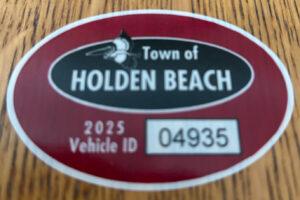 Hurricane Vehicle Decals
Property owners were provided with four (4) decals that were included in this month’s water bill. It is important that you place your decals in your vehicle or in a safe place. A $10 fee will be assessed to anyone who needs to obtain either additional or replacement decals. Decals will not be issued in the 24-hour period before an anticipated order of evacuation.
The decals are your passes to get back onto the island to check your property in the event that an emergency would necessitate restricting access to the island. Decals must be displayed in the driver side lower left-hand corner of the windshield, where they are not obstructed by any other items. Officials must be able to clearly read the decal from outside the vehicle.
Property owners without a valid decal will not be allowed on the island during restricted access. No other method of identification is accepted in an emergency situation. Click here to visit the Town website to find out more information regarding decals and emergency situations.
NC General Statute 166A-19.22
Power of municipalities and counties to enact ordinances to deal with states ofemergency.
Synopsis – The governing body may impose by declaration or enacted ordinance, prohibitions, and restrictions during a state of emergency. This includes the prohibition and restriction of movements of people in public places, including imposing a curfew; directing or compelling the voluntary or mandatory evacuation of all or part of the population, controlling ingress and egress of an emergency area, and providing for the closure of streets, roads, highways, bridges, public vehicular areas. All prohibitions and restrictions imposed by declaration or ordinance shall take effect immediately upon publication of the declaration unless the declaration sets a later time. The prohibitions and restrictions shall expire when they are terminated by the official or entity that imposed them, or when the state of emergency terminates.
Violation – Any person who violates any provisions of an ordinance or a declaration enacted or declared pursuant to this section shall be guilty of a Class 2 misdemeanor.
Hot Button Issues –
Subjects that are important to people and about which they have strong opinions

Climate
For more information » click here.
There’s something happening here
What it is ain’t exactly clear
How Climate Change Affects Hurricanes Like Erin
Global warming is changing the way storms behave.
Hurricane Erin is whipping up the Atlantic Ocean at speeds over 100 miles per hour. The trajectory of the storm has it staying out to sea, though many effects will be felt close to shore and on land. And some of those effects are made worse by global warming. Overnight on Friday, Hurricane Erin ratcheted up to a Category 5 storm, from a Category 1, becoming one of the top five most quickly intensifying hurricanes on record. As the planet warms, scientists say that rapidly intensifying hurricanes are becoming ever more likely. “It’s a very easy set of dots to connect,†said Jim Kossin, who worked at the National Oceanic and Atmospheric Administration as a hurricane specialist and climate scientist before he retired. “These rapid intensification events are linked pretty directly to that human fingerprint.†According to the National Hurricane Center, rapid intensification is an increase in a storm’s sustained wind speeds of at least 35 miles per hour in a 24-hour period. Between Friday morning and Saturday morning, Hurricane Erin’s wind speeds increased by nearly 85 miles per hour, peaking at 161 mph. Daniel Gilford, a climate scientist at Climate Central, a science communication nonprofit, likens hurricanes to the engine of a car. “They need some fuel source in order to spin, and the fuel source is the ocean surface,†he said. “So as the temperature of the ocean surface goes up, that adds more fuel that these storms can use to intensify.†For over a century, greenhouse gases emitted by human activity have trapped heat inside the planet’s atmosphere. A recent streak of record-breaking temperatures crowned 2024 as the hottest year on record. By May of 2024, super marine heat waves had turned nearly a quarter of the world’s ocean area into bath water, and this year’s Atlantic Ocean remains warmer than average. Earlier this summer, forecasters anticipated a busier than usual Atlantic hurricane season because of this lingering heat, along with other regional factors. Erin is the first named storm to become a hurricane this year. As a storm moves across warm oceans, it gathers more fuel and becomes stronger. Because warmer air can hold more moisture, hurricanes in hotter conditions can also carry more rain. According to Climate Central’s analysis of the storm, human-caused climate change made the warm water temperature around where Erin formed at least 90 times more likely. The group’s early estimate, using a statistical model developed by NOAA, also found that the extra heat could drive 50 percent greater damage, like tidal erosion and flooding, to coastal areas. Other features of storms have been exacerbated by the warming planet, too. As polar regions melt and sea levels rise, Dr. Gilford said, the rising tidal base line means that any coastal flooding from storms becomes correspondingly larger, too. During Hurricane Sandy, floods were four inches deeper than they would have been without sea level rise, according to a Climate Central paper published in the journal Nature. “That doesn’t sound like a lot, but four inches could be the difference between over topping the bottom floor of a building or not,†he said. After intensifying, Hurricane Erin grew a second larger eyewall, which is the meteorological term for the thick ring of clouds at the cyclone’s center. Hurricanes that go through an eyewall replacement cycle are larger in size but tend to have weaker wind speeds. As of Wednesday afternoon, Hurricane Erin was 530 miles wide, an expanse that would smother New England. While the storm’s strongest winds aren’t expected to reach coastlines, the powerful waves and riptides that are generated will. Faster intensification makes eyewall replacement more likely, Dr. Kossin said. “All of these behaviors are ultimately linked to the warm water that these storms are sitting on top of,†he said. “The water is warm because the planet is heating up.â€
Read more » click here
Top Scientists Find Growing Evidence That Greenhouse Gases Are, in Fact, a Danger
The assessment contradicts the Trump administration’s legal arguments for relaxing pollution rules.
The nation’s leading scientific advisory body issued a major report on Wednesday detailing the strongest evidence to date that carbon dioxide, methane and other planet-warming greenhouse gases are threatening human health. The report, published by the National Academies of Sciences, Engineering, and Medicine, is significant because it could complicate the Trump administration’s efforts to revoke a landmark scientific determination, known as the endangerment finding, that underpins the federal government’s legal authority to control the pollution that is driving climate change. The finding dates to 2009, when the Environmental Protection Agency concluded that planet-warming greenhouse gases pose a threat to public health and welfare and so should be regulated under the Clean Air Act. The Obama and Biden administrations used that determination to set strict limits on greenhouse gas emissions from cars, power plants and other industrial sources of pollution. But in July, the Trump administration proposed to rescind the endangerment finding and contended that subsequent research had “cast significant doubt†on its accuracy. The proposal is one of President Trump’s most significant steps yet to derail federal climate efforts. If the move is held up in court, future administrations would have no authority under the Clean Air Act to regulate greenhouse gas emissions from the burning of fossil fuels. The new National Academies assessment contradicts the administration’s claims. The 136-page report, assembled by a committee of two dozen scientists, concludes that the original endangerment finding was accurate and “has stood the test of time.†It says that there is now even stronger evidence that rising greenhouse gas levels can threaten public health and well-being, and that new risks have been uncovered. The report notes that multiple lines of evidence now show that human activities such as the burning of fossil fuels and deforestation are producing greenhouse gases that are heating the planet, and that climate change is exacerbating a wide variety of health risks like intense heat waves and increased wildfire smoke. Climate-driven changes in temperature and rainfall patterns have also led to negative effects on crops and less water availability in some places, among other disruptions. The National Academies of Sciences, Engineering, and Medicine is a nongovernmental body that was originally chartered in 1863 by Abraham Lincoln to advise the nation on scientific and medical questions. The influential body issues roughly 200 reports per year on a range of topics from particle physics to neurobiology, and its members are elected each year. In August, the National Academies announced that it was fast-tracking its study on the endangerment finding so that it could inform the E.P.A.’s decision-making process. Under federal law, the E.P.A. needs to solicit public comment on its proposal to revoke the finding and then must respond to all of the comments it receives. Some Republicans in Congress criticized the National Academies for racing to complete the report. Representative James Comer of Kentucky, the leading Republican on the House Oversight Committee, wrote in a recent letter to the body that the decision was “a blatant partisan act to undermine the Trump Administration†and said that some of the members overseeing the report had “shown partisan bias.†The committee that oversaw the report was led by Shirley Tilghman, an emeritus professor of molecular biology and public affairs and former president of Princeton University. While the committee was largely made up of academics, it also included a former employee of Chevron and a former executive at Cummins, a manufacturer of truck engines. “This study was undertaken with the ultimate aim of informing the E.P.A., following its call for public comments, as it considers the status of the endangerment finding,†Dr. Tilghman said in a statement. “We are hopeful that the evidence summarized here shows the strong base of scientific evidence available to inform sound decision-making.†In response to the report, Carolyn Holran, an E.P.A. spokeswoman, said, “The endangerment finding has been used by the Obama and Biden administrations to justify trillions of dollars of greenhouse gas regulations covering new motor vehicles and new motor vehicle engines. As we saw in the 16 intervening years since the endangerment finding was made, many of the extremely pessimistic predictions and assumptions E.P.A. relied upon have not materialized as expected.†She said the E.P.A. “looks forward to responding to a diverse array of perspectives on this issue,†when the public comment period ends on Sept. 22. To justify its proposal, the E.P.A. cited a variety of legal and technical arguments, saying among other things that the greenhouse gas emissions from vehicles on American roads are only a small sliver of total global greenhouse gas emissions. But the agency also tried to argue with the mainstream scientific view that climate change poses a significant risk to humanity. It cited a report that the Energy Department commissioned by a working group of five prominent researchers who dissent from the mainstream scientific view of climate change. They were handpicked by Energy Secretary Chris Wright and while their report acknowledged that the Earth is warming, it said that climate change is “less damaging economically than commonly believed.â€Â In response, a team of more than 85 scientists wrote a 439-page reply, saying that the Energy Department analysis was riddled with errors and cherry-picked data to fit the president’s political agenda. Separately, two environmental groups have filed a lawsuit in federal court charging that the formation of the Energy Department’s working group violated the Federal Advisory Committee Act and that the E.P.A. should not rely on its analysis. That case is ongoing. Mr. Wright disbanded the working group this month in the wake of the lawsuit. But the Energy Department has said it has no plans to withdraw its report. In a statement, Andrea Woods, an Energy Department spokeswoman, said that the agency had determined that the working group had achieved its purpose, “namely to catalyze broader discussion about the certainties and uncertainties of current climate science. We will continue to engage in the debate in favor of a more science-based and less ideological conversation around climate science.†Some legal experts said that the Trump administration’s attempts to argue against longstanding scientific findings on climate change could create problems in court for its deregulatory efforts. “It might have been a better strategy if they tried to sidestep the arguments about climate science altogether,†said Patrick Parenteau, an emeritus professor at the Vermont Law and Graduate School. “Instead, they’ve taken shots at climate science and that’s triggered an enormous response from scientists, and now they’re going to have to carefully respond to all of these comments,†Mr. Parenteau added. “And if they shortchange any of them, that creates a legal vulnerability. Courts are going to be very leery if the E.P.A. tries to ignore or reject the findings of the National Academies of Sciences.â€
Read more » click here

Flood Insurance Program
For more information » click here
National Flood Insurance Program: Reauthorization
Congress must periodically renew the NFIP’s statutory authority to operate. On March 14, 2025, the president signed legislation passed by Congress that extends the National Flood Insurance Program’s (NFIP’s) authorization to September 30, 2025.
Congress must now reauthorize the NFIP
by no later than 11:59 pm on September 30, 2025.

GenX
For more information » click here

Homeowners Insurance
For more information » click here
Brunswick and New Hanover ranked among NC’s most insurance-stressed counties
A new report on North Carolina’s home insurance ranks both New Hanover and Brunswick counties among the top five most at-risk counties in the state. A Raleigh-based independent insurance agency, Guardian Service, ranked both counties within the top five most at-risk counties in the state where high climate risk and insurance market stress are colliding. Guardian Service researchers analyzed around 90 North Carolina counties using data from a mix of federal, state and proprietary sources. The research team examined climate risk, insurance costs, historical trends and homeowner strain. The report estimates coastal counties such as Brunswick, New Hanover and Pender are expected to see some of the biggest increases in home insurance premiums in the next year.
Here’s how climate-related risks are expected to impact home insurance rates in the Cape Fear region.
New Hanover ranked first in climate and insurance pressures
Guardian Service ranked New Hanover County as the county with the most climate and insurance pressure in the state. In 16 of the studied counties, current average home insurance premium costs exceed $4,000. However, New Hanover County had the highest average cost of $6,631, the report states. Carteret and Dare counties follow suit with average insurance premium cost also above $6,000. According to the report, home insurance premium costs in New Hanover County by 2026 are expected to rise by more than $1,400, pushing the average annual cost of home insurance premiums around $8,000. Reasons for New Hanover County’s high climate and insurance vulnerability, per the report, include a 36% paid loss ratio and insurance claims averaging more than $17,000 each. Paid loss ratio is the percentage of premiums that insurance companies pay back to homeowners in claims, Guardian Service spokesperson Dayna Edens said.
Brunswick County home insurance premiums skyrocket
Brunswick County was the fourth most climate and insurance pressure-burdened counties in the report. The county also ranked fourth in having one of the highest insurance claim severity changes between 2018-2022. “Claim severity has grown by 33% statewide,” the report states. The report reveals that Brunswick County jumped from having a $7,800 average in home insurance claim in 2018 to nearly a $20,500 average in 2022. That’s a 162.4% increase in only five years – higher than both New Hanover and Pender counties. Edens said the average cost of a Brunswick County home insurance policy in 2025 is $4,813, based on a $350,000 dwelling coverage. “That figure is projected to rise to $5,865 in 2026, based on already-approved rate filings,” said Edens. From 2018-2022, the rate at which insurers chose not to renew policies decreased by 1.9% and the average rate of claims filed per policy also decreased by 4.9% since 2018, Edens said. Edens explained that the paid loss ratio in Brunswick County is 26%. “That number can reflect how much weather-related damage or other losses are occurring in the area,” Edens said.
Pender County could also see higher insurance rise
Pender County ranked 13th for climate and insurance pressure-burdened counties in the report. The county also ranked sixth in high claim severity changes from 2018-2022. The report shows Pender County had a 120.5% jump in insurance claim severity between 2018 and 2022. This hike was a nearly $10,000 swell over five years and was 0.3% higher than New Hanover County’s increase. Out of the three counties, New Hanover is expected to have the smallest bump in home insurance premium policy costs in the next year. Guardian Services anticipates the New Hanover County home insurance premium average to increase $999 by 2026.
Read more » click hereÂ
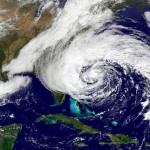
Hurricane Season
For more information » click here
Hurricane season runs from June 1 through November 30
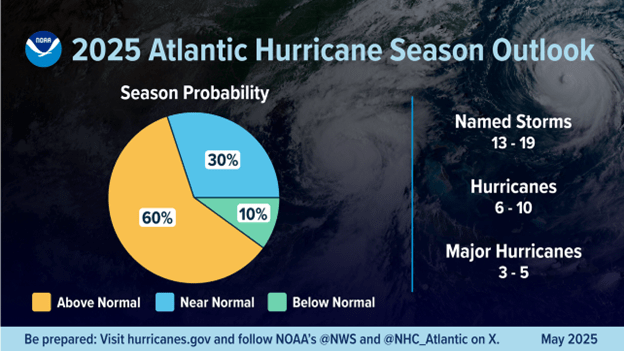
Hurricane season’s peak has arrived, but the Atlantic has gone silent
Atlantic hurricane season has hit a September speed bump. The season’s peak will pass this week with no active storms for the first time in nearly a decade. June is when the six-month-long season begins, but the true bulk of hurricane activity occurs from mid-August through September and into the first half of October. Right in the middle is September 10, the statistical high point of the season. An active tropical storm or hurricane has roamed somewhere in the Atlantic on that date in roughly three-fourths of the 76 years tracked by NOAA. The Atlantic is pitching a shut out on its official peak this year – a feat that last happened in 2016. The season’s last storm was Tropical Storm Fernand, which fizzled out far from land on August 28. The National Hurricane Center expects the Atlantic to remain quiet for at least the next week. If that happens, it would be the farthest into September the Atlantic has gone without a named storm forming since 1992, according to the National Weather Service in New Orleans. Bonnie was the first September storm that year, forming on September 18.
September’s special sauce
September is when the most real estate is open for hurricanes to form in the Atlantic thanks to a collision of weather ingredients. The most basic building block is that water temperatures reach their warmest levels after basking in summer’s heat. Right now, much of the Atlantic basin has plenty of warmer-than-average water for prospective storms to tap into. These temperatures aren’t at the record levels set in 2023 and 2024, but they’re still warmer than they should be, driven higher in a world warming due to fossil fuel pollution. Hurricane Erin took advantage of that warmth, becoming one of the fastest-strengthening Atlantic hurricanes on record when it hit Category 5 status in mid-August. However, warm water is only one piece of the puzzle, as September is showing us right now. The tropical Atlantic has been enveloped in dry, stable air so far this month, which is one of the main reasons it’s unusually quiet. Dry air can squash a storm’s ability to generate rainfall, and it’s typically less abundant at this time of year than earlier in the season. An area of stormy weather the hurricane center tracked for development between Africa and the Caribbean last week succumbed to this hostile factor. Wind shear – changes in wind speed and direction at different levels of the atmosphere – also tends to be lowest at this point. Shear can rip apart fully developed hurricanes and tropical storms, as well as systems still in formative stages, though it wasn’t a huge obstacle for last week’s failed system. September is also when areas of showers and thunderstorms from western Africa make the trek west toward the Caribbean. These seeds for development, known as tropical waves, can spin-up storms when ingredients in the atmosphere and ocean cooperate.
How the season stacks up so far and what lies ahead
This season seems to be running closer to empty at a time of year it should be firing on all cylinders: Six named storms have formed so far, which is two fewer than the average by September 9, according to 1991 to 2020 data. Most of those storms have been short-lived, with Hurricane Erin’s more than 10-day-long journey being the exception. Erin remains the only hurricane so far this season, behind the typical pace of three forming by early September. Of course, impacts matter more than any numbers and several storms this year have already had dangerous outcomes. The leftover moisture from what once was Tropical Storm Barry helped fuel the devastating July 4 Texas floods. Just two days later, Tropical Storm Chantal triggered destructive and deadly floods in a narrow strip of North Carolina. In August, Hurricane Erin brought heavy rain and strong winds to the northeast Caribbean before growing in size and churning up high surf and dangerous rip currents along the East Coast. Looking forward, just over 50% of the entire hurricane season’s activity occurs after the September 10 peak, according to one measure. And we’ve seen a number of hurricanes pack a huge punch in the back end of recent seasons. Last year, Hurricane Helene’s devastating impacts played out from Florida to Georgia, western North Carolina and eastern Tennessee in late September. That was followed by Hurricane Milton’s strike on the Florida Peninsula in early October. In late September 2022, Category 4 Hurricane Ian delivered a catastrophic storm surge to southwest Florida. Destructive winds and flooding rain also pummeled the state’s peninsula. The bottom line is there’s still a long way to go before the season ends. It’s important to stay prepared, especially for those living in hurricane-prone areas.
Read more » click here
It’s the typical peak of Atlantic hurricane season. Where are all the storms?
Subtropical ocean temperatures across the planet are at record-high levels. Here’s why that may be having a counterintuitive effect on hurricane season.
It’s Sept. 10, the typical peak of the Atlantic hurricane season. Normally, there would be a tropical storm or hurricane swirling around — or at least the threat of one forming. But the Atlantic Ocean is currently devoid of tropical depressions, storms and hurricanes — and on their website, the National Hurricane Center prominently displays a map of an empty basin that says “Tropical cyclone activity is not expected during the next 7 days.â€Â This comes after a disturbance last week, which had high odds of developing near the Caribbean islands, disintegrated after choking on dry, dusty air from the Sahara and is no longer a threat. And it’s not just the Atlantic. The tropics across the Northern Hemisphere have experienced less than 60 percent of their normal activity so far this year. That’s according to accumulated cyclone energy, or ACE, an integrated metric of tropical cyclone winds and longevity. So, what’s going on? Does it mean that hurricane season, which surged to life with Category 5 Erin last month, is fizzling out unexpectedly early? Not so fast. But there is something unusual going on. Subtropical oceans across the planet, including regions of the Atlantic, Pacific and Indian oceans, have surged to record levels of warmth, and that may be having the counterintuitive effect of contributing to fewer tropical storms. During August, subtropical oceans across the globe averaged 74.4 degrees, tying the record mark for August set just one year ago. On the other hand, tropical oceans, especially in the eastern and southern Atlantic, have cooled notably compared to last year’s record warmth — part of the reason 2024’s hurricane season was so busy. Because the subtropics have warmed significantly and the tropics have cooled, there’s less of a temperature difference, called a gradient, between the two regions. A weaker temperature gradient tends to lead to more stable, calmer atmospheric patterns in areas where storms typically form. Hurricanes play an important role in transferring heat from the tropics toward the poles. When the temperature difference between these regions decreases, that role somewhat diminishes and there may be a reduced tendency for storms to form. Also, a weather variable known as the atmospheric lapse rate — the rate at which air cools from the ground up through the atmosphere — has been weaker than normal across the Atlantic. A smaller lapse rate means rising air cools faster than its surroundings, so it can’t keep rising, making it harder for clouds and storms to form. Overall, this has meant that environmental conditions are less conducive to tropical storm development, with several meteorologists picking up on the trend. “I think what it shows is we have to look beyond just [rising] sea surface temperatures when we consider the implications of a warming climate,†said meteorologist Andy Hazelton. In a warming world, scientific research has found declining trends in the frequency of tropical storms in some ocean basins. However, storms that do form may become stronger and produce more rain. The subtropical ocean warming trend may also allow tropical storms to form or persist farther away from the tropics.
Dust from the Sahara
As seasonal winds strengthen across Africa, dust and sand from the Sahara get swept high into the atmosphere and carried thousands of miles, often across the Atlantic Ocean. When this hot, dry air mixes into the circulation of a developing tropical storm, it can stunt growth by cutting off the storm’s access to moisture. That’s what happened to a storm that had a high probability of developing last week. This season, dusty air probably influenced the behavior of a few storms, although there has been less dust than normal. Still, dust concentrations alone cannot fully explain the dearth of tropical disturbances.
Will there be a storm soon?
It’s important to remember that hurricane season is a marathon, not a sprint. Months still remain before the season ends after Nov. 30. Forecasters are closely watching a tropical cluster of clouds and thunderstorms that typically tracks around the planet every 30 to 60 days called the Madden-Julian Oscillation. It’s like an energy drink for storms, sparking conditions that are more conducive to their formation, such as rising air and towering thunderstorms, more moisture and spin in the lower levels of the atmosphere. This storm spark plug is currently located in the Pacific Ocean but is predicted to reach the Atlantic in late September into October — potentially providing some of the season’s most prime conditions for hurricane formation in a few weeks. Defense Department meteorologist Eric Webb said in a message that he thinks the period from late September through about early to mid-October is when hurricane-forming factors will intersect most comprehensively in the Atlantic, raising the risk of storms. From late September into October, fewer storms emerge from Africa as the monsoon season there begins to wane. Instead, hurricane tracks begin to favor the western part of the basin, such as the Caribbean and Gulf of Mexico, because it’s the focal point of ocean heat — which is currently above-average. In August, the National Oceanic and Atmospheric Administration issued a La Niña watch. Cool waters in the tropical Pacific Ocean — a hallmark of La Niña — can reduce the level of clouds and thunderstorms there while enhancing it over the Atlantic. This may mean that the bulk of this season’s hurricane activity may occur late and linger longer.
Read more » click here
Inlet Hazard Areas
For more information » click here
.
Lockwood Folly Inlet
For more information » click here.

Seismic Testing / Offshore Drilling
For more information » click here.

Offshore Wind Farms
For more information » click here
Things I Think I Think
 Eating out is one of the great little joys of life.
Restaurant Review:
The Dinner Club visits a new restaurant once a month. Ratings reflect the reviewer’s reaction to food, ambience and service, with price taken into consideration.
///// August 2025
Name:          Blue Drum Waterfront Restaurant                                  Cuisine:     Seafood/American
Location:Â Â Â Â 4430 Kingsport Road, Little River SC
Contact:Â Â Â Â Â 843.273.0081 / Â https://bluedrumwaterfront.com/little-river-waterfront-restaurant/
Food:Â Â Â Â Â Â Â Â Â Â Â Â Â Average / Very Good / Excellent / Exceptional
Service:Â Â Â Â Â Efficient / Proficient / Professional / Expert
Ambience:Â Â Â Drab / Plain / Distinct / Elegant
Cost: $30Â Â Â Â Â Inexpensive <=20 / Moderate <=26 / Expensive <=35 / Exorbitant <=60
Rating:Â Â Â Â Â Â Â Â Â Â Two Stars
A popular casual restaurant that has both indoor and outdoor dining options with nice views of the ICW. While the venue is nice, with live music in a spacious outdoor area, but it is a little pricey. All in all, we had a nice meal there, but it is really was nothing special. Despite the pleasant setting we found it to be just underwhelming. With many unfavorable reviews suggesting that the establishment’s popularity may be more due to its view rather than the quality of its food or service.                Â
Longtime, well-known Wilmington restaurant closing; chef opening new concept downtown
The last day of service for a James Beard-nominated restaurant in Wilmington is Sept. 20. Chef Keith Rhodes, who owns Catch restaurant with wife Angela Rhodes, announced in May that they were looking to relocate following a property sale at 6623 Market St.  At the time, they said they wanted to have a busy final summer season in Ogden before moving the restaurant. That first part came to fruition, they said. It’s taken longer to find a new home for Catch. “We just wanted to thank everyone for their support at this location,†Keith Rhodes said.  Angela Rhodes said she doesn’t consider that the restaurant is closing. “I don’t like that word,†she said. “This is not the end.† They opened catch in 2006, at first in downtown before opening in a retail center with Leisure World Casual Furniture and Wilmington Blind, Shutter & Closet Co. Those other businesses have already closed on Market Street. Preliminary plans for a Sheetz have been submitted for the property, according to the city of Wilmington. In the meantime, they continue to be booked with events with their food truck and catering. And they plan to open VOYCE, named for Keith Rhodes’ grandparents Vergie and Royce, in six weeks or so. “The downtown location has been in our back pocket for a long time,†Keith Rhodes said. He’s aiming for an upscale bistro, a cozy restaurant with 30 seats, beer and wine service, and a menu that reflects his signature style that blends seafood with Asian flavors and Southern tradition. He will also continue popular items like burgers and other favorites similar to what he serves at Catch. He said that having this eatery, close to other James Beard nominated Wilmington restaurants like Seabird and Olivero, could be an attraction for foodies. But they also might be close to announcing the next iteration of Catch. “Being a home-grown African American to open a really nice restaurant in Wilmington was a first,” Keith Rhodes said. “And we did it with integrity.” “The food scene has changed a lot. And I’ve learned a lot. We are looking ahead to the next 20 years, and I know what I want it to look like,” he said. He said ideally, he’d love to reopen Catch in a bigger space, with an outdoor seating area. The Rhodeses said they’ve looked extensively in the area from to Pender County to the Leland area of Brunswick County.  “We are a family restaurant,” Keith Rhodes said. “It’s important that we make the right decision for the family and our work family.” Keith Rhodes and Catch have been nominated for Best Chef: Southeast in the James Beard Foundation Awards twice, in 2011 and 2023. Catch was also on the inaugural USA TODAY Restaurants of the Year list in 2024. Rhodes is also well-known for participating in season nine of Bravo TV’s “Top Chef†series. In the coming days and weeks, look for more social media posts about VOYCE and a website and reservation launch for the new restaurant.
Read more » click here
Name:Â Â Â Â Â Â Â Catch
Cuisine:Â Â Â Â Â Â Â Â Â Seafood
Location:Â Â Â Â 6623 Market St., Wilmington NC
Contact:Â Â Â Â Â 910.799.3847 / https://catchwilmington.com/
Food:Â Â Â Â Â Â Â Â Â Â Â Â Â Average / Very Good / Excellent / Exceptional
Service:Â Â Â Â Â Â Efficient / Proficient / Professional / Expert
Ambience:Â Â Â Drab / Plain / Distinct / Elegant
Cost: $35Â Â Â Â Â Inexpensive <=20 / Moderate <=26 / Expensive <=35 / Exorbitant <=60
Rating:Â Â Â Â Â Â Â Â Â Â Three Stars
Located in a nondescript strip mall on the main drag away from downtown Catch prepares modern seafood cuisine and is an award-winning eatery. Celebrity chef and owner Keith Rhodes opened Catch Restaurant in 2006. He has always favored wild caught or sustainably raised seafood and continually supports local fisheries and organic farmers. They have a very limited menu, which only offers about a dozen entrée choices following the trend of menu simplification. At Catch it’s all about the food, which is amazing! If you dine out just for the food, not for anything else, Catch is one of Wilmington’s top restaurants. Despite the food being outstanding it was still overpriced. The prices are those of an upscale restaurant and they just aren’t one. Therefore, it’s hard to justify the expense. They are still on my short list of favorite restaurants.
            Cloud 9
9 Estell Lee Pl
Wilmington, North Carolina 28401
910.726.9226
Rooftop Bar
https://cloud9ilm.com/
Enjoy panoramic views from the Cloud 9 rooftop bar which overlooks picturesque downtown Wilmington. This premier open-air rooftop venue is located on the Riverwalk in downtown Wilmington on the ninth floor of the Embassy Suites. The bar is open seven (7) days a week at 4:00 PM and is currently serving almost fifty (50) different brews on tap and in cans and more than 20 wine selections. They also offer live music Thursday through Saturday evenings throughout the summer months.This is a must visit the next time you are in Wilmington.
Dining Guide – Local * Lou’s Views
Dining Guide – North * Lou’s Views
Dining Guide – South * Lou’s Views
Restaurant Reviews – North * Lou’s Views
Restaurant Reviews – South * Lou’s Views
Book Review:
Read several books from The New York Times best sellers fiction list monthly
Selection represents this month’s pick of the litter

THE WOMEN by Kristin Hannah
A historical novel that follows Frances “Frankie” McGrath, a nursing student who enlists in the Army Nurse Corps and serves in Vietnam. Frankie faces the brutality of war and the emotional toll it takes, both during her service and upon returning home to a politically divided America. The story highlights the underappreciated courage, resilience, and sacrifices of female veterans who served in Vietnam.
 The Storyteller’s Secret by Sejal Badani
The Storyteller’s Secret follows Jaya, a New York journalist struggling with personal loss, including multiple miscarriages. To cope, she embarks on a journey to India to uncover her family’s hidden history. Along the way, she meets Ravi, her grandmother’s former servant, who shares the story of Amisha, a woman who faced societal restrictions and found love with a British soldier, Stephen. The narrative explores themes of forgiveness, resilience, and the power of storytelling as Jaya learns about her grandmother’s life and the impact of her own experiences on her family’s past. Ultimately, Jaya discovers a profound connection to her heritage and the strength to overcome her grief.Â
A blast from the past
That’s it for this newsletter
See you next month
Lou’s Views . HBPOIN
-
-
-
-
-
-
-
-
-
- Gather and disseminate information
- Identify the issues and determine how they affect you
- Act as a watchdog
- Grass roots monthly newsletter since 2008
-
-
-
-
-
-
-
-