
Lou’s Views
News & Views / October Edition
Calendar of Events –

N.C. Festival by the Sea
October 25th & 26th
Holden Beach
Hosted by the Holden Beach Merchants Association this annual two-day festival which started in the 1980’s occurs on the last full weekend in October. The festival is kicked off with a parade down the Holden Beach causeway. There is a fishing tournament, horseshoe tournament, and a sandcastle building contest. Vendors provide food, arts and crafts, amusement rides and other activities. There is live musical entertainment both days at the Holden Beach’s Pavilion.
For more information » click here
 Discover a wide range of things to do in the Brunswick Islands for an experience that goes beyond the beach.
For more information » click here.
Calendar of Events Island
 Monster Mash Trunk-or-Treat
The Town of Holden Beach will hold a trunk-or-treat on Friday, October 31st from 5:30-7:00 p.m. at Bridgeview Park. Residents, property owners, and businesses may register by October 11th to decorate your trunk and pass out candy.Trunks must be ready by 5:00 p.m. No political activity may be represented at the booth displays. There will be a prize for best decorated trunk and a costume contest held at 6:00 p.m. Categories include 3 and under, 4-7, 8-11, 12-15 and adult. Register by emailing Christy at christy.ferguson@hbtownhall.com. Those planning to attend the event may also email so that there is a headcount for candy purposes. In the email, please indicate whether you will be setting up a truck or trick-or-treating.

 SBI Three Bridge Tour
The South Brunswick Islands Rotary Clubs SBI Three Bridge Tour is set to take place on Saturday, November 8th, in Ocean Isle Beach, North Carolina. This event offers a unique opportunity for cyclists to ride across the three bridges of Sunset Beach, Ocean Isle Beach, and Holden Beach. Participants can choose from various ride options, including family-friendly routes and more challenging distances, ensuring a memorable experience for everyone. The tour supports local and international Rotary projects, enriching the lives of children and youth in Brunswick County. Proceeds from the event will be used to fund these projects, providing experiences and learning opportunities that will benefit the community.
 Veterans Appreciation Luncheon
The Town of Holden Beach will hold its Veterans Appreciation Luncheon on Monday, November 10th. The event will be held at 11:30 a.m. in the Town Hall Board Room. Please RSVP by emailing Christy at christy.ferguson@hbtownhall.com prior to Friday, November 1st with your name and the name of your guest.

Volunteer Appreciation Luncheon
The Town of Holden Beach will hold its annual Volunteer Appreciation Luncheon on Friday, November 14th at noon.Town board and committee members are invited to attend and bring a guest. Please RSVP by emailing Christy at christy.ferguson@hbtownhall.com with your name and the total number in your party.
 Turkey Trot
The Town of Holden Beach will hold its annual Turkey Trot on Thanksgiving morning Thursday, November 27th at 8:00 a.m. All individuals interested in participating should email Christy at christy.ferguson@hbtownhall.com to register. Please bring a canned food item to donate to the local food pantry.
 Tree Lighting
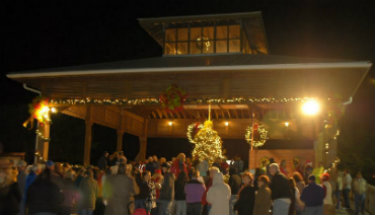
The Town of Holden Beach will hold its annual tree lighting ceremony on Thursday, December 4th at 6:00 p.m. with entertainment beginning at 5:30 p.m.
Parks & Recreation / Programs & Events
For more information » click here
Reminders
Pets on the Beach Strand
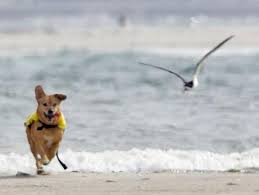
Pets – Chapter 90 / Animals / 90.20
Effective September 10th
-
-
- Pets allowed back on the beach strand during the hours of 9:00am through 5:00pm
- Dog’s need to be on a leash
- Owner’s need to clean up after their animals
-
Bird Nesting Area
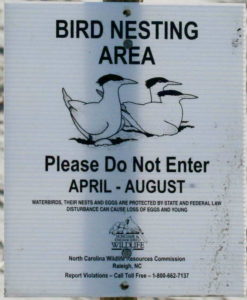
NC Wildlife Commission has posted signs that say – Bird Nesting Area
The signs are posted on the west end beach strand around 1335 OBW.
People and dogs are supposed to stay out of the area from April through November
. 1) It’s a Plover nesting area
. 2) Allows migrating birds a place to land and rest without being disturbed
 News from Town of Holden Beach
The town sends out emails of events, news, agendas, notifications, and emergency information. If you would like to be added to their mailing list, please go to their web site to complete your subscription to the Holden Beach E-Newsletter.
For more information » click here
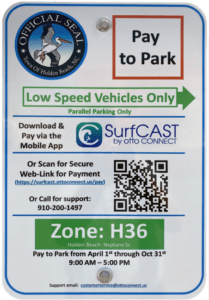 Paid Parking
Paid parking in Holden Beach
Paid parking will be enforced from 9:00 a.m. to 5:00 p.m. daily with free parking before and after that time. All parking will use license plates for verification.
Rates
Parking rates for a single vehicle in all designated areas will be:
$5 per hour for up to four hours
$20 per day for any duration greater than four hours
$80 per week for seven consecutive days
Handicap Parking
A vehicle displaying a handicap license plate and/or hang tag parked in a designated handicap space is free. Any other parking space will require a parking permit via the app.
Annual Passes
Annual permits for the calendar year allow vehicles (this includes low-speed vehicles and trailers) access to designated parking.
$175 for a single vehicle
Passes can be purchased via the app, website or by telephone.
Where to Park
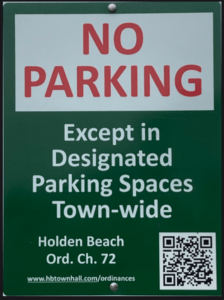
Per ordinance, there is no parking on the streets or rights-of-way except in designated parking spaces identified by Pay-to-Park signs. Click here to view an interactive map. The table with authorized parking can be viewed below.
Citations will be issued for:
-
-
- Parking without an active paid permit in a designated parking area
- Parking within 40 feet of a street intersection
- Parking in a crosswalk, sidewalk, or pedestrian access ways
- Parking blocking a driveway or mailbox
- Parking facing opposing traffic
- Parking in a no parking zone, or within right-of-way
- Parking on any portion of the roadway or travel lane
- Parking a non-LSV vehicle in an authorized LSV location
-
How Do I Pay to Park
The Town uses the SurfCAST by Otto Connect Mobile Solution. This is a mobile app downloadable for Apple and Android devices. Download the app today. Users will setup their account, enter their license plate details and pay for parking directly on the app. Alternatively, users can scan the QR Code located on the parking signs to access a secure website.
The Otto Connect customer service team will be available to help via phone and email.

Solid Waste Pickup Schedule
GFL Environmental change in service, October through May trash pickup will be once a week.
Please note:
Trash carts must be at the street by 6:00 a.m. on the pickup day
BAG the trash before putting it in the cart
Carts will be rolled back to the front of the house
GFL Refuse Collection Policy
GFL has recently notified all Brunswick County residents that they will no longer accept extra bags of refuse outside of the collection cart. This is not a new policy but is stricter enforcement of an existing policy. While in the past GFL drivers would at times make exceptions and take additional bags of refuse, the tremendous growth in housing within Brunswick County makes this practice cost prohibitive and causes drivers to fall behind schedule.
Solid Waste Pickup Schedule
starting October once a week
Recycling
starting October every other week pick-up
 Yard Waste Service
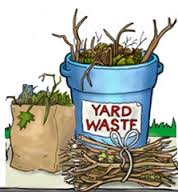
Yard debris is collected on the second (2nd) and fourth (4th) Fridays during the months of October, November, and December.Yard debris needs to be secured in a biodegradable bag (not plastic) or bundled in a maximum length not to exceed five (5) feet and fifty (50) pounds in weight. Each residence is allowed a total of ten (10) items, which can include a combination of bundles of brush and limbs meeting the required length and weight and/ or biodegradable bags. Picks-ups are not provided for vacant lots or construction sites.
Curbside Recycling – 2025
GFL Environmental is now offering curbside recycling for Town properties that desire to participate in the service. The service cost per cart is $119.35 annually paid in advance to the Town of Holden Beach. The service consists of a ninety-six (96) gallon cart that is emptied every other week during the months of October – May and weekly during the months of June – September.
Curbside Recycling Application » click here
Curbside Recycling Calendar » click here

Trash Can Requirements – Rental Properties
GFL Environmental – trash can requirements
Ordinance 07-13, Section 50.08
Rental properties have specific number of trashcans based on number of bedrooms.
* One extra trash can per every 2 bedrooms
..
§ 50.08 RENTAL HOMES.
(A) Rental homes, as defined in Chapter 157, that are rented as part of the summer rental season, are subject to high numbers of guests, resulting in abnormally large volumes of trash. This type of occupancy use presents a significantly higher impact than homes not used for summer rentals. In interest of public health and sanitation and environmental concerns, all rental home shall have a minimum of one trash can per two bedrooms. Homes with an odd number of bedrooms shall round up (for examples one to two bedrooms – one trash can; three to four bedrooms – two trash cans; five – six bedrooms – three trash cans, and the like).
Upon Further Review

A Second Helping
They just completed the twenty-first year of the program. For the last fifteen (15) weeks they have collected food on Saturday mornings in front of Beach Mart; the food is distributed to the needy in Brunswick County. During this summer season, they collected 10,057 pounds of food and $1,360 in monetary donations. Their food collections have now exceeded three hundred and seventeen thousand (317,000) pounds of food since this program began in June of 2005. Hunger exists everywhere in this country. Thanks to the Holden Beach vacationers for donating again this year! Cash donations are gratefully accepted. One hundred percent (100%) of these cash donations are used to buy more food. You can be assured that the money will be very well spent.
Mail Donations to:
A Second Helping
% Sharon United Methodist Church
2030 Holden Beach Road
Supply, NC 28462
 ReadyBrunswick Emergency Notifications Alerts
Brunswick County uses ReadyBrunswick as part of the County’s effort to continuously improve communications during emergency situations within our area. Powered by Everbridge, the ReadyBrunswick notification system sends emergency notifications in a variety of communication methods such as:
-
-
-
- Landline (Voice)
- VoIP (Voice over Internet Protocol)
- Mobile (Voice)
- Mobile SMS (Text Messaging)
-
-
In the case of an emergency, you may choose to receive notifications via one or all of these communication methods. It’s recommended that you register several media options to receive messages in the event a particular communication device is unavailable.
For more information » click here
Corrections & Amplifications
 OIB Terminal Groin
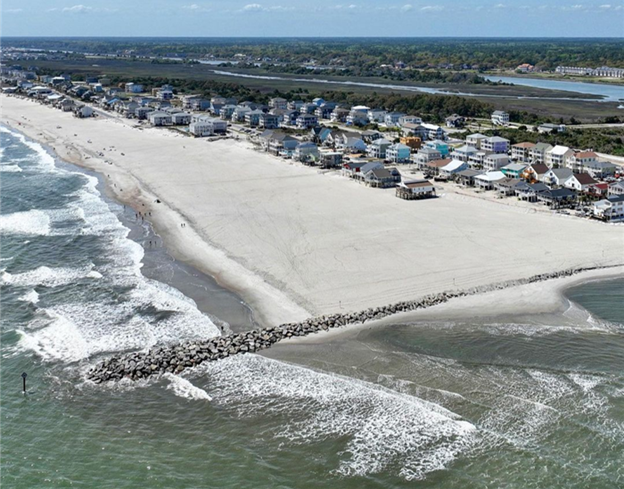
Ocean Isle Beach completed construction of a terminal groin on its east end in April 2022 to help protect the beach immediately behind it. However, this structure has contributed to significant erosion at the east end near Shallotte Inlet by interrupting natural longshore drift, prompting ongoing efforts such as sandbag use to prevent ocean encroachment on properties in that area.

View of OIB east of the terminal groin after Hurricane Erin passed offshore
2024 OIB SHORELINE AND INLET ANNUAL MONITORING REPORT
On Holden Beach, the recent volume change rates (May 2024 to November 2024) along the oceanfront shoreline indicated erosion at 12 of the 21 monitoring stations. Similarly, the MHW shoreline change rates indicated a shoreline retreat at 15 of the 21 monitoring stations. The long-term post-construction linear shoreline changes along the Holden Beach oceanfront shoreline indicated landward retreat. However, volumetric changes indicated slight accretion (0.2 cy/ft./yr.) within this area over the long-term period. The shoreline threshold analysis results along the Holden Beach oceanfront shoreline show that the post-construction shoreline change threshold was exceeded at only one monitoring station. This is the first time a threshold has been exceeded at Holden Beach since this annual analysis started in 2022. In addition, the analysis of May 2024 aerial imagery-derived wet/dry line revealed an 885 ft. section of Holden Beachs inlet shoreline that exceeded the inlet shoreline threshold by a maximum distance of 100 feet. The inlet shoreline threshold on Holden Beach was also exceeded in Year-2. This marks two straight years where this threshold was exceeded. The inlet shoreline recession is believed to likely be attributed to a combination of morphological changes within Shallotte Inlet including the position and orientation of the main channel through Shallotte Inlet and the formation of a flood channel on the inlet shoulder of Holden Beach. Regardless, as stated in the Plan, because the shoreline changes in this area exceeded the threshold over the entire 2-year confirmation period, an assessment of the proper responsive measures will be made through coordination with State and Federal regulatory officials.
 Sand is vanishing on east side of Ocean Isle’s $11M erosion fix
When the Army Corps of Engineers issued its final decision on the terminal groin project here more than eight years ago, the document conveyed a prescient warning. A terminal groin “may increase erosion along the easternmost point of Ocean Isle Beach, down-drift of the structure.†Today, the shoreline east of terminal groin is being gnawed away, vanishing beach in front of a neighborhood of grand, multimillion-dollar homes built shortly after the $11 million erosion-control structure was completed in spring 2022. A wall of sandbags fends off waves from reaching some of the waterfront homes on the ocean side of the gated community thats advertised as “luxurious coastal living.†Several lots remain vacant because the properties no longer have enough beachfront necessary to meet the state’s ocean setback requirements. “I would have never developed the property if I had known this was going to happen,†said Doc Dunlap, a developer with Pointe OIB, LLC. “It’s just devastating to tell you the truth. I even had plans myself to build there, have a summer home.†The caveat written in the federal record of decision all those years ago, one that was a central argument in a lawsuit to try and stop the terminal groin from being built, was not explicitly pointed out to the developers of The Pointe, they say. In an email responding to Coastal Review’s questions, the Division of Coastal Management said it, “is not aware of any specific notification to those property owners other than the standard (area of environmental concern) hazard notice.†“We were just under the impression that all of this was going to be extremely positive and help protect this part of the beach,†said Jimmy Bell, who contributed to the planning and implementation of the community. “And then, once we started experiencing this massive erosion, I started researching groins more. We had engineers and other people that were helping, and we were informed and under the impression that it was going to all be good, and now it’s turning out to not be quite as good.†Ocean Isle Beach Mayor Debbie Smith pushed back on those claims. “My heart breaks for them, but the developers knew that that groin was going in,†she said. “They knew it was not designed to protect that area. It was not designed to harm it, but they also know that adjacent 2,000 feet west of them was a line of sandbags and most of them had been there for years.†The developers are now seeking legal representation as they continue to try to figure out how to protect the oceanfront properties within the 44-lot neighborhood. “Mr. Dunlap is extremely disappointed in the decisions made that resulted in the placement and construction of the terminal groin and the erosion damages it has caused,†John Hilton III, corporate counsel to Pointe OIB, stated in an email. “He is committed to holding those who made these decisions legally accountable and also seeking a remedy to correct the ongoing erosion. We are working to obtain local legal counsel to explore and pursue all available options.
Erosion-battered shore
The east end of the island at Shallotte Inlet historically accreted and eroded naturally as the inlet wagged back and forth between Ocean Isle Beach and Holden Beach up until Hurricane Hazel hit in 1954. When the powerful hurricane – likely a Category 4 storm using the Saffir-Simpson scale developed in 1971 – made landfall in October 1954 near the South Carolina border, it caused the inlet channel to move in a more easterly direction, accelerating erosion at the east end of the barrier island. Erosion has remained persistent in that area since the 1970s, according to N.C. Division of Coastal Management records. The worst of the erosion occurred along about a mile of oceanfront shore beginning near the inlet. An encroaching ocean claimed homes, damaged and destroyed public utilities, and prompted the N.C. Department of Transportation to abandon state-maintained streets. In 2005, the town was permitted to install at the east a wall of sandbags to barricade private properties and infrastructure from ocean waves. Sandbags revetments are, under state rules, to be used as a temporary measure to hold erosion at bay. In 2011, the North Carolina General Assembly repealed a decades-old state law that prohibited permanent, hardened erosion-control structures from being built on North Carolina beaches. Under the revised law, a handful of beach communities, including Ocean Isle Beach, get the option to pursue installing a terminal groin at an inlet area. Terminal groins are wall-like structures built perpendicular to the shore at inlets to contain sand in areas of high erosion like the east end of Ocean Isle Beach. These structures are controversial because they capture sand that travels down the beach near shore, depleting the sand supply to the beach immediately downdrift of the structure, stripping land that is natural habitat for, among others, sea turtles and shorebirds. Ocean Isle Beach Sea Turtle Protection Organization Island Coordinator Deb Allen said that beach conditions east of the terminal groin have hindered turtles from nesting there this season. Escarpment, sandbags and debris that Allen believes is coming from the development have impeded turtles from accessing the sandy areas they seek to lay their eggs. As of early September, the organization had recorded four false crawls, which is when a female turtle crawls onto a beach only to return to the ocean without laying eggs, and three nests east of the terminal groin, Allen said. The potential for that type of impact to wildlife was argued in a lawsuit the Southern Environmental Law Center filed on behalf of the National Audubon Society in August 2017 challenging the Corps’ approval of Ocean Isle Beach’s project. The lawsuit claimed that the Corps failed to objectively evaluate alternatives to the terminal groin, including those that would be less costly to Ocean Isle residents and less destructive to the coast, particularly to what was then the undeveloped area on the island’s east end. The lawsuit, which later included the town, came to an end in March 2021 after a panel of appellate court judges affirmed a lower court’s decision that the Corps fairly considered the alternatives included in an environmental impact statement, or EIS, examining the proposed project. “As we went through and talked about the impacts of terminal groins in the EIS, this was the central argument – will the land east of the groin erode at a more rapid pace? And, everything we could point to, all of the science, said yes,†said Geoff Gisler, program director of SELC’s Chapel Hill office. “There’s only so much sand and the way that these structures operate is they keep more of it in one place and necessarily take it from somewhere else. That’s why we have seen over and over again that when you build a groin towards the end of an island, what happens is the island erodes at the end. That there is less sand going to the east end is not an accident.â€
Righting this wrong
Gisler said the SELC will be following how the town and the Corps respond to the erosion that is occurring east of the terminal groin. “The town committed and the Corps committed to righting this wrong if it occurred and that’s what we’ll be looking at,†he said. Under conditions in the town’s federal permit, the town is required to monitor the sand spit east of The Pointe as well as the town’s shoreline and that of neighboring Holden Beach to the west. Should those shorelines erode past boundaries identified in 1999, “consideration will be given to modifying the structure to allow more sediment to move from west to east past the structure,†according to final EIS. The town also has the option to nourish an eroded shoreline. “In the event the negative impacts of the terminal groin cannot be mitigated with beach nourishment or possible modifications to the design of the terminal groin, the terminal groin would be removed,†the EIS states. The Corps and the Division of Coastal Management are reviewing the monitoring report submitted by the engineering firm hired by the town, Coastal Protection Engineering of North Carolina. That report indicates that erosion “has exceeded the 1999 shoreline threshold for the area immediately east of the groin.†“However, the applicant is working on a modification request to alter this threshold as the shoreline had eroded landward of part of that threshold prior to construction of the groin,†according to the division. A beach maintenance project scheduled for fall 2026 to inject sand west of the terminal groin is anticipated to increase the rate of sand that bypasses the terminal groin and “would serve to ‘feed’ the shoreline immediately east of the groin with additional material,†according to the town’s engineer. But The Pointe’s developers and property owners say they can’t wait another year. “There’s got to be an exception to the standard application restrictions (i.e., sandbag placement and height) the (Coastal Area Management Act/Coastal Resources Commission) process has today to protect near term east of the groin due to emergency status and a path longer term that can get us to a point of evaluating what we can do for the groin from a redesign standpoint that would protect all both west and east of the groin,†property owner Brendan Flynn said. “What we’re dealing with now in my view is we need to have another review of what could be done to enhance the groin’s performance to benefit and protect the other part of this island.†Smith said that the terminal groin is doing what it was designed to do. “It is building up right adjacent to the groin,†she said. “It just has not built anything far enough down to protect this new development. I wish Mother Nature would reserve herself and build it up right now instead of taking it away. I wish I had some magic bullet for them too, but I don’t today. It’s really up to them to take some action.†Kerri Allen, director of the North Carolina Coastal Federation’s southeast office in Wrightsville Beach, called the situation “heartbreaking,†but not surprising. The Coastal Federation publishes Coastal Review. “When you alter the natural movement of sand with a hardened structure like the terminal groin, you might protect one stretch of beach, but you inevitably put other areas at greater risk,†she said. “And, unfortunately, the erosion we’re seeing east of the groin is exactly what experts warn could happen. That being said, the purpose of this groin was to protect existing infrastructure that was already at risk. Instead, new homes were built in an area that’s incredibly vulnerable and these homeowners are now facing devastating losses. Moving forward, we need to focus on solutions that don’t just shift the problem from one place to another and ensure that public resources aren’t used to subsidize these risky, short-term development decisions.†“I think this is a pivotal moment for Ocean Isle and for other coastal towns,†she continued. “We have an opportunity to step back, look at the science, and commit to managing our coast in a way that protects both our communities and the natural systems that sustain them. That means resisting the temptation to build our way out of these challenges because, ultimately, the ocean always wins.
Read more » click here


 Previously reported – August 2018
Recognition of 2018 Pelican Award from the North Carolina Coastal Federation to the Town of Holden Beach Board of Commissioners for Outstanding Leadership and Dedication to Keep Our Coast Accessible and Public – Commissioner Butler and Commissioner Freer

 Town of Holden Beach, Dunescape Property Owners’ Association and the Holden Beach Property Owners Association For Outstanding Leadership and Dedication to Keep Our Coast Accessible and Public

Flanked by the beautiful Lockwoods Folly Inlet, the eastern end of Holden Beach was threatened to be forever changed by an unnecessary and expensive engineered structure. But on April 17, 2018, the Holden Beach Board of Commissioners unanimously voted to permanently revoke the town’s permit application for a terminal groin with the U.S. Army Corps of Engineers. This historic move would not have been possible without the diligent evaluation of potential impacts by dedicated residents of the Dunescape Property Owners’ Association and the Holden Beach Property Owners Association — Rhonda and Tom Dixon, Tom and Vicki Myers, Jay and Denise Holden, John and Margaret Witten, Rich Weigand, Lou Cutajar and Skip Klapheke. These and other Holden Beach residents tirelessly fought to bring to light the detrimental effects the terminal groin — a rock, concrete, stone or metal structure built at an inlet, perpendicular to the coast — would have had on the island’s natural habitat and shoreline. Their forethought and action also positioned the town to save a lot of money for a project that likely would not work. The residents of Holden Beach persevered in their opposition and are true pioneers in showing how to exercise sound coastal management decision- making and recognizing that expensive hardened structures along our beaches are not the answer to erosion.
Holden Beach, associations honored with Pelican Award
Six years ago, Holden Beach considered constructing a terminal groin. Town officials received input from Holden Beach Property Owners Association and the Dunescape Property Association to teach residents about the process and possible outcomes before commissioners ultimately voted not to pursue the project. On July 28, the North Carolina Coastal Federation honored the town and the two associations with its Pelican Award for “outstanding leadership and dedication to keep the North Carolina coast accessible and public.
Read more » click here
A Look Back: Holden Beachs (Un)Done Deal
A terminal groin at the east end of Holden Beach was a given.
Read more » click here
Terminal Groin Committee Report
 At the time that the Board was considering a terminal groin at the east end of the island there was quite the brouhaha. After considerable research and meetings, it appears that their decision not to build a terminal groin at an initial cost of thirty (30) million dollars was the right decision. US Army Corps of Engineers (USACE) warned us about the very issue that Ocean Island is currently experiencing.  I would be remiss not to recognize those Commissioners that prevented this situation from happening to us on Holden Beach. My thanks to the elected Commissioners then: Joseph Butler, John Fletcher, Peter Freer, Patty Kwiatkowski, and Mike Sullivan.
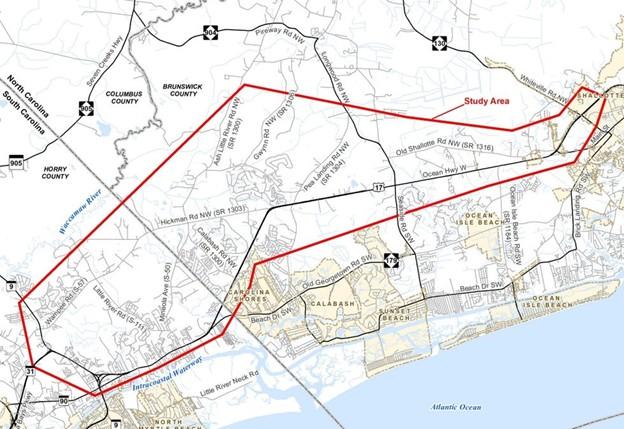 Carolina Bays Parkway project S.C. 31
OCEAN RIDGE MASTER ASSOCIATION COMMUNITY IMPACT COMMITTEE
The North Carolina Department of Transportation (NCDOT) is implementing several initiatives to relocate the Carolina Bays Parkway Extension to Brunswick County. Following extensive planning and anticipation, a recent environmental assessment has identified a suitable location for the significant highway project and initiated a public comment period. The NCDOT and the South Carolina Department of Transportation (SCDOT) are collaborating to extend South Carolina Highway 31 (SC 31), commonly referred to as the Carolina Bays Parkway, from South Carolina Highway 9 (SC 9) in Horry County to U.S. Route 17 (US 17) in Brunswick County. Should the project secure funding and proceed with construction, it will result in a newly constructed multi-lane full-access freeway that will connect the Carolinas. The route will be constructed in phases, potentially enhancing evacuation routes as Brunswick County experiences population growth. The Carolina Bays Parkway Extension project commenced in 2006 with a feasibility study that evaluated conceptual alternative routes. The construction of the road would have a significant impact on areas situated on either side of U.S. 17 in southern Brunswick County. The North Carolina Department of Transportation (NCDOT) had prepared seven alternative maps for preferred routes in Brunswick County, which ultimately converge onto U.S. 17. However, five alternatives have been eliminated, and the options have been reduced to Routes 4 and 4a. Attached are the maps for each route. The North Carolina Department of Transportation (NCDOT) website, updated on August 22, indicates that the $797 million project is currently in development with an anticipated commencement date of 2028. North Carolina’s portion of the project is projected to incur a cost of $610.9 million. South Carolina has secured the necessary funding and intends to initiate the process to connect Carolina Bays 31 from Route 9 to the state line at Hickman Road.  Currently, North Carolina has secured funding for only the planning document, but not for the right-of-way or construction phases. Public hearings for the North Carolina side of the extension have been postponed on several occasions as the NCDOT awaited the availability of the draft environmental impact statement. However, the draft environmental impact statement is now available, and public hearings have been scheduled. The proposed project will involve two pre-hearing open houses and corridor public hearings. During these events, information will be presented, and NCDOT representatives will be available to address inquiries. The first public hearing will be from 5-8 p.m. on Sept. 29 at the Sea Trail Convention Center in Sunset Beach. The second hearing will be 5-8 p.m. on Sept. 30 at the North Strand Recreation Center in Longs, South Carolina. Alternative map 4 is identified in the Draft Environmental Impact Statement as the preferred alternative. Alternative map 4 crosses through Hickman’s Crossroads and the Longwood area and continuing out to connect to Route 17 at the intersection of Route 904 and Route 17. Following the public hearing, the merger team will meet to select the preferred/ least environmentally damaging practicable alternative corridor, also called LEDPA, in accordance with the National Environmental Policy Act/ Section 404 Merger Process. This includes consideration of public comments and the local sponsors’ preferred alternative, potential impacts to noise, low income and disadvantaged populations, cultural resources and the environment are considered when selecting the least environmentally damaging and practicable alternative route. According to the merger process, the preferred/LEDPA corridor is the best solution to the problem satisfying the transportation need and considering environmental and community resources.
Landing spot identified for new highway connecting Brunswick County to SC
The North Carolina Department of Transportation is taking several steps toward moving the Carolina Bays Parkway Extension into Brunswick County. After years of planning and hoping, a recent environment statement has identified a landing spot for the major highway project and kickstarted a public comment period. The NCDOT and the South Carolina Department of Transportation are working together to extend S.C. 31, known as Carolina Bays Parkway, from S.C. 9 in Horry County, South Carolina, to U.S. 17 in Brunswick County. If funded and constructed, the proposed project will result in a new multi-lane full access freeway connecting the Carolinas. The route will be built in phases and could enhance evacuation routes as Brunswick County continues to grow in population.
Carolina Bays Parkway Extension project history
The Carolina Bays Parkway Extension project began in 2006 with a feasibility study with conceptual alternative routes. The road, if constructed, could impact places on each side of U.S. 17 in southern Brunswick County. NCDOT has seven alternative maps for preferred routes in Brunswick County that will eventually dump onto U.S. 17. However, five alternatives cross on the northern side of U.S. 17 around Hickman Crossroads along Hickman Road in Calabash. Interactive maps of the alternatives can be viewed on NCDOT’s website. “The primary purpose of the project is to improve transportation in the area by enhancing mobility and connectivity for traffic moving in and through the project area,” per NCDOT website.
New movement on the nearly $800 million project
The NCDOT website, updated Aug. 22, states the $797 million project is in development with an anticipated start date of 2028. The project is also part of NCDOT and SCDOT’s state transportation improvement program. North Carolina’s portion is expected to cost ​$610.9 million, per the website. “In North Carolina, this project is currently funded for the planning document, but not for right-of-way or construction,” Jenkins said.
Read more » click here
Previously reported- June 2025
To fast-track highway extension into Brunswick, leaders push for toll study
A toll could be the only way to fund a new highway connecting North and South Carolina. After years of waiting, one local transportation organization is pressing the gas on a new highway in Brunswick County as the clock continues to tick by without funding.
Here’s what to know.
A new highway?
The N.C. Department of Transportation and the S.C. Department of Transportation are working together to extend S.C. 31, known as Carolina Bays Parkway, from S.C. 9 in Horry County, South Carolina, to U.S. 17 in Brunswick County. The Carolina Bays Parkway Extension project began in 2006 with a feasibility study with conceptual alternative routes and has evolved into seven potential​routes being studied. Interactive maps of the alternatives can be viewed on NCDOT’s website.
Funding troubles for North Carolina
The NCDOT’s website, last updated in October 2024, has the total project cost estimated at $552 million with North Carolina’s portion costing $367 million. However, the Federal Infrastructure Projects Permitting Dashboard lists the estimated project cost at $797 million.
Read more » click here
Previously reported – February 2025
Boom or doom: How a new highway could transform rural Brunswick County
A new road in southern Brunswick County will open the flood gates of opportunity for some but could close the
Read more » click here
Odds & Ends –
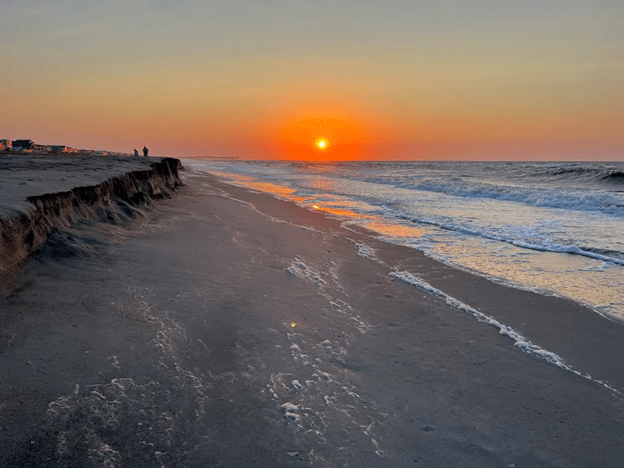
After getting pounded by storms and offshore hurricanes, what will wounded NC beaches do?
Recent storms and hurricanes passing the N.C. coast have pounded area beaches with heavy surf, causing significant erosion and raising concerns.
On Topsail Island, chunks of sand that had been pumped onto the beaches in Surf City and Topsail Beach in the past year have washed away. In Wrightsville Beach, the pounding waves from the slow-moving early October subtropical storm left large escarpments along much of the New Hanover County town’s beach and residents worried if the town’s beach would survive until a scheduled federal nourishment project in 2027. Down in Ocean Isle Beach in Brunswick County, the recent storm and heavy surf from several tropical systems that have passed by the East Coast while staying offshore have amplified an existing erosion problem on the barrier island’s east end and raised questions about the effectiveness of a terminal groin built three years ago to stabilize the beach. But nowhere along the N.C. coast has this hurricane season’s damage been worse than on the Outer Banks, where nine homes in Buxton collapsed into the Atlantic over a two-week span in late September and early October and left highway crews struggling to keep N.C. 12, the islands’ lifeline, open on Hatteras and Ocracoke islands. The damage, albeit highly localized to beachfront areas, shows that it doesn’t necessarily take a landfalling hurricane to make it a bad hurricane season for coastal communities. But experts say it also highlights that how we live, develop and try to protect our coast is increasingly becoming untenable, especially as costs for beach nourishment projects continue to rise and climate change promises to fuel higher seas and stronger storms in the coming years. “The trajectory we’re on is unsustainableâ€, said Dr. Robert Young, director of the Program for the Study of Developed Shorelines at Western Carolina University.
Why are the beaches so beaten?
When a large subtropical storm started forming in the Caribbean, officials knew it could be a problem for the East Coast − especially since many coastal areas had already been pounded this summer by strong swells from several hurricanes that had passed by offshore. But this storm was different, from its path close to the coast to its big footprint. “This storm was a real beach-eater from Florida to Long Island (N.Y.),” Young said. The unnamed storm has left beach officials wondering what measures they can take to protect some of the most valuable real estate in their coastal communities, never mind also having an attractive asset to draw visitors back to fuel their tourist-dependent economies. But Young said damaged and, in some cases, completely eroded beaches along 1,000 miles of U.S. coastline won’t be an easy problem to fix. There are logistical issues, including a very small pool of U.S. contractors to actually do nourishment projects. Then there are the financial questions, especially in this political environment, if spending money to pump sand that might quickly wash away is the best use of taxpayer dollars. And then there’s the practical question. “We need to allow ourselves to consider slightly changing the map of our coastal communities and concentrate our money and sand on areas that can be saved,” Young said. He said this is especially true in communities where local taxpayers, sometimes with the state’s help, fund their own nourishment projects instead of having the federal government pick up most of the beach-building costs, as is the case in New Hanover County’s three beach towns. Already, officials in North Topsail Beach and in Dare County on the Outer Banks have said they don’t have the funds to nourish parts of their beachfront. And in Surf City, residents are in an uproar over a 30% increase in property taxes this year that town officials say is partly needed to help pay for beach nourishment. While surrendering erosion-prone areas of North Topsail Beach and the Outer Banks, for example, to Mother Nature might not be popular, managed retreat is really the only option if we want to save other parts of our coastal communities where it is feasible to try and protect property and vital infrastructure, Young said. “It’s already a burden for many of these small towns and the economics for continuing to do it are becoming more and more sketchy,” he said of the rising costs of beach nourishment and other erosion-control projects.
What’s going to happen?
While putting a Band-Aid on wounded beaches isn’t a long-term solution, it’s something coastal officials might have to look at in the coming weeks and months. Actions could include trucking in fresh sand; knocking down escarpments to makes beaches safer for visitors and to allow wave energy to be dissipated to some degree; and fast-tracking small beach-building projects, such as dredging sand from easily accessible inlets or other coastal waterways. Federal and state officials also could see about securing funding to help finance projects, although the current government shutdown could stymie that. But big-scale nourishment projects, the favored way of dealing with beach erosion woes, take time to plan, design and finance. Young said another option that could help coastal communities recover is to wave a century-old federal law, the 1906 Foreign Dredge Act, that limits dredging to U.S. companies. Opening beach nourishment work to foreign companies, primarily European, could help increase competition, lower prices and allow more work to be done within the sometimes restrictive environmental windows designed to protect nesting sea turtles and shorebirds. The rising cost of beach nourishment work has already been felt in the Wilmington area, with the federal project to nourish Carolina and Kure beaches delayed a year until this winter after the initial bids came in well over budget. Another option is to hope that the upcoming nor’easter season is a mild one and that a lot of the sand that has washed away is just offshore and will eventually be pushed back onshore over the next few weeks and months. Beaches naturally ebb and flow, so wide changes and shifting sands aren’t unusual. But Young said almost all of North Carolina’s beaches today have been engineered and modified one way or another by human hands. “I think it’s fair to say a lot of that sand simply isn’t going to come back,” he said. “It’s just gone.”
Read more » click here
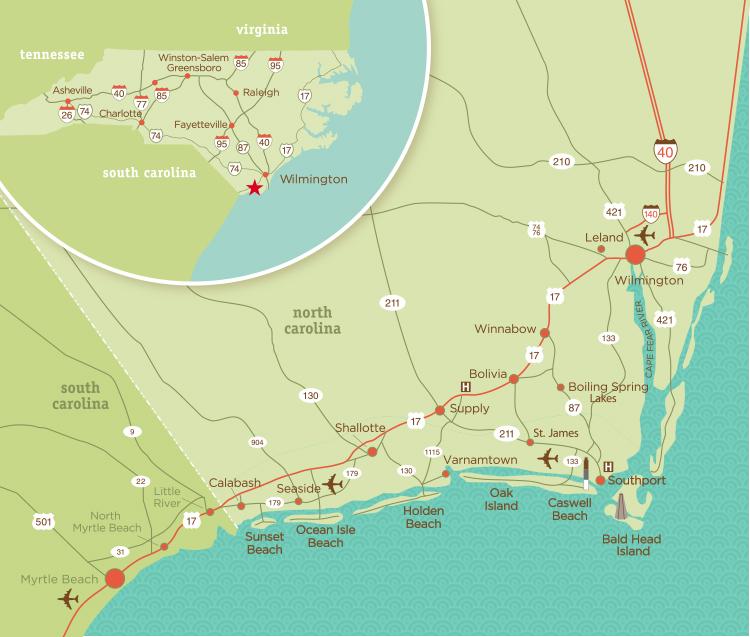
Brunswick County 2024 Visitor Impact released
Domestic and international visitors in Brunswick County spent over $1.22 billion in 2024, an increase of 4.8% from 2023. Brunswick County ranked No. 6 among North Carolina’s 100 counties in visitor spending in 2024. This data comes from an annual study commissioned by Visit North Carolina, a unit of the Economic Development Partnership of North Carolina. “We’re pleased to see that 2024 marked another year of continued growth in the economic impact of visitor spending in Brunswick County,†said Whitney Sauls, chair of the Brunswick County Tourism Development Authority. “The latest data released by Visit North Carolina reinforces what we know. The money spent by visitors in our county creates jobs, helps to support our small businesses and generates funds for beach renourishment.â€
Brunswick County tourism impact highlights for 2024:
-
- The travel and tourism industry directly employed approximately 5,838 people in Brunswick County, up 4% from 2023.
- Total payroll directly generated by the tourism industry in Brunswick County was $240.97 million, up 4.5% from 2023.
- State tax revenue generated in Brunswick County totaled $36.68 million through state sales and excise taxes, and taxes on personal and corporate income. About $51.41 million in local taxes were generated from occupancy and sales and property tax revenue from travel-generated and travel-supported businesses.
- Each Brunswick County resident saved $523.96 in state and local taxes as a result of visitor spending in the county.
These statistics come from the “Economic Impact of Travel on North Carolina Counties,†which can be accessed at partners.visitnc.com/economic-impact-studies. The study was prepared for Visit North Carolina by Tourism Economics. Statewide, visitor spending in 2024 rose 3.1% to reach a record $36.7 billion. Direct tourism employment increased 1.4% to 230,338 people. “Scenic beauty, outdoor adventure, culinary innovation and authenticity help North Carolina remain a top choice for travelers,†said Wit Tuttell, executive director of Visit NC. “That appeal might be hard to quantify, but as we follow the numbers, we see the payoff in terms of the money that goes to businesses as well as state and local tax bases.â€
NC tourism facts:
-
- Total spending by domestic and international visitors in North Carolina reached $36.7 billion in 2024. That sum represents a 3.1% increase over 2023 expenditures.
- Visitors to North Carolina generated nearly $4.6 billion in federal, state and local taxes in 2024. The total represents a 2.9% increase from 2023.
- State tax receipts from visitor spending rose 1.1% to $1.36 billion in 2024.
- Local tax receipts grew 4.3% to $1.29 billion.
- Direct tourism employment in North Carolina increased 1.4% to 230,338 people.
- Direct tourism payroll increased 2.6% to over $9.5 billion.
- Each North Carolina resident saved $242.37 on average in state and local taxes as a direct result of visitor spending in the state.
Read more » click here
This and That –
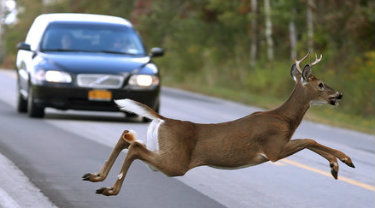 Fear the deer: Crash data illuminates America’s deadliest animal
Behold the deer, the deadliest beast in North America. Deer are responsible for the deaths of about 440 of the estimated 458 Americans killed in physical confrontations with wildlife in an average year, according to Utah State University biologist Mike Conover, employing some educated guesswork in the latest edition of “Human-Wildlife Interactions.” Those deer-inflicted fatalities are not, so far as we know, caused by deer-on-human predation. They’re the unfortunate result of more than 2 million people a year plowing into deer with their sedans and SUVs, usually on a two-lane road, often at high speed. You might wonder: Where and when am I most likely to hit a deer? And how can I avoid it? To shed light on this herbivorous hazard, we turned, of course, to data. Specifically, we analyzed more than 1 million animal-vehicle collisions compiled by Calumn Cunningham, Laura Prugh and their colleagues at the University of Washington for a recent paper published in Current Biology. They estimate deer were involved in more than 90 percent of the collisions, which occurred in 23 states between 1994 and 2021. With a few exceptions, the data show deer are at their most dangerous in November. Indeed, the deer threat peaks just before Thanksgiving – typically Nov. 7 through 14 – when you’re about three times more likely to hit a deer than at any other time of year. Experienced deer hunters can probably guess why driving in November can turn into Russian roulette on certain highways and byways: In much of the country, that’s rutting season. And during the rut, deer focus on procreation, not self-preservation. Marianne Gauldin of the Alabama Wildlife and Freshwater Fisheries Division compares rutting bucks to teenage boys. “They are hyper-focused on the opportunity to breed, and they therefore lose some of their wits,” Gauldin said. “They are full tilt looking for does, chasing does and running after does for the opportunity to breed. And they are doing this with tunnel vision … literally running across the road.” Does share similar distractions. They’re either in estrus – hormonally receptive to sex and looking to breed – or fleeing hot-and-bothered bucks until their cycles catch up. Collisions occur more often in states with the most white-tailed deer – which experts say tend to have a shorter, sharper rut than the western mule deer – and in states with long stretches of busy rural roads. Separate insurance claim data from State Farm, which is widely cited in academic research, shows a driver out minding her own business on the wending, bending roads of West Virginia had a 1 in 35 chance of hitting an animal between June 2021 and June 2022, making the Mountain State easily the most dangerous in terms of deer-car collisions. Montana and Michigan were next. D.C. drivers, by contrast, had only a 1 in 907 chance of stopping a buck while driving down Pennsylvania Avenue, or anywhere else. Fun fact: Deer are responsible for at least 69 percent of animal-related accident claims, according to State Farm. Another 12 percent of claims involve unidentified animals, many of which could be deer that bounded off before the driver got a good look at them or were mangled beyond recognition in the crash. The third-most-dangerous animals on the road are undifferentiated rodents, which are cited in 5 percent of all animal-related accident claims. However, State Farm spokesperson Dave Phillips noted that many of the drivers never make contact with said rodent: The vast majority of those accidents occur when motorists swerve to avoid a suicidal squirrel or moseying marmot. Our more calendar-conscious readers will note that peak deer-crash season coincides with another big moment in November: the first week of daylight saving time, which begins the first Sunday of the month. And the University of Washington team has found that the two events are not unrelated. To understand why, we need to spelunk deeper into their data, which breaks new ground by including the exact location, date and hour of all these deer disasters. When we glance at a chart of accidents that includes time of day and time of year, one fact strikes us right between the headlights: Evening, the twilight of each day – especially in November! – is the hour of the Götterdeermmerung. Conveniently for us, the University of Washington scholars used accident coordinates and some basic weather math to calculate exactly when the sun would have risen or set at each location. It turns out that deer danger skyrockets about 30 minutes after sunset and remains extraordinarily elevated for almost half an hour. Those with deer-behavior expertise say drivers should be on high alert as darkness falls in autumn – especially when careening through the deer’s favorite transitional habitats, the forest-edge ecosystem created by roads and other developments. But they urge us to take a lesson from the thousands of people who land in hospitals and body shops each year after attempting to avoid a turtle or chipmunk: If you do see a deer, don’t swerve. “Slow down as much as you can, obviously, coming up to it,” said Karlin Gill of the National Deer Association, a hunting and conservation organization. “But if it’s unavoidable and you’re going to hit the deer, don’t try and swerve out of the way. That can cause an even worse car wreck, and you still might hit the deer regardless.” Deer crashes also rise in the morning, about 30 minutes before sunrise, but the number is significantly lower than after sunset. To understand why, we need to dig deeper into both deer and human activity patterns. Biologist after biologist told us deer are crepuscular, meaning they’re most active at dawn and dusk. When Texas A&M University wildlife scientist Stephen Webb and his colleagues fitted GPS trackers onto white-tailed deer in Oklahoma, they found deer movement peaks at both sunrise and sunset. “Deer, unlike humans, don’t lay down for eight hours at night and then get up and move throughout the day,” said Gill , who, as a hunter, closely examines deer behavior. “They actually go through a cycle where they’ll lay down, bed, get up, eat, lay down, bed, get up, eat, and they’ll do this throughout a 24-hour period.” But if deer are equally active at dawn and dusk, why are they so much more likely to be hit in the evening? To untangle that one, we need to examine another somewhat crepuscular species: the American commuter. Our commutes also peak in the morning and evening, but we’re much more likely to be driving at dusk than we are at dawn, and we stay on the roads even as darkness falls, and the deer start moving – often squarely into our headlights. It’s a matter of visibility. Deer are just as active two hours before dusk as they are two hours after, yet we’re about 14 times more likely to hit a deer after sundown than we are before. And, as Cunningham notes, right at the peak of the whitetail rut, we throw another variable into the stew: We end daylight saving time. Suddenly, as far as the deer are concerned, our 6 p.m. commute happens an hour later. Millions of drivers find themselves contending with lower visibility just as sex hormones flood the local deer population. “It’s like one of the grandest-scale natural experiments that we can come up with, where humans impose these very arbitrary and abrupt changes on the wildlife,” Cunningham told us from his native Tasmania (he’s at the University of Washington as a Fulbright fellow). People living on the far eastern side of a time zone are about 1.35 times as likely to hit a deer as folks on the far western edge, since folks in the east are more likely to be driving home in the dark. Similarly, folks in Northern states, where days are short and darkness rules the winter, are 1.86 times more likely to hit a deer than their friends in America’s sunny South. Taking these effects into account, the University of Washington team estimates that “falling back” causes a 16 percent jump in deer carnage in the weeks after the shift. It’s possible that adopting permanent daylight saving time would thus save the lives of more than 36,000 deer and 33 humans each year. On the down side, chronobiologist Eva Winnebeck of the University of Surrey argues that any gains might be offset by an increase in deaths spurred by the chronic drowsiness that would inevitably set in if our solar-powered circadian rhythms were forced to endure a never-ending disconnect between the sun and clocks set permanently to daylight saving time. Here at the Department of Data, we’ve found a strong connection between happiness and the great outdoors. So, we’re partial to any move that would give us more daylight hours to get out after work and fish, run or dominate the competitive wood-chopping circuit, circadian rhythms be darned.
Read more » click here
Watch out for deer
NCDOT warns motorists across North Carolina to stay alert for deer now that fall has arrived. Every year during late autumn, auto and body shops across the region brace for a bumper crop of business, comprised of an influx of cars with damage from collisions with deer. Beginning in October, roads across the state become hazardous as North Carolina’s deer population fans out, lurking on highway shoulders in search of food and potential mates. It’s the deadliest time of the year for deer, which also pose a particular danger to motorists. Nearly half of vehicle accidents involving white-tail deer occur from October to December. Deer accidents typically begin rising in October, peak in November and begin dropping off after December, according to the Insurance Institute for Highway Safety. Deer are crepuscular mammals, meaning they’re most active at dawn and dusk – which, following the onset of daylight savings time, places them near roads and byways precisely when large numbers of residents are commuting to and from work.
NCDOT has some helpful tips for motorists in regard to deer-vehicle crashes:
-
- Although it does not decrease the risk of being in a crash, wearing a seat belt gives you a better chance of avoiding or minimizing injuries if you hit a deer or other animal.
- Always maintain a safe amount of distance between your vehicle and others, especially at night. If the vehicle ahead of you hits a deer, you could also become involved in a crash.
- Slowdown in areas posted with deer crossing signs and in heavily wooded areas, especially during the late afternoon and evening.
- Most deer-vehicle crashes occur where deer are more likely to travel, near bridges or overpasses, railroad tracks, streams, and ditches. Be vigilant when passing through potentially risky landscapes.
- Drive with high beams on when possible and watch for eyes reflecting in the headlights.
- Deer often travel in groups, so if you see one deer near a road, be alert that others may be around.
- If you see deer near a road, slow down and blow your horn with one long blast.
- Do not swerve to avoid a collision with deer. This could cause you to lose control of your vehicle, increasing the risk of it flipping over, veering into oncoming traffic, or overcorrecting and running off the road and causing a more serious crash.
Officials say the most crashes occur between 6 p.m. and midnight, accounting for about 45% of the overall total. With the end of daylight savings time at 2 a.m. Sunday, Nov. 1, the time shift increases the chance of deer being by roadways when drivers are traveling in the dark, especially for their evening commute. If your vehicle does strike a deer, officials say do not touch the animal. A frightened and wounded deer can be dangerous or further injure itself. Get your vehicle off the road if possible and call 911.
Read more » click here
Factoid That May Interest Only Me –
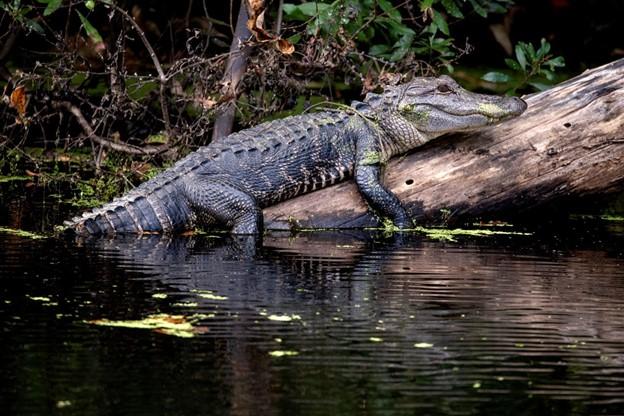 Gators’ more frequent appearances make splash along coast
Did you hear the one about the alligator? An alligator walks into … a road, a pool, a miniature golf course, onto a beach, underneath a car, up to the front door of a storefront, by a back entrance of a police station. Stop me if you read about this while perusing the headlines of your local newspaper, heard about it on the 6 o’clock news, or saw it plastered across social media platforms this past summer. Alligators have made quite the splash (pun intended) in recent months here in southeastern North Carolina, where seemingly numerous public appearances by these living dinosaurs have produced dramatic headlines and videos shared not only across the state, but the country. But these typically reclusive reptiles aren’t looking for all the attention they’ve been getting, experts say. They just want to be left alone. The problem is, they’re being squeezed out of seclusion as housing developments and retail centers continue to crop up along the coast. “The ever-growing population along the coast of North Carolina is the biggest threat to wildlife in general,” said John Harrelson, a wildlife biologist with the North Carolina Wildlife Resources Commission. “Habitat loss is the biggest threat to wildlife in general, not just alligators, and when people move in and we build communities in places that haven’t historically had people, then that leads to lots of interactions.” And the more interactions that occur, the more comfortable alligators become around people. Harrelson puts alligators into one of two categories: country alligators and city alligators. Country alligators inhabit areas up the Northeast Cape Fear River. He said that those alligators generally try their best to steer clear of humans, he said. But city alligators get used to seeing people and, just like squirrels, birds, deer, and other animals, they become habituated, “realizing that people, for the most part, don’t mean them any harm and that there’s nothing to be worried about,” Harrelson said. Think of it like a cost-benefit analysis where an alligator weighs the risk of being around people and decides whether the reward is worth the risk. “And often times the reward is great enough,” Harrelson said. While development strips away their natural habitat, it tends to provide pockets of prime real estate for alligators in the form of retention ponds. Harrelson works in the commission’s District 4, which includes Brunswick County, and is home to a reported 30 scenic golf courses (think about all of the water hazards – well, not a hazard from a gator’s point of view – on just one of those courses). Brunswick, Columbus, Craven, New Hanover, Onslow, and Pender counties are home to the largest populations of American alligators in North Carolina and their turf runs from the state’s coastal plains to Texas. With its barrier island beaches, proximity to Wilmington and Myrtle Beach, South Carolina, and its numerous golf courses, Brunswick County has become a draw for retirees who, for many, move in from areas where there are no alligators. Pair that with the influx of tourists who flock to the county each summer – Oak Island’s population more than quintuples between May and August – and odds are high people are going to encounter alligators. Boiling Spring Lakes Police Capt. Windy Hager knows that when tourism season picks up, so too do the number of calls going into the Brunswick County town’s law enforcement center about alligator sightings. “When it’s warmer (alligators) become more active and, when you’ve got people who are not familiar with alligators they get a little excited about, ‘Oh, there’s one in the lake!’ Well, yes, that’s where they live and that’s what we have to tell them a lot of times,” Hager said. Hager has lived in the area more than 10 years. She’s accustomed to seeing alligators pretty regularly in their own habitat. But one had to be removed from a swimming pool a couple of weeks ago and the unnamed storm that pummeled Brunswick County with catastrophic rainfall Sept. 16 means there’s a lot of water in places that were previously dry. “I know that there’s two (alligators) in what used to be somebody’s front yard right now in the city because their front yard is flooded,” Hager said. “But they’re just doing their thing and the people who live there are giving them their space. The people are not messing with them and the alligators aren’t messing with the people so they’re sharing space right now.” Two days before he spoke in a telephone interview with Coastal Review, Sunset Beach Police Animal Control Officer Bill Arp had removed a small alligator hanging out underneath a car. “They’ll wind up in people’s garages and on people’s porches, underneath decks, under cars. We find them all over the place,” he said. “Unfortunately, because of such huge development down here, their habitat is starting to shrink and that’s what’s happening. People are calling us and wondering, ‘Why’s it under my car? Why are they on my porch? Why are they in my garage?’ Well, that’s why because the development is robbing them of their other habitat.” Alligator Do’s and Don’ts If an alligator settles in an area near you, wildlife and law enforcement officials have tips on how to safely cohabitate. “A lot of people think, even with birds and deer, it’s nice to feed them,” Arp said. “But alligators, you don’t. Everybody knows an alligator is an apex predator. They’re nice to watch. They’re nice to take pictures of, but to feed them, that’s not a good idea.” Remember what Harrelson said earlier in the story about city alligators? “Individual people feeding alligators is the worst thing you can do,” he said. “Alligators are wild animals and they’ve got to work for their food. An easy meal means, ‘hey I don’t have to continue to fail and fail and make all these attempts when I’m not successful. I can just wait for this person to walk over and, if I approach them, they’re going to give me chicken or bread or marshmallows, a fish scrap or whatever else they’ve got.’ We deal with this all the time, particularly with folks who aren’t locals.” It is illegal to feed alligators. It is also illegal to kill them. American alligators are protected by the Endangered Species Act as threatened. In North Carolina, a permit is required to hunt alligators. The monthlong season is limited to population control at the request of municipalities in Brunswick, Carteret, Columbus, Craven, Hyde, Jones, New Hanover, Onslow, Pamlico, and Pender counties, according to the WRC website. “The Commission does not plan to issue permits to take American alligators, outside of municipality requested population reduction hunts, until further research is conducted to determine the conditions under which alligator populations would be sustained while allowing limited harvest,” the site states. Harrelson said that alligators are relocated only as a last resort because they, like other wildlife, have a propensity to travel long distances to return to where they were captured. “This is something that we face ongoing and, as biologists, something that we have to figure out how to address going forward because our agency isn’t going to pick up and move animals,” Harrelson said. “We want to let wildlife be wildlife for as long as we can and maintain the ecosystems that are out there.” As people build, alligators move. Males can occupy areas greater than 2 miles so, when they move, they’re crossing roads, ditches, and yards. An alligator may be removed from a property when it is considered a nuisance – at least 4 feet long and poses a threat to people, pets, or property. To report a potential nuisance alligator, call the N.C. Wildlife Helpline at 866-318-2401. Experts say simply spraying an alligator with a water hose usually prompts the animal to move away. If you’re taking a walk and spot an alligator in or near your path, give the alligator a wide berth and go around it. Never walk up to one or try to touch one. “When an alligator is on a sidewalk or up on a roadway, he’s not hunting, he’s not searching out food. If we give them an opportunity to make that move on their own, most of the time, they will,” Harrelson said. “Our biggest thing, of course, is to keep people safe and then let the animals be animals. That’s what we’re always striving toward.”
Read more » click here

More than bearly existing: Why black bears are thriving at the NC coast
Black bears at the beach? Yep, and they are some of the biggest in the world. Here’s how NC brought the animals back from the brink, and why they are now thriving
The North Carolina coast is well-known for its wildlife. Dolphins are frequently seen entertaining boaters and beachgoers, and a lucky few even get to see manatees traversing the Intracoastal Waterway and whales migrating offshore. On land, bobcats and turkeys can often surprise folks, and in the sky ospreys can often put on a show while hunting for fish in local waterways. Eagles are even beginning to show up in greater numbers, with a pair that raised an eaglet at New Hanover County’s Airlie Gardens this year causing quite a social media stir. But bears? Unless you’re a farmer or a hunter, it might come as a surprise to find out that more black bears live in the state’s coastal plain than in the higher elevations of Western N.C., where the Appalachians rise up and Great Smoky Mountain National Park is the nation’s most popular national park − and Ursus americanus is its unofficial mascot. Here are some things you might now know about one of Eastern North Carolina’s most unique residents, and how climate change could be changing how bears behave in the coastal region.
Beach bears?
The ability of the bear to bounce back in the state is one of North Carolina’s great wildlife success stories. Unregulated hunting and loss of habitat led to bears being driven into the most isolated pockets of swamp forests and mountain areas for most of last century. But starting in the 1970s with the establishment of bear sanctuaries, strict management strategies, and educating the public about the state’s omnivorous residents, bear numbers have surged back. Today, more than 20,000 bears are estimated to roam North Carolina, and more than half are in the eastern part of the state. Coastal North Carolina is also home to some of the largest black bears in the world, thanks to an ample food supply of farmers’ crops, a relatively mild climate and many large, protected areas − like state game lands such as Holly Shelter in Pender County and federal wildlife refuges like Alligator River near the Outer Banks − that offer the bears valuable habitat. The size and number of Eastern N.C.’s black bears also fuels a successful hunting season and helps support the economy in many rural areas. According to the N.C. Wildlife Resources Commission, the numbers of bears harvested by hunters has increased from fewer than 300 in 1980 to more than 4,500 on 2023, the last year figures are available. In the Wilmington area for 2023, hunters took 34 bears in Brunswick County, seven in New Hanover County, and 92 in Pender County. The leading state that year was Hyde County near the Outer Banks, with 288 animals harvested by hunters.
Bears on the hunt
But humans aren’t the only ones on the hunt these days. Bears are beginning to fatten up as they prepare to hibernate in the late fall and winter. In a process called hyperphagia, which means “extreme appetite,” bears will travel long distances and be very opportunistic in looking for food sources. “In late summer through fall, black bears are consuming a variety of hard and soft mast species, from acorns and hickory nuts to pokeberry, cherry, grapes and black gum,†said wildlife commission biologist Jenna Malzahn in a release. “They’ll also take advantage of agricultural crops, such as soybeans and standing corn, as well as bird feeders and unsecured garbage and compost.â€Â  With this level of food consumption, which can last through early winter, bears can put on 3 pounds per day and gain anywhere from 20% to close to 100% of their summer weight, according to the commission. With bears traveling so much, human-animal interactions − including vehicle strikes − peak over the next few weeks.
Will they hibernate at the N.C. coast?
Maybe. But they’ll still often eat even if the weather doesn’t trigger them to hibernate for very long or at all. “Even in warmer climates, such as our state, a bear’s biological clock will still activate this fall feeding frenzy, even for those bears that hibernate briefly or not at all, as natural food scarcity in winter months, not temperatures, has been a key driver for activating the hyperphagia and hibernation process,†said Colleen Olfenbuttel, the wildlife commission’s game mammals and surveys supervisor. “Even bears that won’t den until January or February still look for food practically around the clock and eat as much as they can find. However, in areas where bears have found dependable year-round supplies of human-provided foods, they may not hibernate at all but will eat as if they are going to.â€Â Female bears at the coast have generally been recorded hibernating longer than males, and will give birth during their hibernation, only waking up and emerging with her cubs in the spring when they are able to walk and feed on solid food. Males may den for short periods but may also exhibit lethargic behavior during the winter if they stay awake.
Where will they hibernate in Eastern N.C.?
With few rock formations to den in or under in Eastern N.C., coastal bears will often hibernate in thick vegetation on the ground. They also have been found to use tree cavities and burrow under fallen trees and logs. Bears finding accommodations under abandoned or seldom used human structures, like porches and barns, also has been observed, according to the wildlife commission.
How will a warming climate impact bears?
As warmer weather becomes the norm, North Carolina’s coastal black bear might start to mimic behavior patterns of bears in other Southern states that already deal with a hotter, year-round climate. According to the N.C. State Climate Office, five of North Carolina’s top six warmest years have happened since 2016, and each year in the past decade ranks among the top 22 warmest on record dating back to 1895. That could mean shorter, or no, hibernation for male bears in the state, increased pressure on winter food supplies, and a greater chance of human-bear conflicts as both species share the same space for longer periods of time.
Read more » click here
Black bears are common along the NC coast.
Here’s why and what to know about their habits.
More bears live in the state’s coastal plain than in North Carolina’s mountains. They also are generally larger. And yes, they do hibernate
When people think of bears in North Carolina, most thoughts probably drift to the mountains in the higher elevations of the state and places like Great Smoky Mountain National Park. But black bears ’ the only bear species found in the Tar Heel State ’ are found across North Carolina, and their population is actually larger in the state’s coastal plain than in the mountains. Potentially even more surprising to some is that many bears at the coast, especially females, hibernate like their brethren where frost and snow is a lot more common.
Bears at the coast?
Yes, there are bears ’ lots of them ’ near North Carolina’s beaches and in its coastal forests and swamps. The ability of the bear to bounce back in the state is one of North Carolina’s great wildlife success stories. Unregulated hunting and loss of habitat led to bears being driven into the most isolated pockets of swamp forests and mountain areas for most of the last century. But starting in the 1970s with the establishment of bear sanctuaries, strict management strategies, and educating the public about the state’s omnivorous residents, bear numbers have surged back. Today, more than 20,000 bears are estimated to roam North Carolina, and more than half are in the eastern part of the state. Coastal North Carolina is also home to some of the largest black bears in the world, thanks to an ample food supply of farmers’ crops, a relatively mild climate, and many large, protected areas ’ like state game lands and federal wildlife refuges ’ that offer the bears valuable habitat. According to the wildlife commission, the largest bear ever killed in North Carolina was an 880-pound male taken in Craven County in 1998. The state’s propensity for lots of bears also attracts hunters and fuels economies in many rural areas, with more than 4,000 animals taken during the 2022 bear season ’ up 11% over 2021 figures. Of those, more than 2,500 bears were taken along the coast. Around the Wilmington area, hunters harvested 34 bears in Brunswick County, 92 in Pender County, and seven in New Hanover County. The popularity, size, and sheer number of bears in Eastern North Carolina also has spawned its own festival, the National Black Bear Festival, which takes place every June in Plymouth, Washington County.
What is hibernation?
In its very basic form, animals enter hibernation as a way to reduce their metabolism in response to a decrease in food supply and sometimes falling temperatures. When bears, in this case, enter hibernation, their internal body clocks slow down. That leads to lower heart rates, reduced breathing, and lower oxygen consumption. The animal’s temperature also drops. According to biologists, this can be by as much as 15 degrees for bears. To prepare for hibernation, bears step up their eating, putting on up to 3 pounds a day in the fall and sometimes into winter. That can mean foraging for a meal for up to 20 hours a day, and they are typically most active at dawn and dusk.
Why do N.C. coastal bears hibernate?
While black bears in colder, northern climates can hibernate for six months or longer, it is generally for shorter periods in North Carolina. But they do hibernate even along the N.C. coast, especially female bears. Males may den for short periods but may also exhibit lethargic behavior during the winter if they stay awake. “Bears studied in eastern North Carolina by radio-telemetry entered dens as early as November and as late as January. These same bears exited dens as early as February and as late as April,” states information on the wildlife commission’s website. “This results in the possibility of bear sightings and roadkills in all months and the misconception that coastal bears do not hibernate. Only human disturbance interrupts these periods of hibernation in North Carolina’s bears.” Females will give birth during their hibernation, only waking up and emerging with her cubs in the spring when they are able to walk and feed on solid food.
Where do they hibernate?
With few rock formations to den in or under in Eastern N.C., coastal bears will often hibernate in thick vegetation on the ground. They also have been found to use tree cavities and burrow under fallen trees and logs. Bears finding accommodations under abandoned or seldom used human structures, like porches and barns, also has been observed.
What about the impact of climate change on N.C. bears?
Scientists are clear that North Carolina is facing a warming climate in the coming years. The only real question is by how much temperatures will increase. As warmer weather becomes the norm, North Carolina’s coastal black bear might start to mimic behavior patterns of bears in other Southern states that already deal with a hotter, year-round climate. That could mean shorter, or no, hibernation for male bears, increased pressure on winter food supplies, and a greater chance of human-bear conflicts as both species share the same space for longer periods of time. But black bears also have proven time and again to be very adaptable to changing conditions, including human encroachment on their habitats. That ability has seen them spread to all of North Carolina’s 100 counties, with number increasing even as the state’s population also continues to rise quickly.
Read more » click here
Bears are smart animals
Time to be smarter than the bear. Elimination of regular and easy food sources is the best deterrent and will cause him/her to move out of our location faster than any other reason. If the bear discovers the pattern of garbage cans going out in the evening, he/she will look for the cans each evening. Consider putting garbage cans out in the morning hours just before the truck arrives so that the bear does not discover cans full of food each week. Please reconsider feeding any other animals during warmer months with an outdoor supply of food because the bear will find it and eat what you put out, thus strengthening his/her reason to remain here. Bird feeders may also be destroyed for the bear to secure the stored grains.
Consistent patterns in OR will help to move the bear to new territory. If some food sources remain available, he/she will find them and remain here. Keep the food sources out of his/her reach. Please consider staying with this habit until the acorns begin to drop in the fall. We have few oak trees within OR, so that source of food is limited. The bear will seek an area with a greater source of food prior to winter.
Bears roam approximately ten miles in all directions to obtain food or shelter. If sources outside of the OR provide him/her with regular food, and our area provides the best shelter, he/ she will remain until late fall once again. Be aware of choices and be aware of walking in forested areas with dogs, etc. Black bears will avoid humans and dogs, but if you accidentally run into one at close proximity, do the following:
If you and he /she are walking toward each other, change your direction anddo not run.Constantly check over the shoulder to see if the bear is following you or continuing in another direction.
-
- If you happen to get REALLY close to a bear, you can make yourself look as large as possible and yell loudly. A black bear will usually change direction.
- If there is a bear cub with a mother bear, stay as far away as possible. She will protect the cub at all costs, and you can be in great danger.
- Review the pamphlet put out by the NC Department of Wildlife:
https://www.ncwildlife.org/media/1458/download?attachment
Stay aware, stay smart, and stay safe.
Storm Events –
 Hurricane Vehicle Decals
Property owners were provided with four (4) decals that were included in this month’s water bill. It is important that you place your decals in your vehicle or in a safe place. A $10 fee will be assessed to anyone who needs to obtain either additional or replacement decals. Decals will not be issued in the 24-hour period before an anticipated order of evacuation.
The decals are your passes to get back onto the island to check your property in the event that an emergency would necessitate restricting access to the island. Decals must be displayed in the driver side lower left-hand corner of the windshield, where they are not obstructed by any other items. Officials must be able to clearly read the decal from outside the vehicle.
Property owners without a valid decal will not be allowed on the island during restricted access. No other method of identification is accepted in an emergency situation. Click here to visit the Town website to find out more information regarding decals and emergency situations.
NC General Statute 166A-19.22
Power of municipalities and counties to enact ordinances to deal with states ofemergency.
Synopsis – The governing body may impose by declaration or enacted ordinance, prohibitions, and restrictions during a state of emergency. This includes the prohibition and restriction of movements of people in public places, including imposing a curfew; directing or compelling the voluntary or mandatory evacuation of all or part of the population, controlling ingress and egress of an emergency area, and providing for the closure of streets, roads, highways, bridges, public vehicular areas. All prohibitions and restrictions imposed by declaration or ordinance shall take effect immediately upon publication of the declaration unless the declaration sets a later time. The prohibitions and restrictions shall expire when they are terminated by the official or entity that imposed them, or when the state of emergency terminates.
Violation – Any person who violates any provisions of an ordinance or a declaration enacted or declared pursuant to this section shall be guilty of a Class 2 misdemeanor.
Hot Button Issues
Subjects that are important to people and about which they have strong opinions

Climate
For more information » click here.
There’s something happening here
What it is ain’t exactly clear
Top Scientists Find Growing Evidence That Greenhouse Gases Are, in Fact, a Danger
The assessment contradicts the Trump administrations legal arguments for relaxing pollution rules.
The nation’s leading scientific advisory body issued a major report on Wednesday detailing the strongest evidence to date that carbon dioxide, methane and other planet-warming greenhouse gases are threatening human health. The report, published by the National Academies of Sciences, Engineering, and Medicine, is significant because it could complicate the Trump administration’s efforts to revoke a landmark scientific determination, known as the endangerment finding, that underpins the federal government’s legal authority to control the pollution that is driving climate change. The finding dates to 2009, when the Environmental Protection Agency concluded that planet-warming greenhouse gases pose a threat to public health and welfare and so should be regulated under the Clean Air Act. The Obama and Biden administrations used that determination to set strict limits on greenhouse gas emissions from cars, power plants and other industrial sources of pollution. But in July, the Trump administration proposed to rescind the endangerment finding and contended that subsequent research had “cast significant doubt†on its accuracy. The proposal is one of President Trump’s most significant steps yet to derail federal climate efforts. If the move is held up in court, future administrations would have no authority under the Clean Air Act to regulate greenhouse gas emissions from the burning of fossil fuels. The new National Academies assessment contradicts the administration’s claims. The 136-page report, assembled by a committee of two dozen scientists, concludes that the original endangerment finding was accurate and “has stood the test of time.†It says that there is now even stronger evidence that rising greenhouse gas levels can threaten public health and well-being, and that new risks have been uncovered. The report notes that multiple lines of evidence now show that human activities such as the burning of fossil fuels and deforestation are producing greenhouse gases that are heating the planet, and that climate change is exacerbating a wide variety of health risks like intense heat waves and increased wildfire smoke. Climate-driven changes in temperature and rainfall patterns have also led to negative effects on crops and less water availability in some places, among other disruptions. The National Academies of Sciences, Engineering, and Medicine is a nongovernmental body that was originally chartered in 1863 by Abraham Lincoln to advise the nation on scientific and medical questions. The influential body issues roughly 200 reports per year on a range of topics from particle physics to neurobiology, and its members are elected each year. In August, the National Academies announced that it was fast-tracking its study on the endangerment finding so that it could inform the E.P.A.’s decision-making process. Under federal law, the E.P.A. needs to solicit public comment on its proposal to revoke the finding and then must respond to all of the comments it receives. Some Republicans in Congress criticized the National Academies for racing to complete the report. Representative James Comer of Kentucky, the leading Republican on the House Oversight Committee, wrote in a recent letter to the body that the decision was “a blatant partisan act to undermine the Trump Administration†and said that some of the members overseeing the report had “shown partisan bias.†The committee that oversaw the report was led by Shirley Tilghman, an emeritus professor of molecular biology and public affairs and former president of Princeton University. While the committee was largely made up of academics, it also included a former employee of Chevron and a former executive at Cummins, a manufacturer of truck engines. “This study was undertaken with the ultimate aim of informing the E.P.A., following its call for public comments, as it considers the status of the endangerment finding,†Dr. Tilghman said in a statement. “We are hopeful that the evidence summarized here shows the strong base of scientific evidence available to inform sound decision-making.†In response to the report, Carolyn Holran, an E.P.A. spokeswoman, said, “The endangerment finding has been used by the Obama and Biden administrations to justify trillions of dollars of greenhouse gas regulations covering new motor vehicles and new motor vehicle engines. As we saw in the 16 intervening years since the endangerment finding was made, many of the extremely pessimistic predictions and assumptions E.P.A. relied upon have not materialized as expected.†She said the E.P.A. “looks forward to responding to a diverse array of perspectives on this issue,†when the public comment period ends on Sept. 22. To justify its proposal, the E.P.A. cited a variety of legal and technical arguments, saying among other things that the greenhouse gas emissions from vehicles on American roads are only a small sliver of total global greenhouse gas emissions. But the agency also tried to argue with the mainstream scientific view that climate change poses a significant risk to humanity. It cited a report that the Energy Department commissioned by a working group of five prominent researchers who dissent from the mainstream scientific view of climate change. They were handpicked by Energy Secretary Chris Wright and while their report acknowledged that the Earth is warming, it said that climate change is “less damaging economically than commonly believed.â€Â In response, a team of more than 85 scientists wrote a 439-page reply, saying that the Energy Department analysis was riddled with errors and cherry-picked data to fit the president’s political agenda. Separately, two environmental groups have filed a lawsuit in federal court charging that the formation of the Energy Department’s working group violated the Federal Advisory Committee Act and that the E.P.A. should not rely on its analysis. That case is ongoing. Mr. Wright disbanded the working group this month in the wake of the lawsuit. But the Energy Department has said it has no plans to withdraw its report. In a statement, Andrea Woods, an Energy Department spokeswoman, said that the agency had determined that the working group had achieved its purpose, “namely to catalyze broader discussion about the certainties and uncertainties of current climate science. We will continue to engage in the debate in favor of a more science-based and less ideological conversation around climate science.†Some legal experts said that the Trump administration’s attempts to argue against longstanding scientific findings on climate change could create problems in court for its deregulatory efforts. “It might have been a better strategy if they tried to sidestep the arguments about climate science altogether,†said Patrick Parenteau, an emeritus professor at the Vermont Law and Graduate School. “Instead, they’ve taken shots at climate science and that’s triggered an enormous response from scientists, and now they’re going to have to carefully respond to all of these comments,†Mr. Parenteau added. “And if they shortchange any of them, that creates a legal vulnerability. Courts are going to be very leery if the E.P.A. tries to ignore or reject the findings of the National Academies of Sciences.â€
Read more » click here
Flood Insurance Program
For more information » click here

National Flood Insurance Program: Reauthorization
Congress must periodically renew the NFIP’s statutory authority to operate. On March 14, 2025, the president signed legislation passed by Congress that extends the National Flood Insurance Program’s (NFIP’s) authorization to September 30, 2025.
Congress must now reauthorize the NFIP
by no later than 11:59 pm on September 30, 2025.
As the federal government shutdown drags on, one quiet corner of the housing market has seized up: The sales of homes in flood-prone areas. With the National Flood Insurance Program lapsed since Oct. 1, the government can no longer issue most new policies or renewals, leaving buyers who need coverage for their mortgage uncovered, and throwing deals that had already been negotiated into uncertainty.

GenX
For more information » click here

Homeowners Insurance
For more information » click here
Hurricane Season
For more information » click here
Hurricane season runs from June 1 through November 30
Why This Years Hurricanes Keep Turning Away From the East Coast
There are six weeks left in the Atlantic hurricane season.
Dexter, Erin, Gabrielle, Humberto, Imelda, then Jerry. Again and again, this year’s Atlantic hurricane season has featured storms that seemed to be heading straight to the United States, only to suddenly take a sharp turn toward the east, veering away from land and out to the open ocean. Typically, by this time in an Atlantic season, at least three hurricanes or tropical storms would have made landfall in the United States. But with 12 named storms so far this year — four of them hurricanes — the only one to make U.S. landfall was Tropical Storm Chantal, which came ashore in South Carolina in early July. (Another, Tropical Storm Barry, made landfall in Mexico in late June.) Each storm’s eastward turn has its own unique causes, but John Cangialosi, a senior hurricane specialist at the National Hurricane Center, said two main factors determine a storm’s path: where it formed and what is steering it.
Steering
The main steering mechanism for Atlantic storms comes from a large high pressure system known as the Bermuda high. The Bermuda high (also called the subtropical high) normally sits in the Atlantic Ocean. Its light winds circulate in a clockwise direction, which usually push hurricanes westward in the tropical Atlantic, before guiding them northward along its western edge. “They are the primary steering for storms,†Mr. Cangialosi said. However, he added that nearby low pressure systems — along the East Coast, for example — and their associated cold fronts can influence the Bermuda high’s strength. “They can cause the high to weaken and shift, and cause these storms to turn,†he said. “So, it’s a combination of both of those features.†According to the National Hurricane Center, a strong Bermuda high generally pushes hurricanes farther west, toward Florida and the Gulf of Mexico, before turning them northward. A weaker Bermuda high, however, doesn’t drive storms as far west. Instead, it turns them northward sooner, either toward the East Coast of the United States or eastward and out to sea. This year, the eastward paths of Hurricanes Erin, Gabrielle and Humberto and Tropical Storm Jerry were influenced by a weak Bermuda high. Tropical Storm Dexter differed a bit, said Dr. Phil Klotzbach, a senior research scientist at the Department of Atmospheric Science at Colorado State University — another atmospheric steering mechanism was at play: the jet stream. The jet stream is a fast-moving ribbon of air high in the atmosphere that flows from west to east across the North Atlantic. It not only steers storms but can also accelerate or even intensify them. Dr. Klotzbach said Dexter was “already in the jet stream flow†when it formed to the northeast of the North Carolina coast, causing the storm to move away from the U.S. Sometimes a nearby Atlantic storm can lend a helping hand. Last month’s Imelda, Dr. Klotzbach said, “was a really lucky case for the United States.†With Hurricane Humberto positioned to Imelda’s east, which helped weaken the western edge of the Bermuda high just in time, causing Imelda to slow down. The two storms also orbited around a shared center point, in what meteorologists call the Fujiwhara effect. “Then Humberto’s circulation helped pull Imelda to the east,†he said.
Location
Where a storm forms also plays a key role in determining its track. The farther east a storm develops, Mr. Cangialosi said, the more likely it is to encounter a low pressure system along its westward path, which may turn it northward and then eastward, much like the paths of Erin and Humberto. “But hypothetically,†he said, “if a storm forms far to the west, like over the western Caribbean or over the Gulf, in those cases they would probably not avoid the United States with similar patterns.â€Â From October through November, storms tend to form farther west.
What to expect
Months ago, forecasters at the National Oceanic and Atmospheric Administration said they expected an above-average season this year, with up to 18 total named storms by the time it ends in November. A typical season has 14 named storms. Looking ahead, Mr. Cangialosi said, as the season moves into the rest of October and November, storms are expected to form closer to home. “They would be much less likely to miss the U.S.,†he said. “Doesn’t mean they can’t. It just means they are closer to home and therefore would have less of an opportunity to recurve.†Hurricane landfalls after mid-October are “fairly rare,†Dr. Klotzbach said, largely because vertical wind shear near the United States is typically quite strong this time of year. Strong vertical wind shear, or the change in wind direction and wind speed with height, can disrupt a storm’s structure, making it harder for hurricanes to maintain their intensity. On Thursday, the National Hurricane Center began tracking what might become the next named storm sometime in the next week. “It’s still a long way away, so there is a lot of uncertainty,†Dr. Klotzbach said, “but there is a pretty robust signal in the various models.â€
Read more » click here
Inlet Hazard Areas
For more information » click here
.
Lockwood Folly Inlet
For more information » click here.

Seismic Testing / Offshore Drilling
For more information » click here.

Offshore Wind Farms
For more information » click here
Things I Think I Think
 Eating out is one of the great little joys of life.
Restaurant Review:
The Dinner Club visits a new restaurant once a month. Ratings reflect the reviewer’s reaction to food, ambience and service, with price taken into consideration.
///// September 2025
Name: Island Way
Cuisine: American
Location: 1407 E Beach Drive, Oak Island, NC
Contact: 910.278.7770 / https://www.islandwayres.com
Food: Average / Very Good / Excellent / Exceptional
Service: Efficient / Proficient / Professional / Expert
Ambience: Drab / Plain / Distinct / Elegant
Cost: $27 Inexpensive <=20 / Moderate <=26 / Expensive <=35 / Exorbitant <=60
Rating: Two Stars
/////
Island Way is a popular casual upscale beachfront restaurant with ocean and pier views. Its beach dining in style, offering both indoor and outdoor dining options. Although it was previously rated as a three-star establishment, unfortunately that is no longer the case.  It remains as one of the better dining options in the area, significantly better than most. It’s a busy place, which is filled to capacity nearly every evening., making reservations advisable.
///// November 2023
Name: Salt64
Cuisine: American
Location: 6404 East Oak Island Drive, Oak Island NC
Contact: 910.933.1019 / https://salt64.com/
Food: Average / Very Good / Excellent / Exceptional
Service: Efficient / Proficient / Professional / Expert
Ambience: Drab / Plain / Distinct / Elegant
Cost: $29 Inexpensive <=20 / Moderate <=26 / Expensive <=35 / Exorbitant <=60
Rating: Two Stars
Dining is in a casual relaxed atmosphere, nothing fancy, with a diverse menu that offers a little something for everyone. The white tablecloth was a nice upscale twist, but both the noise level and bright lighting will dissuade you from thinking that you are at a fine dining establishment. All in all, we had a nice meal there, but it really wasn’t anything special. We found it to be pretty standard fare, while it was good, it wasn’t worth returning for. It was a very busy place on a Tuesday night in November. If you want to eat there you probably should call ahead for reservations. You can expect to wait for a table during prime tourist season.
This celebrated Brunswick County restaurant is expanding.
Here’s what to expect.
Jon and Erika Spencer are Brunswick County natives. He grew up in Southport and shes from Oak Island. For years, though, the couple lived away from Southeastern North Carolina. Jon Spencer said he was eager to go and gain experience in the culinary world when he was a young man. He wanted fine dining skills and to cater big banquets. And he did. For much of his professional life, he worked at country clubs, and then at restaurants like the former Soiree and Epic Chophouse near Charlotte. But the couple eventually decided they wanted to come home. In 2022, they opened Salt 64 in the former automotive repair shop and Jones Seafood House space at 6404 E. Oak Island Drive in Oak Island. We wanted to do something different, and we weren’t quite sure how that was going to work out, Jon Spencer said. But people welcomed their return — and the restaurant. Last year, Salt 64 was No. 19 on Yelp’s list of the top 100 restaurants in North Carolina, and the only one in Brunswick County. We try to keep it unique but unpretentious, Jon Spencer said. We wanted it to be approachable. He and his staff flex their creativity with the daily specials, which are also the best sellers at the restaurant. We change it every day, he said. And the dishes like fresh-caught fish prepared in a number of ways, or skillet seared duck breast, or filet medallions topped with their famed ill-tempered lobster tails — are posted to social media. As far as the regular menu, Jon Spencer said the seared scallops with fruity gastrique and warm fennel potato salad, the beet-and-goat cheese salad, and the spice-seared rare tuna are popular. And versions of other dishes, like the grilled artichoke appetizer and the addictive cheesy and garlicy crack toast, have been on Spencer’s menus for decades. There’s also a section of the menu called Jones Corner devoted to classic seafood. Now, Salt 64 is expanding. For the past two years, they’ve been completing the permitting to renovate. They closed in August for about a week to add some capacity to the electrical system and to demolish the existing patio. Now, a temporary wall is in place and crews will build a new room on the other side. If all goes well, they’ll close again briefly later this year to combine the spaces and complete a refresh of the restaurant. The big change will be to the existing six-seat bar, which will be a larger, U-shaped bar in the former patio.They’ll also add about 40 seats to the dining room and have more space in the kitchen. Eventually, they’d like to add a space for catering / commissary kitchen with more room for pastry making. Jon Spencer said there’s also a possibility of opening more Salt 64 locations in the future.
Read more » click here
Dining Guide – Local * Lou’s Views
Dining Guide – North * Lou’s Views
Dining Guide – South * Lou’s Views
Restaurant Reviews – North * Lou’s Views
Restaurant Reviews – South * Lou’s Views
Book Review:
Read several books from The New York Times best sellers fiction list monthly
Selection represents this month’s pick of the litter
 WITH A VENGEANCE by Riley Sager
Anna Matheson plans to get retribution for her family’s downfall. Her plan was simple, get the six (6) people responsible for her family’s downfall during the war onto a train where there’s no escape, confront them and find out why they did what they did and then deliver them right to the authorities waiting at the train’s destination. The story is a variation on the classic locked-room whodunit reminiscent of Agatha Christie’s works, where passengers are killed one by one on the train.
That’s it for this newsletter
See you next month
Lou’s Views . HBPOIN
-
-
-
-
-
-
-
-
-
- Gather and disseminate information
- Identify the issues and determine how they affect you
- Act as a watchdog
- Grass roots monthly newsletter since 2008
-
-
-
-
-
-
-
-