

Lou’s Views
News & Views / July Edition
Calendar of Events –
 Discover a wide range of things to do in the Brunswick Islands for an experience that goes beyond the beach.
For more information » click here.
Calendar of Events Island –
 Concerts on the Coast Series
The Town’s summer concert series calendar has been released! Live performances featuring local musical groups will be held at the Bridgeview Park picnic pavilion across from Town Hall. It will be on Sunday evenings at 6:30pm from May 25th to August 31st. The concerts are free of charge.
Summer Concert Schedule * Lou’s Views
The park will be blocked from vehicular access beginning Saturday evening. The splash pad will be closed on Sundays and the multipurpose court will close at 3:00 p.m. each Sunday. No seating will be provided so everyone should bring their own chair for the event.

Tide Dyed Program
The Tide Dye program will be held on Tuesdays between 1:00 to 2:30 p.m. at Bridgeview Park picnic pavilion. Participants must be in line by 2:00 p.m. to participate because the process takes approximately 30 minutes to complete. Fee is $7 per shirt for youth sizes through Adult XL and $10 per shirt for 2XL. Payment via cash or check only.
.Beginning June 10th and continuing through August 12th
 Turtle Talk
Two programs both are held every Wednesday during the summer atthe Holden Beach Chapel. Children’s Turtle Time is at 4:00 p.m. with crafts, stories and activities for children ages 3 – 6. All children must be accompanied by an adult. Turtle Talk is an educational program at 7:00 p.m. for everyone else. (Beginning June 18th)
Parks & Recreation / Programs & Events
For more information » click here
Reminders –
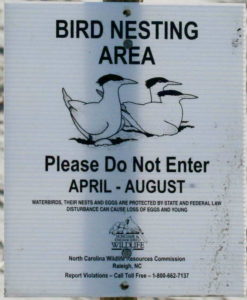
Bird Nesting Area
NC Wildlife Commission has posted signs that say – Bird Nesting Area
The signs are posted on the west end beach strand around 1335 OBW.
People and dogs are supposed to stay out of the area from April through November
. 1) It’s a Plover nesting area
. 2) Allows migrating birds a place to land and rest without being disturbed

A Second Helping
.
Program to collect food Saturday mornings (8:00am to 10:30am) during the summer at the Beach Mart on the Causeway.
1) Twenty-first year of the program
2) Food collections have now exceeded 307,000 pounds
3) Collections will begin on Memorial Day weekend
4) Food is distributed to the needy in Brunswick County
For more information » click here
.
Hunger exists everywhere in this country; join them in the fight to help end hunger in Brunswick County. Cash donations are gratefully accepted. One hundred percent (100%) of these cash donations are used to buy more food. You can be assured that the money will be very well spent.
Mail Donations to:
A Second Helping
% Sharon United Methodist Church
2030 Holden Beach Road
Supply, NC 28462
 News from Town of Holden Beach
The town sends out emails of events, news, agendas, notifications, and emergency information. If you would like to be added to their mailing list, please go to their web site to complete your subscription to the Holden Beach E-Newsletter.
For more information » click here
 Paid Parking
Paid parking in Holden Beach
Paid parking will be enforced from 9:00 a.m. to 5:00 p.m. daily with free parking before and after that time. All parking will use license plates for verification.
Rates
Parking rates for a single vehicle in all designated areas will be:
$5 per hour for up to four hours
$20 per day for any duration greater than four hours
$80 per week for seven consecutive days
Handicap Parking
A vehicle displaying a handicap license plate and/or hang tag parked in a designated handicap space is free. Any other parking space will require a parking permit via the app.
Annual Passes
Annual permits for the calendar year allow vehicles (this includes low-speed vehicles and trailers) access to designated parking.
$175 for a single vehicle
Passes can be purchased via the app, website or by telephone.
Where to Park
Per ordinance, there is no parking on the streets or rights-of-way except in designated parking spaces identified by Pay-to-Park signs. Click here to view an interactive map. The table with authorized parking can be viewed below.
Citations will be issued for:
-
-
- Parking without an active paid permit in a designated parking area
- Parking within 40 feet of a street intersection
- Parking in a crosswalk, sidewalk, or pedestrian access ways
- Parking blocking a driveway or mailbox
- Parking facing opposing traffic
- Parking in a no parking zone, or within right-of-way
- Parking on any portion of the roadway or travel lane
- Parking a non-LSV vehicle in an authorized LSV location
-
How Do I Pay to Park
The Town uses the SurfCAST by Otto Connect Mobile Solution. This is a mobile app downloadable for Apple and Android devices. Download the app today. Users will setup their account, enter their license plate details and pay for parking directly on the app. Alternatively, users can scan the QR Code located on the parking signs to access a secure website.
The Otto Connect customer service team will be available to help via phone and email.


Solid Waste Pick-Up Schedule
GFL Environmental change in service, October through May trash pickup will be once a week. Trash collection is on Tuesdays only.
Please note:
. “¢ Trash carts must be at the street by 6:00 a.m. on the pickup day
. “¢ BAG the trash before putting it in the cart
. “¢ Carts will be rolled back to the front of the house
GFL Refuse Collection Policy
GFL has recently notified all Brunswick County residents that they will no longer accept extra bags of refuse outside of the collection cart. This is not a new policy but is stricter enforcement of an existing policy. While in the past GFL drivers would at times make exceptions and take additional bags of refuse, the tremendous growth in housing within Brunswick County makes this practice cost prohibitive and causes drivers to fall behind schedule.
Solid Waste Pickup Schedule –
starting the Saturday before Memorial Day (May 25th) twice a week
Recycling –
starting after Memorial Day (June 4th) weekly pick-up
Curbside Recycling – 2025
GFL Environmental is now offering curbside recycling for Town properties that desire to participate in the service. The service cost per cart is $119.35 annually paid in advance to the Town of Holden Beach. The service consists of a ninety-six (96) gallon cart that is emptied every other week during the months of October – May and weekly during the months of June – September.
Curbside Recycling Application » click here
Curbside Recycling Calendar » click here

Trash Can Requirements – Rental Properties
GFL Environmental – trash can requirements
Ordinance 07-13, Section 50.08
Rental properties have specific number of trashcans based on number of bedrooms.
* One extra trash can per every 2 bedrooms
..
§ 50.08 RENTAL HOMES.
(A) Rental homes, as defined in Chapter 157, that are rented as part of the summer rental season, are subject to high numbers of guests, resulting in abnormally large volumes of trash. This type of occupancy use presents a significantly higher impact than homes not used for summer rentals. In interest of public health and sanitation and environmental concerns, all rental home shall have a minimum of one trash can per two bedrooms. Homes with an odd number of bedrooms shall round up (for examples one to two bedrooms – one trash can; three to four bedrooms – two trash cans; five – six bedrooms – three trash cans, and the like).
Building Numbers
Ocean front homes are required to have house numbers visible from the beach strand.
Please call Planning and Inspections Department at 910.842.6080 with any questions.
§157.087 BUILDING NUMBERS.
(A) The correct street number shall be clearly visible from the street on all buildings. Numbers shall be block letters, not script, and of a color clearly in contrast with that of the building and shall be a minimum of six inches in height.
(B) Beach front buildings will also have clearly visible house numbers from the strand side meeting the above criteria on size, contrast, etc. Placement shall be on vertical column supporting deck(s) or deck roof on the primary structure. For buildings with a setback of over 300 feet from the first dune line, a vertical post shall be erected aside the walkway with house numbers affixed. In all cases the numbers must be clearly visible from the strand. Other placements may be acceptable with approval of the Building Inspector.
Upon Further Review –

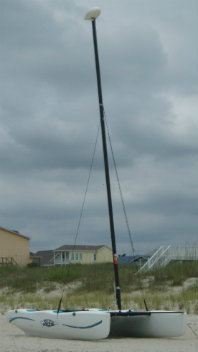
§ 94.06PLACING OBSTRUCTIONS ON THE BEACH.
(A) All beach equipment must be removed from the beach by its owner or permitted user on a daily basis. All personal items and beach equipment unattended and remaining on the beach between the hours of 6:00 p.m. and 7:00 a.m. will be classified as abandoned property and shall be removed and disposed of by the town.
(B) All beach equipment shall be set at least ten feet from any sea turtle nest or dune vegetation.
Just so you know, there was a catamaran on the beach strand the holiday week
Both pictures are of unattended items on the beach strand
Which of these ordinance compliance choices do you think is correct?
Select from the following choices:
-
-
- Both items are in violation of the ordinance
- Neither item is in violation of the ordinance
- The catamaran is in violation / the beach umbrella is in compliance
- The catamaran is in compliance / the beach umbrella is in violation
-
In my world either both are in compliance or both are in violation
Apparently Ordinance §94.06 dated 09/14/10 does not apply to the catamaran
So, the answer is #4 / The catamaran is in compliance / the beach umbrella is in violation
It makes no sense that the large catamaran is allowed while the smaller umbrella is not
In what universe does this make sense?
Corrections & Amplifications –
 Oak Island revises ordinance to target big beach holes
The Town of Oak Island has changed an ordinance to target unfilled beach holes. Since the start of May, theOakIslandBeach Safety Unit has responded to and filled inover205large, deep holes left unattended on the public beach areas.The Town says deep holes in the sand can be dangerous to beachgoers, wildlife, and Beach Safety crews responding to emergencies. At well over 100 lbs. per cubic foot, the weight of sand from a collapsed hole can immediately crush most children, small pets, and wildlife. Often difficult to see when left unattended, and nearly impossible to see at night, these hazards regularly lead to damaged emergency equipment and severe injuries for people, pets, and wildlife walking along the beach.OnJuly 8,theOakIslandTown Council approved anupdate to Ordinance 14-142, which will now limit the depth and tools used to dig recreational holes on the public beach areas.
As noted in the new Ordinance Amendment, Holes dug on the beach strand:
-
- Cannot be deeper than 12″
- Can only be dug using toy shovels intended for use by children
- Must be attended at all times, and completely filled in by 6:00 p.m.
Violation of this ordinance can now result in a $50 fine, issued by the Beach Safety Unit or the Oak Island Police Department.To educate beachgoers on the ordinance update, the Town is inviting everyone to help say “Goodbye to Deep Holes” – through this effort, the graphic below will be shared with accompanying information on multiple visitor-targeted pages of the Town Website, as well as social media platforms and on roadside billboards.
Read more » click here
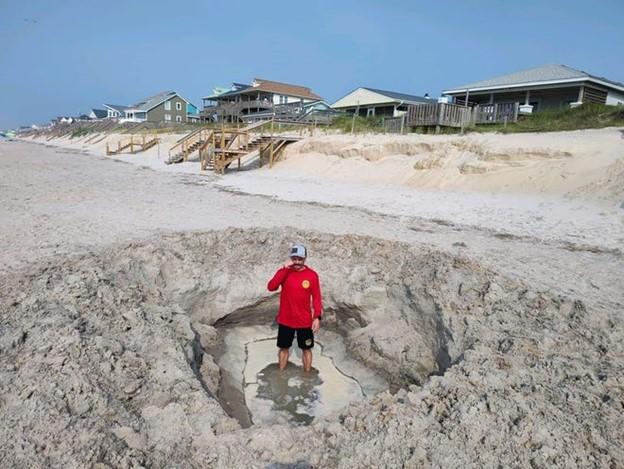
Oak Island restricts depth, tools used for digging on beach
Large, deep holes left by dig-loving beachgoers on Oak Island’s ocean shore have prompted the town’s council to restrict the depth and the tools that may be used to shovel recreational holes on the public beach. The Oak Island Town Council on July 8 updated ordinance 14-142, which addresses digging holes on the beach, to include specific rules that go beyond the original ordinance’s wording that holes be “be attended at all times and filled prior to leaving the beach.” The update was made in response to “the recent call volume and overwhelming safety concerns” that have resulted from deep holes beachgoers have left on the town’s ocean shore,” according to a release the Brunswick County town issued Friday. “Since the start of May 2025, the Oak Island Beach Safety Unit has responded to and filled in over 205 large, deep holes left unattended on the public beach areas,” the release states. “Deep holes in the sand can be dangerous to beachgoers, wildlife, and Beach Safety crews responding to emergencies. At well over 100 lbs. per cubic foot, the weight of sand from a collapsed hole can immediately crush most children, small pets, and wildlife.” These holes can be difficult to see, particularly at night, and regularly cause damage to emergency equipment and severe injuries to people, pets and wildlife walking the beach. The amended ordinance mandates that holes may be dug only using toy shovels, not more than one foot deep, must be attended at all times, and completely filled by 6 p.m. Violators will face a $50 fine issued by the Beach Safety Unit or the Oak Island Police Department.
Read more » click here
 Changes to a Brunswick beach town fire station could improve response and rescue times
Following residential growth and a recent drowning, this Brunswick beach town is looking to revamp its partly operating fire station into a 24/7 station. The town of Holden Beach and Tri-Beach Fire Department are planning to replace an existing fire station on the island with an upgraded, full-time fire station. A permanently staffed station could mean quicker response times all around. The Tri-Beach Fire Department serves Varnamtown, Holden Beach and unincorporated Brunswick County from two stations located on Sabbath Home Road SW and Seashore Road in Supply. A rebuild of the station on Sabbath Home Road, originally built in 1968, is underway and ahead of progress, Tri-Beach Fire Department Chief Doug Todd said. The new station will have updated sleeping quarters, a slide instead of a fireman’s pole and larger bay doors to accommodate newer fire trucks. However, the department hopes another dream construction project will soon become a reality.
Giving the island a permanent station
The town of Holden Beach contracts with the Tri-Beach Fire Department to provide services for the island. There is another fire station at Starfish Drive on Holden Beach, but the building is owned by the town and only partially used. Though both stations in Supply are staffed by at least two people at all times, Todd said the station on Holden Beach is only staffed by two firefighters during the day from May 1 to Sept. 30. The existing fire station on the island is not fit for a 24/7 staff, said Todd, noting there are no sleeping quarters for workers to spend the night. If the town decides to go through with upgrading the station, he said, a rebuild will be necessary. During the Holden Beach Board of Commissioners meeting on June 17, inspections director Tim Evans told the board he is in the early process of making plans to upgrade the existing fire station for the Tri-Beach Fire Department to permanently move in.
Increases in residents and calls for help
Water rescue calls normally occur between May 1 and Sept. 30, Todd said. Occasionally, he added, a water rescue call is made in the evening after the staff has left the station. “Most of the [water rescue calls] we have in the off season have something to do with a fisherman or somebody that’s fishing, and we have a boat that we run out of the main station and that usually is what takes care of that call,” Todd said. Surrounding beach town fire departments, like Oak Island and Ocean Isle Beach, have mutual aid agreements with the Tri-Beach Fire Department if additional help is needed, the chief said. However, having the beachside station staffed 24/7 will help with rescue and response times. “The biggest thing is, the island is getting to where it’s got more full-time residents, and we’re having a few more calls over there than what we normally have,” said Todd, noting the increase in calls for help occur later in the day.
Current and future staffing
With the growth the area is experiencing, Todd said more personnel is needed in general. The Tri-Beach Fire Department has 19 full-time employees, around 11 part-time employees and 12 volunteers, Todd said. Asked if the department has enough personnel to operate the Holden Beach station full time, the chief said yes. “We can get by with the staffing we have now to do that, but it would be nice to have three personnel at each station on duty at a time,” he said. Two people are staffing the stations in Supply during the day, Todd explained, and adding a third person to the shift will allow them to work more efficiently. “Like in the nighttime and in the off season, we have that now at our main two stations, and the staff have seen how much more efficient they can handle things when they get on a call by having that third person,” Todd said.
What’s next?
During the June 17 meeting, Evans said a needs assessment and a draft site plan have been completed. “We actually verified that the location of our current fire station is where it should be,” Evans said. The Starfish Drive station location is in the middle of the eight-mile-long island, Todd said. A house count must be done before the project can be brought before the commissioners with roughly estimated costs, Evans said. The town will also seek input from the state fire marshal regarding recommendations for future needs, he added. The fire department sent information to the town several weeks ago, Todd said. No updates on where the town is at in process have been released as of July 1.
Read more » click here
Odds & Ends –

More than a machine: How a robot is propelling beach conservation
One local environmental group is aiming to help keep coastal environments cleaner with new technology. While navigating permitting challenges, their end goal is to amplify community engagement in addressing beach pollution and foster greater public responsibility for the health of the shoreline. More than just a beach-cleaning robot, Keep New Hanover Beautiful’s BeBot serves as a unique and visible catalyst for change. The robot cleans up litter and has been utilized so far in Carolina and Wrightsville beaches for under two years. Last year, it cleaned over 100,000 square feet of beach overall but hopes to expand along the North Carolina coast. “It’s kind of like pushing a rock up a hill for us, which we’ve been successful at so far and been able to do these things, especially with Carolina Beach, but the rock still needs to be pushed up in many other spaces for us to be able to expand out,” Veda Lewin, Vice President of Keep New Hanover Beautiful, said of permitting struggles. The BeBot’s deployment has encountered permitting hurdles, primarily due to existing regulations not being tailored for advanced, low-impact technology. To take the BeBot onto the beach for cleaning, Keep New Hanover Beautiful has to obtain a Coastal Area Management Act minor permit and Department of Environmental Quality beach-raking permit, in addition to getting permission from local municipalities. “The state won’t process the application unless the municipality is on board first, but the municipality would like us to have the state permit first,” Keep New Hanover Beautiful Executive Director Dick Brightman explained. “Then it kind of turns into this hamster wheel where we’re just kind of stuck.” As a result, the BeBot was out on the beaches five times last year. It takes more than a month to get permits on average. Brightman added current legislation was not written with technology like BeBot in mind. He explained existing state regulations are antiquated, designed for traditional beach-cleaning machinery rather than low-impact robots. While there isn’t a clear regulatory pathway specifically for devices like the BeBot, Brightman said the DEQ has been understanding of the technology, acknowledging it isn’t a traditional beach rake. (Port City Daily contacted the DEQ for comment on its permitting process for technology not covered by current regulations; a response wasn’t received by press, but this will be updated upon contact.) “We’ve done demos in the DEQ parking lot,” Lewin said, “demos for both municipal governments on Carolina Beach and Wrightsville Beach. What’s made the difference is them being able to actually get involved with it and see that it’s not a tank, something that’s coming and demolishing the shoreline.” The BeBot, acquired by Keep New Hanover Beautiful in 2023, is a 1,300 pound, manually-operated beach-cleaning robot. Also dubbed “Robot DeNiro,” it works by dragging a rake approximately 4 inches below the sand’s surface, where smaller debris often settles. In contrast, a traditional beach rake pulled by a tractor can dig up to 6 inches, making BeBot a less disruptive option when it comes to sand erosion and wildlife protection.It works like this: BeBot’s rake pushes sand onto a grate, allowing clean sand to fall through, back onto the shoreline, while trapping litter. The collected trash is then deposited into a rear bin for disposal.Items most commonly trapped include small plastics, such as bottlecaps, food wrappers and cups, as well as cigarette butts. With a sifting width of about 51 inches, the BeBot runs up to three hours on an eight-hour charge, augmented by solar panels for air pollution-free operation. Lewin explained the BeBot’s less invasive design sets it apart considerably from a traditional large beach rake. It has a more environmentally friendly, gentle-cleaning approach, solar-powered and quietly operates, causing significantly less sand compaction and disturbance than heavy, fuel-powered machinery. “This is not impacting in any negative way and I would not stand behind something that I felt was,” said Lewin, who has a master’s degree in coastal resource protection.By comparison, Carolina Beach’s Public Works Department primarily uses large, tractor-pulled rakes, which weigh close to 2 tons, for maintenance, though sea turtle restrictions limit these operations to just a few times annually. The BeBot also has to adhere to sea turtle nesting season restrictions; from May 1 to August 31 deep raking of the sand is prohibited to avoid disturbing or destroying nests and eggs. “I agree these protections need to be in place and I’m happy that the project is difficult to get through the regulations,” Lewis said, “especially with the turtle populations that we have here.”Supplementing Carolina Beach’s beach cleanup is also the volunteer group CB Trash Walkers, who organize regular litter collections along the strand, often on Wednesdays. A high-tech addition to these efforts is the BeBot, last deployed on Carolina Beach on June 10 and 11.According to Carolina Beach Mayor Lynn Barbee, the BeBot often draws in beachgoers whenever it goes out and the results so far have been promising.”There’s two pieces to it – one is it picks up the trash, but two is it also brings awareness to the trash left behind,” Barbee said. “It might not be the end all be all, but if we can be a little better tomorrow and can continue to improve, we can really reduce the waste that gets into the ocean.” Barbee said the Town of Carolina Beach is open to purchasing its own robot in the future; the robots cost roughly $80,000. Keep New Hanover Beautiful hopes to expand the BeBot’s reach into neighboring beach communities like Topsail Beach next, seeking to spread litter prevention awareness eventually throughout the Atlantic coast.”Being able to partner with them and talk to their municipalities and be able to get the word into their communities too,” Brightman said. The organization is dedicated to litter prevention, waste reduction, recycling, and beautification throughout the southeastern North Carolina region. It prominently features its advanced beach cleaning robot in community engagement and educational programs to help promote awareness. For instance, Keep New Hanover Beautiful held a field day with New Horizons Elementary School in March. Brightman said third-through-fifth-graders could see how BeBot operated. Despite its impressive capabilities, the BeBot alone cannot eradicate beach pollution. Brightman and Lewin said lasting change requires a deeper shift in how people interact with the beaches they enjoy, recognizing technology is a tool for awareness, not a complete replacement for human responsibility.”Is this machine going to solve beach pollution and beach litter? No, absolutely not,” Lewin said.However, she said beachgoers, especially children, learn by merely seeing BeBot at work. In a previous outing, she explained that a group of kids tailed behind the robot for two hours, fascinated by its ability to find trash hidden beneath the sand.”So, it’s more than the machine picking up litter, it’s talking to people about what it’s collecting and bringing attention to it,” Lewin said. Brightman explained much of the beach’s pollution goes unnoticed by the casual visitor.”They probably know there’s cans left behind, but they don’t know about the cigarette butts or the bottle caps,” he said.Pollutants often include tiny, seemingly innocuous items, such as the plastic tabs from new clothing, which can easily drop into the sand unnoticed.”It’s kind of like death by a thousand cuts,” Lewin said. “Say you bring a Publix sandwich out to the beach, you remember to wrap up the leftovers of your sandwich in the wrapping paper, but the little tab of your mustard packet, you dropped it, and it flew away in the wind. That’s the kind of thing that we’re picking up, so a bird doesn’t eat it, so a turtle doesn’t eat it.” One of the most frequently found pollutants around New Hanover are cigarette butts.According to the National Oceanic and Atmospheric Administration, cigarette butts are the most common form of marine litter. In addition to the BeBot project, Keep New Hanover Beautiful has managed a cigarette butt recycling program since 2017 with over 400 cigarett ereceptacles at 64 sites around the county.Since the program’s inception, the group has sent approximately 3 million cigarette butts or roughly 1.5 tons to be recycled into hard plastic pellets and plastic lumber. According to recycler TerraCycle, Keep New Hanover Beautiful ranks in the top 10 as one of the top cigarette butt recyclers in the country, among the likes of large cities and corporations, including Amazon warehouses. Nearly two years after the BeBot made its maiden voyage on Carolina Beach, KNHB is focusing their attention on a new social media campaign highlighting the organization, its members and volunteers, and the often-unseen pollutants the BeBot targets. It’s urging beachgoers to adopt a “pack-in, pack-out” mentality. “It really resonates with people and it lands when they’re camping,” Lewin stated. “I think if we were able to translate that mentality to going to the beach for the day it’s essentially the same thing.” The campaign aims to shift the public mindset, moving beyond the idea of “someone else will clean it up.”
Read more » click here
This and That –
Bird Nesting Area
NC Wildlife Commission has posted signs that say – Bird Nesting Area
The signs are posted on the west end beach strand around 1335 OBW.
People and dogs are supposed to stay out of the area from April through November
. 1) It’s a Plover nesting area
. 2) Allows migrating birds a place to land and rest without being disturbed
As temperatures surge, sunbathers and shorebirds look to share Wrightsville Beach
Both like sand and being at the coast. But sometimes humans and birds find it hard to share the beach. How Audubon NC is looking to help both coexist.
The southern end of this New Hanover County beach town was a cacophony of noises on a hot June morning as the fight to find the best space and the location of loved ones saw a few ruffled feathers. But the amicable squabbling wasn’t among beachgoers searching for a way to stay cool as a heat dome descended on the Cape Fear region, but shorebirds and waterbirds jostling for space amid the sand dunes and beach areas in close proximity to some of the priciest real estate along the N.C. coast. And that right there sums up the challenges of managing a vital nesting and roosting colony alongside a thriving and popular beach town that can see its population surge from around 2,400 full-time residents in the winter to more than 30,000 during the peak of summer. “In many cases they’re competing for the same habitat as people, so that can be very difficult,” said Lindsay Addison, a coastal biologist with Audubon North Carolina.That balancing act between humans and Mother Nature comes as researchers warn about the continued threats, many manmade, facing bird species across the country.
‘A full-on emergency’
This spring a coalition of conservation and science groups, including Audubon, released the 2025 State of the Birds report. According to the study, about a third of all bird species nationally are considered of high or moderate concern because of declining populations. Researchers have issued alerts for nearly 80 species of birds that are or remain despite conservation efforts in danger of eventually disappearing from the American landscape, meaning they have lost more than half of their measurable populations in the past 50 years. “Birds tell us that we have a full-on emergency across all habitats,” said Marshall Johnson, chief conservation officer at the National Audubon Society, in a release. Among the most at risk are shorebirds, which have seen a 33% decline since 1980, according to the report. While waterbirds have shown some improvement, they face some of the same threats that shorebirds do. Those include loss of habitat due to booming coastal development and rising sea levels tied to climate change that’s causing increased flooding of important colony nesting and roosting sites, especially in sandy areas at the ends of barrier islands that are favored by many coastal bird species. The warming of the planet from increased greenhouse gas emissions is also leading to longer and more intense heat waves, which can impact food supplies for the birds. Tropical storms also are growing stronger and bigger as ocean temperatures increase, researchers warn. Predation from coyotes and other predators also is a constant threat. But it is human interaction with the birds that remains one of the biggest problems although it is also the factor that can be most easy to manage.
Sharing the coast
Audubon and other groups have worked hard over recent decades to get areas favored by coastal birds, like the sandy spits near inlets, declared protected areas when the feathered friends are around. But the secret, officials say, is reinforcing that message every year through signs and the occasional gentle reminders to beachgoers, like to keep dogs away from the birds whether on or off a leash. Looking at the big picture, Addison said most visitors to the reserve sites are very respectful of the birds’ needs and the rules regarding the sanctuaries. At the south end of Wrightsville, volunteers help keep the peace between visitors and birds. A plethora of signs and illustrations, drawn by local school students, and a rope barrier also help to reinforce the idea of keeping a safe space between the parties. “We really don’t have too many problems, and when we do one of our volunteers is generally there to talk to folks about what they should and shouldn’t be doing and give them a good idea of what’s going on and what they’re seeing,” Addison said, noting the bird steward program at the south end of Wrightsville has nearly 80 volunteers. “People really do want to be responsible coastal visitors when they come here.” Nesting shorebird season runs from March 1 through mid-September, overlapping near the tail end with the arrival of migrating waterbirds moving south from their nesting grounds in the Canadian Arctic. Among the shorebirds still at the south end nearing the end of June are hundreds of least terns and black skimmers, mixed in with some common terns and the occasional oystercatcher, which are either still taking care of fledgling chicks or incubating eggs.Nearby undeveloped islands, like Lea-Hutaff and Masonboro, also are popular nesting and roosting sites, and have several protected areas to help the visiting birds and visitors share the islands. Addison said the importance of these islands to the birds ongoing recovery can’t be overstated, with Lea-Hutaff Island, squeezed between Figure Eight and Topsail islands in Pender County, accounting for nearly one-third of the nesting least terns in the state.But that doesn’t mean the birds can’t be found outside of the posted-off areas, especially as fledglings explore their surroundings and all of the birds head to tidal areas for food and to stay cool. “So, when you’re at the beach, it’s really important that people don’t think every bird is a seagull, so don’t chase them,” Addison said. “Some of them can’t fly, and even if they can they really can’t be wasting important energy and calories running and flying away when they’re trying to feed their young or just find food for themselves.”
‘We can learn a lot from them’
Because of its accessibility, the south end of Wrightsville Beach is a magnet for bird watchers − and birdwatching is big business in the U.S. The recent birds report highlights findings from the 2022 National Survey of Fishing, Hunting, and Wildlife-Associated Recreation that found total economic output related to bird watching activities is $279 billion, and birding related activities support 1.4 million jobs. On this roasting late June day, though, there weren’t many visitors of any sorts paying attention to the birds. Staying cool was the name of the game for beachgoers. But that wasn’t stopping Joanna Smothers, relaxing on her beach chair on the Intracoastal Waterway side of the sandy spit, from keeping an eye on the vocal and busy birds and offering any help to visitors who came her way. This was the fourth year Smothers had volunteered with the bird ambassador program. “I love it,” said the Wrightsville Beach resident. “This really is one of the best ways to spend time at the beach.” Smothers added that she really enjoys observing the birds and their interactions, and when she explains their behavior to visitors they also are impressed. She added that she really likes how the birds, while sometimes seemingly arguing with each other, learn to share the beach and embrace the diversity found within the multiple species that together call the sandy spit home ’ at least for a few months. “I think we can learn a lot from them,” she said with a smile.
Read more » click here
Previously reported – June 2025
Shorebirds among species in steepest decline in latest count
As the weather and water warm, beachgoers will flock to the North Carolina coast just as many of the native shorebirds and seagoing avian residents begin to nest. Piping plovers skittering up and down the sand with the surf, gulls loitering for picnic castoffs and tossed fish bait and pelicans soaring overhead or skimming the swells are all well-known and welcome sights for tourists to the North Carolina coast. The annual nesting sanctuary closure window from March 1 to Sept. 15 helps both early and late-season nesters like brown pelicans and black skimmers. Least terns have already begun their courting and nesting rituals and American oystercatchers have started hatching chicks. While almost any sandcastle builder, surfer or fisherman can expect to share the shore with these birds, almost all of them are in steep decline from habitat loss, rising sea levels, pollution and other threats, a new study led by the Audubon Society shows. The 2025 State of the Birds Report shows sharp declines in shorebirds and other species along the Atlantic Coast, including least terns, American oystercatchers and piping plovers. In North Carolina, black skimmers have also seen a drop in documented nests, leading to their designation as a state-threatened species. “The issues facing shorebirds are complex,” Audubon North Carolina spokesperson Brittany Salmons told Coastal Review. “The combined effects of sea level rise due to climate change and how we respond to that by choosing natural solutions versus shoreline hardening play a central role in the long-term hope for these species. Development brings more people and more alterations – like dredging, beach nourishment, terminal groins – to the habitats birds need. For shorebirds in particular this can be catastrophic. Having inlets with natural oscillation and broad flats are critical, along with water quality and prey abundance.” If shorebirds can rise above all of that, many species also have to endure lengthy, challenging migrations from their nests on the Arctic tundra to wintering grounds in South America and places in between. The quality of each of the habitats they will encounter on their multi-thousand-mile annual odysseys is critical to their survival and ability to return to their nesting grounds to breed once more, Salmons said. Nationally, about a third of all bird species – Audubon kept count of 229 individual species from coast to coast – are considered of high or moderate concern because of declining populations. Of those, 42 species are listed as red-alert tipping point species, or “birds with perilously low populations and steep declining trends.” Another 37 species are considered orange-alert, populations that show long-term population losses and accelerated declines within the past decade. Thirty-three species qualify for yellow-alert status, showing long-term population losses that have stabilized in recent years yet still require conservation to sustain that tenuous recovery, Audubon said. All of those species, regardless of their color coding, have one thing in common: They have each lost more than half of their measurable populations in the past 50 years. “Some of these species lack sufficient monitoring to thoroughly investigate losses,” states the report. “Tipping point species require focused scientific research to pinpoint drivers of declines, paired with fast action on conservation measures to bring these birds back.” As a group, shorebirds fared worst among the bird populations outlined in the report. Since 1980, shorebirds have suffered a 33% decline in overall population, which the report characterizes as “widespread declines with accelerating losses.” Of 28 species of shorebirds measured, 19 showed “definitive negative population trends,” with 18 of those showing accelerated losses in recent years. Shorebirds are most heavily represented among the species listed as at a tipping point. “Surveys show steep shorebird declines at migratory staging sites along the Atlantic Coast from North Carolina to Nova Scotia, as well as the Gulf Coast,” the report says. “Conservation actions to restore these critical coastal habitats will protect shorebirds, people and property from storms, flooding and sea level rise.”
Targeted efforts needed
Targeted conservation efforts are needed to protect shorebirds along the North Carolina coast and elsewhere along the Eastern Flyway, Audubon said. The report highlights efforts to protect the American oystercatcher, the black, white and brown shorebird notable for its thick, sturdy orange bill. Fifteen years ago, the oystercatcher was in serious decline throughout its Atlantic Coast range. In 2009, Manomet Conservation Sciences, in partnership with the National Fish and Wildlife Foundation, launched the American Oystercatcher Recovery Initiative composed of state, federal and private groups across 16 states all along the Atlantic and Gulf coasts. The coordinated conservation effort has resulted in a 43% increase in oystercatcher populations, from about 10,000 individuals in 2009 to nearly 15,000 in 2023, according to the report. Targeted management and monitoring along the coast, including protecting areas for oystercatcher use paid off, the report says. Remote islands and portions of public beaches were also roped off to keep the public from interfering with the birds’ natural behavior and reproduction. “This coordinated, multi-state effort saved this iconic, orange-billed bird from irreversible loss,” Audubon Coastal Biologist Lindsay Addison said. “People visiting the coast this summer can do their part by respecting posted sanctuaries and keeping a safe distance from beach-nesting birds. We’ve already limited available habitat with development, the least we can do is share the shore.” Seabirds – gulls and similar species that spend much of their time soaring over ocean waves – were also found to be in freefall. Audubon characterized seabird populations as suffering “cascading declines, but recovery efforts show great promise.”
Seabirds face numerous threats
Rising sea levels coupled with booming coastal development have wreaked havoc on natural seabird habitat and roosting sites, the report says. Seabird colonies on low-lying islands, like North Carolina’s barrier islands, are flooding more often. Marine heat waves are shocking their food sources. Ravenous invasive species consume seabirds and their eggs in many coastal areas. They also become bycatch in many coastal fisheries and fall prey to plastic pollution and infectious disease, Audubon says. “Protected nesting colonies and marine foraging areas can provide refuges for seabirds during extreme storm events,” the report says. “Policies that reduce fishing bycatch and plastics pollution can help mitigate direct human-caused stressors. Most of the shorebird species highlighted in the report are long-distance migrants, which face a somewhat different set of challenges than temperate-nesting, shorter distance migrants like the American oystercatcher, Salmons said. “To get between breeding and wintering grounds, these long-distance migrants must navigate a series of steppingstone sites where they stopover before continuing on,” Salmons wrote in an email. “Many of these are impacted by human presence on the coast, be it from beach renourishment or other coastal engineering projects that degrade habitat quality and prey availability.” Waterfowl and waterbirds – ducks, rails, egrets, heron and the like – showed some of their long-term population gains level off but have fared better than their seaside cousins, according to the report. In general, duck populations have grown 24% in the past half century and waterfowl were the only group of birds in the report that showed population gains. Of 20 species of duck measured, 14 were found to be increasing in population while one was stable and just five are declining. Large-scale conservation policies and efforts from legislation like the North American Wetlands Conservation Act and the Duck Stamp program are partially responsible for the health of duck species in particular. “But today, this legacy is in jeopardy,” the report said. “Loss of wetlands and grasslands is accelerating in key regions for waterfowl and wetland protections are being weakened. Environmental land-use changes are driving recent duck and marsh bird declines in many areas.” Declining bird populations were laid bare in a 2019 study published in the journal Science that showed a net loss of 3 billion birds in North America over the past half-century. The 2025 State of the Birds report shows those losses are continuing. But, Audubon stresses, conservation works. Coastal restoration, conservation ranching, forest renewal and seabird translocations “show how proactive, concerted efforts and strategic investments can recover bird populations,” the report says. “The science is solid on how to bring birds back,” according to the report. “Private lands conservation programs, and voluntary conservation partnerships for working lands, hold some of the best opportunities for sparking immediate turnarounds for birds.”
Share their habitats
Policies aimed at reversing bird population decline can also benefit humans who share their habitats by creating healthier agricultural land, cleaner water and natural landscapes that better resist flooding, wildfire and drought, Audubon says. Birds are also the natural foundation for a soaring outdoors industry. Around 100 million Americans are avid birdwatchers, not to mention hunters and anglers, all activities to which healthy bird populations are a keystone feature, Salmons said. Audubon puts the total economic impact of birding activity at $279 billion annually. Regular folks can help support healthy bird populations by giving them room this summer, as they roost and lay their eggs along the North Carolina coast. Getting too close to a nest can scare parents away from eggs or hatchlings, Salmons said. Human disturbance, in which recreational or other activities disrupt shorebirds’ survival behaviors, she said. Such activities include people walking through resting or foraging flocks and allowing dogs or children to chase birds which wastes their energy and makes otherwise suitable habitat unavailable for their use. Repeated disturbance has a cumulative impact on birds at the coast. “Just as running once to catch the mailman won’t cause a person to be too exhausted to cook dinner and clean the house but doing it all day can, being repeatedly disturbed over and over impacts the health of shorebirds,” Salmons said. “Compounding these challenges which relate to the heavy development and recreational use of coastal sites are issues related to climate change, such as impacts to Arctic nesting grounds, timing of resource availability, and other factors.”
Read more » click here
Previously reported – June 2023
Wildlife Commission asks beachgoers to be mindful of nesting birds
Waterbirds are nesting and brood-rearing now through Aug. 31
Before hitting the beach this summer, visitors should remember to “share the shore” with beach-nesting birds, giving them, their eggs and chicks a wide berth. Waterbird nesting is now under way along the coast, and biologists with the N.C. Wildlife Resources Commission urge people to watch where they step on the beach because these birds are very sensitive to human disturbance. Eggs and chicks are well camouflaged and can be unintentionally stepped on and crushed by humans and pets. Getting too close to a nesting bird can cause it to fly off, leaving the eggs or chicks vulnerable to the elements or to predators. “Birds have their ways of letting you know when you’re too close,” said Carmen Johnson, the Wildlife Commission’s waterbird biologist. “They’ll call loudly and dive at you. Some species will pretend to have a broken wing to lure you or other perceived predators away from the nest and chicks.” Because beachgoers may not recognize bird-nesting habitats, the Wildlife Commission asks the public to observe the black-and-white signs posted by the agency and signs posted by agency partners around important beach-nesting areas and islands. The signs help people avoid nesting grounds from April 1 through Aug. 31, the sensitive nesting and brood-rearing season, and advise that entering an area can result in the loss of eggs or chicks. Wildlife Commission staff also remind boaters to be mindful of nesting birds on islands, particularly if they approach an island posted with the black-and-white signs. “You can help North Carolina’s waterbirds have a successful nesting season by observing them from outside the posted areas, and avoiding islands marked as bird-nesting areas, or unmarked islands where you see nesting birds,” Johnson said. “Some birds nest near the high tide line, and the likelihood of disturbing nests and stepping on flightless chicks is high.” Johnson added that it is especially important to adhere to the “no dogs” rule on the signs. Not only is it the law, but one dog can destroy an entire bird nesting colony in minutes. Some islands that serve as beach-nesting habitat are not marked with black-and-white signs, such as many of the state’s marsh islands in the sounds. Johnson recommends that people give these islands a buffer between their activities and any nesting birds. Likewise, not all nesting areas on the beach are posted, so coastal visitors and residents should always be aware of their surroundings. Beachgoers can help protect nesting shorebirds by: Keeping dogs on a leash at all times. Dogs may chase and harass birds, as well as trample nests, killing chicks or crushing eggs. Following the beach driving regulations. If driving is permitted, only drive on the lower part of the beach and drive slowly enough to avoid running over chicks. Disposing of trash properly when leaving the beach, including bait and scraps from cleaned fish, which can attract predators such as gulls, raccoons, feral cats and foxes. Discarding fishing line and kite string in an appropriate receptacle. These materials can entangle and kill birds and other wildlife if left on the beach. Abstaining from feeding gulls. Gulls are a major predator of young chicks and eggs. Avoiding flying drones and kites near nesting colonies. They may be mistaken for a predator. Cooperating with these simple steps and observing the posted signs will protect valuable bird resources and preserve our amazing beaches and wild waterfronts. For more information about beach-nesting waterbirds and how to protect them, down-load the “North Carolina’s Beach-Nesting Birds” document or visit the Wildlife Commission’s conserving webpage
(https://www.ncwildlife.org/Conserving/Conserving-North-Carolinas-Wildlife-Resources)
Beacon
Turtle Watch Program –
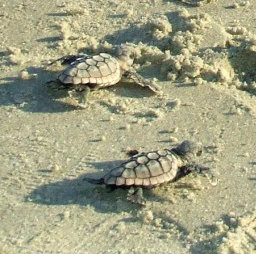
Turtle Watch Program – 2025
The first nest of the 2025 season was on May 22nd
Average annual number of nests is 57
Current nest count – (31) as of 07/18/25
Members of the patrol started riding the beach every morning on May 1 and will do so through October looking for signs of turtle nests.
For more information » click here.
.Turtle Talks
The Holden Beach Turtle Watch Program conducts weekly educational programs on selected Wednesday evenings in June, July and August. Please check our Events Calendar for details on dates, times and locations. Seating is limited.
Children’s Turtle Time
Special programs for younger turtle enthusiasts are held at 4 p.m. on Wednesday afternoons in June, July and August on select dates.
Both programs are free of charge and will be held at the Holden Beach Chapel.

Holden Beach welcomes first sea turtle hatchlings of the season
The first two sea turtle nests of the season hatched on Thursday night at Holden Beach.
Sea turtle hatching season is underway. The town of Holden Beach posted pictures on Facebook. The first two sea turtle nests hatched on Thursday night. “What excitement on the beach,” the post reads. When sea turtles hatch, they find their way to the ocean via the downward slope of the beach along with the reflections of the moon and stars on the water, according to the National Oceanic and Atmospheric Administration. Turtle patrol members are expected to be on the beach to watch the nests, the town wrote. The turtle patrol members are also scheduled to pick up trash on Saturday morning. “We love Holden Beach and want to make it clean and beautiful,” The post reads. “We love our sea turtles, too and want to make the beach safe for them. “Their travels on the beach can be impeded or worse they can become trapped and die in trash.”
Read more » click here
Hatchlings are Here!
WOOHOO! We have hatchlings! 89 babies from nest #1 and 69 hatchlings from nest #2 went into the water last night (July 17) within minutes of each other. This was 56 days after they were laid. Also, Holden Beach Turtle Patrol members will be on the beach tomorrow morning (Saturday July 19) picking up trash. This will be our first Beach Sweep! Look for us early! We love Holden Beach and want to make it clean and beautiful. We love our sea turtles, too, and want to make the beach safe for them. Their travels on the beach can be impeded or worse they can become trapped and die in trash. Please do your share to help by picking up your trash. Thanks.
Read more » click here
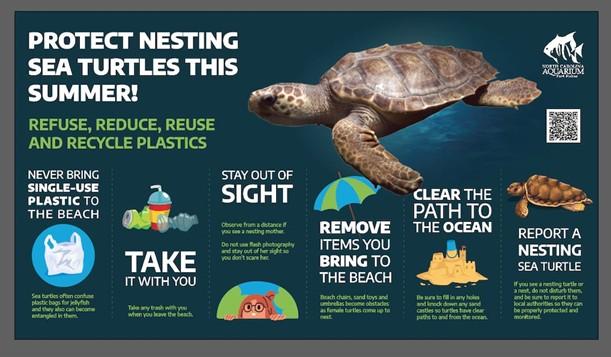
Fort Fisher Aquarium offers tips to protect sea turtles during nesting season
The North Carolina Aquarium at Fort Fisher (NCAFF) has provided the community with tips on how to protect sea turtles during their nesting season beginning this month. “The Aquarium team is passionate about sea turtle conservation and we hope that our work in protecting these species inspires the community to find their own way to protect them,” said NCAFF education curator, Karissa Bearer.
NCAFF suggests a variety of tips, including:
-
-
- Reduce, reuse, and recycle plastics.
- Never release balloons. Pop them and put them in the trash.
- Never release sky lanterns. Try alternatives like bubbles or planting trees in celebration.
- Pick up trash and share that data with scientists studying marine plastics.
- Organize or participate in a beach cleanup or local trash pickup.
- Write a letter to the editor or local government officials about the dangers of marine debris.
-
Read more » click here
Factoid That May Interest Only Me –
Washing away: How funding for NC’s beach nourishment projects could erode
The cost and need for fresh injections of sand along the N.C. coast is growing thanks to climate change even as funding for the beach-building projects grows more tenuous
When the Army Corps of Engineers announced in May that a contract had been signed for fresh sand to be pumped onto Pleasure Island’s beaches, Carolina and Kure beach officials expressed a sigh of relief. Without wide, attractive beaches, there wouldn’t be many tourists. And without visitors, well, the economies of the two New Hanover County beach towns would likely find themselves in a financial mess. The announcement was especially welcome after the nourishment project had been delayed a year because initial bids for the project came in well over estimates. To put it simply, there was too much work along the Gulf and East coasts after a series of big tropical storms and not enough money earmarked to cover the escalating project costs. The work, expected to begin this fall or winter, will buy Pleasure Island about three years of beach relief − assuming a sand-chomping hurricane or strong nor’easter doesn’t take aim at the Cape Fear coast. But what happens after that? While the nourishment agreement between Washington and the beach towns has been extended, the Trump administration has shown little reservation in reversing policy decisions and financial agreements made by previous congresses and administrations.
Mix of funding sources
Coastal communities use a variety of financial models to fund their beach-building projects.Arguably among the luckiest North Carolina towns are New Hanover County’s three beach towns and Ocean Isle Beach in Brunswick County, which see periodic federal beach nourishment projects. Under the agreements with Washington, the federal government generally picks up 65% of the nourishment’s cost while the remaining 35% is the responsibility of local governments or the state. In the case of Wrightsville, Carolina and Kure beaches, New Hanover County and the state split the local cost-share. New Hanover uses room-tax proceeds, a special additional tax on hotel and short-term rentals, to pay for its beach nourishment costs. While a sustainable model, even local officials admit the fund could get stretched quickly if the county had to pick up more of a nourishment project’s cost if the aggressive cost-cutting moves underway in Washington take aim at beach funding. Funding for beach building could become a heated issue in a world of tighter budgets when many see nourishment projects as only benefiting oceanfront property owners and that the work needs to be done every several years to be truly effective and offer protection, since erosion is a natural process that’s only been increasing in recent years due to rising seas and increased storm activity fueled by climate change. The upcoming Pleasure Island project, for example, will cost $23.5 million. According to corps and county officials, the cost-share of the Carolina Beach portion of the project is 50% federal, 25% county, and 25% state. In Kure Beach, the break down is 65% federal, with New Hanover and Raleigh splitting the remaining 35%.
Tough choices
For beach towns that don’t have the federal funding backstop, the financial question looms large. Yet local officials admit just letting their beaches wash away isn’t a viable option, either. Beaches draw visitors, prime the local economy, and keep real estate values high. And for communities that have few sources of income and jobs other than tourism, sand is the only game in town. But funding beach nourishment projects is becoming perilously expensive for many coastal communities, and tough choices are already being made. In 2021 North Topsail Beach, which is facing serious erosion woes at the town’s northern end, opted out of a federal beach nourishment project with neighboring Topsail Island town Surf City due to concerns about meeting the cost-sharing requirements. Farther up the coast, Rodanthe on the Outer Banks is a small, unincorporated Dare County community that has some of the highest annual beach erosion rates in North Carolina. That constant pounding of the Atlantic has seen 10 oceanfront homes topple into the ocean in the past four years. But county officials have told residents they simply don’t have the money to fund a nourishment project for the community, especially as they are already paying for other large beach projects along the Outer Banks. They said a one-time beach nourishment for Rodanthe could cost as much as $40 million, and maintaining the village’s beach over 30 years, where sand is washing away upwards of 20 feet a year in places, would cost more than $175 million. Besides room-tax proceeds, many coastal communities dedicate a portion of their property taxes to help fund beach-related project. But most beach towns are pretty small, and the cost of beach nourishment projects isn’t − and have been increasing in recent years. The upcoming Pleasure Island project, for example, had an estimated cost of just under $20 million. But the only bid for the work the corps received came in at $37.5 million, forcing a year-delay to the work until a lower bid could be secured. That’s left many beach towns looking to Raleigh for help. Surf City recently completed a nearly $20 million beach nourishment project, using sand from Banks Channel, which was largely funded with a $14.5 million state grant. Oak Island also is looking at a large-scale, end-to-end nourishment project that will cost at least $40 million, with a state grant projected to pick up about half the cost.But grants are only good for a single dredging contract, and beach nourishment needs to take place every few years to really be effective. And with the state struggling to pay for Tropical Storm Helene relief and recovery efforts, especially with federal support getting cut, pumping sand might not be a priority in Raleigh for much longer. The hollowing out of the Federal Emergency Management Agency by the Trump administration also could hit some coastal towns hard since FEMA often pays to rebuild eroded beaches if the initial placement of sand were paid for by the local community. But with FEMA all but getting out of the disaster-relief business, that funding source also could soon dry up for beach towns.
Read more » click here
 Amidst FEMA staff cuts, worries grow about summer hurricane, tornado seasons
The Trump administration wants to rethink FEMA’s role in disasters. So far it’s mostly ’caused a lot of confusion.’
Federal Emergency Management Agency employees are trained to respond to disasters but have struggled this spring with the situation unfolding at their agency. While they’ve been deployed to wildfires in Los Angeles, flooding along the Kentucky River and throughout the southeast in response to Hurricane Helene, FEMA workers have watched a roiling turmoil of staff cuts, slashed budgets and threats to dismantle their agency. They’re fielding difficult questions from friends, co-workers and disaster victims about what the future holds. “It’s caused a lot of confusion,” said Michael Coen, a FEMA veteran of more than 15 years who left his position as chief of staff on Inauguration Day. At least 2,000 of the agency’s roughly 6,100 full-time employees have either left or plan to leave under the waves of terminations and voluntary retirements ordered by Elon Musk’s Department of Governmental Efficiency, Coen told USA TODAY. That doesn’t include a reduction in force expected to take place in the federal government in the coming weeks. President Donald Trump also has launched an agency review and cut funds for some FEMA grant programs, outraging officials in states where those funds already had been committed. The controversy taps into a long-running debate over the role of states and the federal government in disaster response. It’s hard to find a public official who doesn’t think the way the nation responds to disasters could be improved, but the 30% cut in its full-time staff raises concerns about whether FEMA will be able to respond to major disasters during the approaching summer storm season that could bring hurricanes, tornadoes and wildfires. Jay Inslee, whose term as the Democratic governor of Washington State ended in January, is among those gravely concerned about FEMA’s ability to respond. “Gutting FEMA is just going to make more and more families have to be living under blue tarps for years, and not to have the financial assistance they deserve when they pay their taxes,” Inslee said. “I’m outraged on their behalf.”
States can’t go it alone, workers are worn out
Major disasters require federal resources, and state and local governments cannot cope on their own, said Shana Udvardy, senior climate resilience policy analyst at the Union of Concerned Scientists “With the summer danger season of extreme weather, including climate-fueled disasters, getting underway soon, these attacks on FEMA could not come at a worse time,” Udvardy said. “Congress must push back assertively on these egregious plans in a bipartisan way “’ disasters do not discriminate based on politics.” When enormous natural disasters befall communities, especially small ones, they just don’t have the local resources, Inslee said. “It’s basically everybody pitching in together from the county to the Red Cross to the state, to the federal government.” FEMA’s remaining full-time employees, even those who work at headquarters and don’t typically deploy, have been warned to be ready to deploy to disasters this summer. The agency has been short-staffed for years, federal documents show. The staff flexes up and down as the need arises, with roughly 12,000 employees who respond as reservists or local temporary hires. Among the cuts this year to the permanent employees were 200 probationary staff, dismissed because they had been either recently hired or recently promoted. Coen said another 800 took the “fork-in-the-road” plan that placed employees on administrative leave with pay until the end of the summer, when they’d lose their jobs. “A lot of people with the agency were just exhausted,” he said. “Last year was a very challenging year for FEMA employees with all the disasters that took place, plus all the (Hurricane) Helene misinformation.” In the aftermath of Helene, some FEMA officials found their personal information had been made public on the web, and some were threatened. The inauguration opened a new chapter. Trump had been critical of FEMA during the campaign, and his first official trip was to visit the Helene disaster zone in western North Carolina, where he said the administration was “very disappointed” in FEMA. After information was leaked from one early meeting with the new FEMA officials, at least a dozen staff members were asked to submit to lie detector tests, Coen said. Employees are afraid to talk, even to former colleagues, because they’re afraid they might be subjected to a lie detector, Coen said. “If the head of the agency isn’t even respected by the Secretary’s office, if he’s being subjected to a lie detector test, you know, why would I stay here?” Even some of the younger staff are thinking, “I don’t need this anxiety,” he said.
FEMA’s role in disaster response
FEMA responds to every major natural disaster, assessing damage and providing assistance under pre-established guidelines and state agreements. In Washington State, “FEMA has been a tremendous, absolutely essential partner,” Inslee said. “From a boots-on-the-ground perspective, FEMA has been incredibly valuable.” In recent years, FEMA has seen an enormous increase in the number of disasters that require a response. That’s, in part, because the number of extreme weather events is rising, with more intense rainfall and larger wildfires brought on by climate change, Inslee said. That’s backed up by numerous federal reports. The scope and complexity of disasters are also growing because more people live in vulnerable areas, where they’re more exposed to storms and fires. In the current fiscal year, the agency carries financial obligations for 30 major disasters, dating back to Hurricane Katrina in 2005, according to its February 2025 monthly report. Its actual and estimated total obligations for those disasters are around $57 billion. Its budget authority for this year was $33 million.
FEMA’s reputation problems
The agency’s reputation has struggled in part because FEMA meets people when they are likely to be at their lowest, most desperate point, and, in part, because its mission is often misunderstood, Coen said. FEMA is supposed to function primarily as a backstop for people who don’t have insurance. It covers uninsured losses, so if you have homeowners insurance, “you’re probably not going to be eligible,” he said. “That frustrates people who feel like they did everything right.” Victims often expect FEMA to be there first, even though the agency must wait to be requested by state government. That message is often hammered home by emergency management officials, who remind residents to store enough supplies for five to seven days after a disaster. The agency’s mission has evolved and it walks a tightrope at times between trying to battle fraud and not attach so many rules that money can’t get where it needs to. State and local officials often refer to the recovery phase as the “disaster after the disaster.” A General Accounting Office Report in 2022 made numerous suggestions for addressing “red tape” in disaster recovery. Coen said a prime example of the misunderstandings is the frustration from states where the Trump administration recently denied claims for disaster assistance and denied extensions of certain assistance in others. “I’m personally not critical of that,” he said. When the federal government takes the bulk of the financial responsibility, it often slows down recovery, he said, adding that when new bridges or other infrastructures are complete, other officials and organizations sometimes take credit and forget to acknowledge FEMA’s role.
What happens next with FEMA?
By executive order on Jan. 24, Trump ordered a “full-scale review” of FEMA. Federal responses to Helene and other disasters “demonstrate the need to drastically improve” the agency’s efficiency, priorities and competence, his executive order stated. Appointees to the review council, announced April 28, will be tasked with taking a sweeping look at everything from disaster aid during periods before and after FEMA, the traditional role of states and citizens in securing life, liberty and property and how FEMA could serve as a support agency if the states were in control of disaster relief. They’re expected to make recommendations to Trump for improvements or structural changes to promote the national interest and enable national resilience. Members include Secretary of Defense Pete Hegseth, Homeland Security Kristi Noem, Texas Gov. Greg Abbott, Florida’s emergency management chief Kevin Guthrie and Tampa, Florida, Mayor Jane Castor. Noem already has stated she wants to eliminate FEMA.On Truth Social, Trump posted: “I know that the new Members will work hard to fix a terribly broken System and return power to State Emergency Managers.” Udvardy, with the Union of Concerned Scientists, is among many who agree there’s room for reform at the federal agency. Genuine reforms, she said, “should be informed by science, expertise, and the experiences of disaster survivors.” Meanwhile, the clock is ticking. The start of the Atlantic hurricane season is just a month away.
Read more » click here
States and Cities Fear a Disaster Season Full of Unknowns Amid Federal Cuts
President Trump’s efforts to downsize the government threaten essential functions that Americans have come to rely on before, during and after natural disasters. States and cities along “‹the Atlantic and Gulf coasts are “‹heading into hurricane season“‹ with an extraordinary level of uncertainty, unable to “‹g“‹auge how significant cuts at vital federal agencies will affect weather forecasts, emergency response and long-term recovery. They are bracing for the likelihood that fewer meteorologists at the National Oceanic and Atmospheric Administration will lead to less accurate forecasts, and that the loss of experienced managers at the Federal Emergency Management Agency will lead to less coordination and more inaction. Governors and mayors are also anticipating less financial aid, as the Trump administration shifts the burden of response and recovery away from the federal government. Exactly who will pay for what moving forward is a gaping question as disasters become bigger and costlier. “There’s no plan in writing for how FEMA intends to respond during this disaster season,” said Trina Sheets, the executive director of the National Emergency Management Association, which represents state emergency managers. “Things seem to be changing on a daily basis. But there’s no road map for states to follow or to be able to plan for.” The Department of Government Efficiency, the cost-cutting initiative led by Elon Musk, has left agencies that would normally be preparing for a run of extreme weather at this point in the year trying instead to find their footing after leadership changes and staffing cuts. FEMA has lost about a quarter of its full-time staff, including one-fifth of the coordinating officers who manage responses to large-scale disasters, according to a former senior official. Many of those employees made their own decision to leave. NOAA has lost about one-fifth of its staff, including hundreds of people from the National Weather Service. The thought of a shrunken FEMA – or eliminating the agency altogether, which President Trump has raised – is unnerving coastal residents like Trasi Sharp, of Sanibel Island, Fla. Her business, Over Easy Cafe, was destroyed by Hurricane Ian in 2022. “To just get rid of it with no plan is frightening,” Ms. Sharp said of the agency. It took her 18 months to rebuild, and then she lost $60,000 worth of equipment in Hurricane Milton last year, after the low-lying restaurant took on two-and-a-half feet of water. She did not receive FEMA assistance to repair her restaurant or her home, but she said the agency’s debris removal services were essential to the island’s recovery. “It’s just such a confusing time,” she added. “We’re all on pins and needles this season.” The agency did not respond to requests for comment before this story was published online. In an email after publication, a spokesperson for FEMA said that it was “shifting from a bloated, DC-centric dead weight to a lean, deployable disaster force that empowers state actors to provide relief for their citizens.” Kristi Noem, the Department of Homeland Security secretary, whose department includes FEMA, said on Tuesday that the agency was prepared for hurricane season, which extends from June through November. Some of the other federal agencies involved in disaster response agreed, in responses to emailed questions. But the Army Corps of Engineers, which is often called on to help communities after storms, acknowledged that it did not know “the full impact that staff departures or other reductions will have.” The unknowns extend beyond hurricanes. States and cities in the West, going into peak wildfire season, say they are concerned about how much they will be able to lean on the federal government after the Trump administration reduced the ranks of United States Forest Service personnel who support frontline firefighters. The domino effect may be that more local firefighters are deployed to help other jurisdictions fight wildfires sooner and for longer – leaving fewer available back at home, Chief Leonard Johnson of the McLane Black Lake Fire Department near Olympia, Wash., said in a news conference this month. Several state officials in the West said all the uncertainty affirmed their decision to devote more resources to their own firefighting efforts in recent years. “We have made the effort to try to take our fate back,” said Stan Hilkey, executive director of the Colorado Department of Public Safety. There is no historical comparison since no other administration has made such deep cuts to FEMA or other disaster-response agencies. In the recent past, the nightmare scenario came in 2017, when FEMA struggled to respond to three devastating hurricanes in quick succession – Harvey, Irma and Maria – as well as widespread wildfires in California. The agency came close to running out of staff to deploy. At the start of that year’s hurricane season, FEMA had 6,588 trained staff members available to deploy to disasters, according to agency records. As of Wednesday, it had 1,952. States with robust budgets and considerable experience with disasters, such as Texas and Florida, may be better suited to working with less federal help than less affluent, more rural states that have fewer funds to tap into. Climate change has not only made extreme weather more frequent and deadlier, but also more likely to hit where it rarely did before. Even some who believe that FEMA needs an overhaul have acknowledged that the speed and volume of the changes could make this disaster season bumpy. “We’re going to be massively transforming the response system while that response system has to be effectively responding,” Gov. Glenn Youngkin of Virginia, a Republican, said on Tuesday at the inaugural meeting of a Trump-appointed council that will make recommendations on FEMA’s future. Few question the need for improvements to the nation’s disjointed disaster response system, especially when it comes to long-term recovery. FEMA employees say they are often buried in months of paperwork. States and cities may submit a rebuilding proposal, only to find themselves caught in a lengthy back-and-forth after FEMA underestimates its price tag. Disaster victims often complain that FEMA takes too long, and offers too little, to be of real help. “They need to be revamped,” said Karen Small, 54, whose elevated home on Sanibel Island suffered damage during Hurricane Ian. That storm caused more deaths in Florida than any in almost 90 years. After her property insurance payout fell short, Ms. Small turned to FEMA to help cover some of her repairs. Agency officials insisted on meeting in person four times to review her application, while she was staying more than three hours away. In the end, she received $700, the standard amount that FEMA offers disaster victims. “That $700 covered my gas just to meet them,” she said. “It was almost an insult.” Yet few can fathom disaster recovery without the federal government. “My God where would this community be without FEMA?” said Nic Hunter, the outgoing mayor of Lake Charles, near the Louisiana coastline, who steered the city through Hurricane Laura in 2020. His city alone claimed more than $200 million after that storm and Hurricane Delta that year, he said. Had the federal government not stepped in, the city would have had to raise taxes and cut back services to make up the difference. “By and large, my experience with FEMA has been a positive one,” he said. FEMA is weighing whether to make it more difficult for states to qualify for financial assistance, and whether to reimburse state and local governments at a lower rate. The Trump administration wants states and cities to bear the brunt of the response and cost, saying they can be quicker and more effective. One possibility is to give states block grants to disburse as needed. “He wants us to be there in a time of need, but he wants the response to be led by those who know best,” Ms. Noem told the advisory council on Tuesday. She asked members to think of a new name for the restructured agency. In previous administrations, both Republican and Democratic, new presidents had appointed permanent, Senate-confirmed administrators of FEMA by the onset of hurricane season. Mr. Trump has not. The administration pushed out Cameron Hamilton, its first acting head, after he told lawmakers this month that the agency should not be eliminated. He was replaced by David Richardson, who has no emergency management background and on his first full day told FEMA employees during a town hall that if any of them tried to get in his way, “I will run right over you.” On Wednesday, Mr. Richardson told employees that he was rescinding the agency’s previous strategic plan. He added that a new plan would be developed “this summer,” according to a copy of the memo reviewed by The New York Times. When Arkansas was struck by tornadoes in March, FEMA surprised the state by initially denying its request to help victims cover housing, rental and other expenses. The federal government approved the request this month after Gov. Sarah Huckabee Sanders, a Republican who served as press secretary during Mr. Trump’s first term, sent a personal appeal to the president. Mayor Cara Spencer of St. Louis pleaded for help after a tornado ripped through her city on Friday, killing at least five people and causing an estimated more than $1.6 billion in damage. “We’re going to run out of resources here pretty quickly,” she said in an interview, calling it a “classic” example of when the federal government needs to step in. Beyond concerns about funding, emergency managers fear that sharp cuts to federal weather forecasting may give them less precise information to make decisions on evacuations, shelters and positioning of aid materials. “Having an accurate forecast is one of the most critical pieces of information for effective warning and alerting of populations,” said David Merrick, who runs the emergency management and homeland security program at the Center for Disaster Risk Policy at Florida State University. NOAA did not respond to a request for comment. James Franklin, a meteorologist who retired in 2017 from the National Hurricane Center, which is part of the National Weather Service at NOAA, has seen administrations come and go and federal budgets grow and shrink. What is happening now, he said, is more alarming because it amounts to “hostility to gaining knowledge about how the atmosphere works and how to make forecasts better.” “We are largely giving up on the next 20 years of improvements that we could have had,” he said. “The best we can kind of hope for right now is that we stagnate in our abilities to keep people safe over the next couple of decades.”
Read more » click here
Beach Strand –
 As weather warms, nesting shorebirds and sea turtles join people heading to NC’s beaches
With people flocking to the coast, officials hope education and outreach can help efforts to share the sand with nesting birds and sea turtles.
As the weather warms, sun-seeking tourists aren’t the only ones drawn to North Carolina’s rich necklace of barrier islands along its 320 miles of coastline. If you’re visiting the beach this summer, there’s a good chance you’ll see wildlife mixed in with visitors and the occasional resident. But sharing valuable beach real estate with nesting shorebirds and sea turtles can be challenging. Mix in the loss of habitat on many islands to development, the growing risk from climate change, and the increased threat of disturbance tied to human activities, dogs and even predators and the odds are often stacked against the native fauna. The eggs and chicks of nesting shorebirds often blend in perfectly with the sand, making it easy for people or pets to accidentally step on them. Getting close to the nests or babies can be just as bad, scaring the parents off and leaving the eggs and chicks at the mercy of predators and the summer heat. That’s where groups like the N.C. Wildlife Resources Commission and Audubon North Carolina come in to help level the playing field. Hundreds of signs ring the state’s coastal nesting sanctuaries from Currituck Sound in the north to Sunset Beach in the south, warning visitors to respect nesting areas. In some locations, including Wrightsville Beach, volunteers help reinforce that message. Hope Sutton, eastern wildlife diversity supervisor with the wildlife commission, said education and outreach efforts are some of the most powerful tools officials have to raise awareness about the birds’ requirements. “It’s a critical component, whether its students at Wrightsville Beach Elementary making cute signs to warn beachgoers to stay out of the refuge or adults learning about these birds through one of our outreach activities,” she said. “Our behavior patterns can really impact the chance of success many of these birds species have.” The helping hand comes as regulators worry about the future of some of the state’s shorebirds. North Carolina’s 2023 waterbird survey, which is conducted every three years and is a collaborative effort among government agencies and environmental groups, showed substantial dips in the numbers of many nesting shorebirds. Among wading birds, that list included cattle egrets, tricolored heron, little blue herons, snowy egrets and glossy ibis. Beach-nesting species showing substantial declines included the common tern, gull-billed tern, and Caspian tern. Another species that is in trouble is the black skimmer, with North Carolina’s populationdecreasing by half since 1999. Because skimmers nest directly on the open sand, they are especially vulnerable to disturbance and loss of nesting sites. But the survey wasn’t all bad news. Least tern numbers were found to be increasing, with many of the nests found on the beaches at the south end of Wrightsville Beach and on Lea-Hutaff Island in Pender County. Brown pelicans also are doing well, with 5,227 nests reported in 2023, well above the 15-year average of about 4,000 nests. Many of the shorebirds holding their own nest on spoil islands, like those in the Cape Fear River or Intracoastal Waterway, or on sections of protected natural areas like Masonboro Island that are hard to access. But climate change is an unknown variable that could add to the pressure many species face. On low-lying manmade dredge islands, for example, rising seas and stronger tropical storms tied to warming temperatures could increase erosion and over wash threats. “And the competition for sand is already tough and is likely to get worse in the coming decades,” Sutton said, referring to the limited nearshore sand resources and many coastal towns now seeking nourishment projects to boost their eroding beaches. A warming climate also could prompt some birds to nest sooner. Lindsay Addison, a coastal biologist with Audubon North Carolina, said learning to share the beach and knowing when to back away, such as when a shorebird starts acting irritated, can go a long way to help. “Anyone who has lived down here for a while knows that there are more and more people now, and sometimes it’s really hard to go anywhere along the coast and not run into a lot of people,” she said. “The birds also are experiencing that, and there are a lot of opportunities for people to disturb them and impact their survival. “But if we just keep our distance and take some other steps, like keeping our dogs on a leash during certain times, it can make a really huge difference.” Shorebird nesting season runs from March through mid-September.
Turtle time
Shorebirds aren’t the only ones looking to nest on area beaches. Peak sea turtle nesting season beginsMay 1and continues through the end of October.Most local beaches are monitored daily during sea turtle nesting season to look for evidence of nests, which are then monitored and protected if needed during the roughly two-month incubation period. While sea turtle nesting numbers have been showing increases in recent years, regulators and environmentalists warn the marine reptiles still face many threats − especially during the decades they navigate the oceans before females return to their birth beach to nest. While on the beach, threats dangers include holes dug in the sand and left by beachgoers, which can trap hatchlings after they emerge from the nest, and bright lights from homes and businesses that can distract nesting mothers and hatchlings and lead them away from the ocean.
Sharing the beach
Tips from the N.C. Wildlife Resources Commission on how to share the beach with nesting wildlife this summer:
-
-
- Respect the boundaries of the roped-off nesting areas
- Keep dogs on a leash
- Follow beach driving regulations
- Throw away trash properly, including fishing line and kite strings
- Don’t feed sea gulls or least terns
- Don’t fly drones or kites near nesting sites
-
Read more » click here
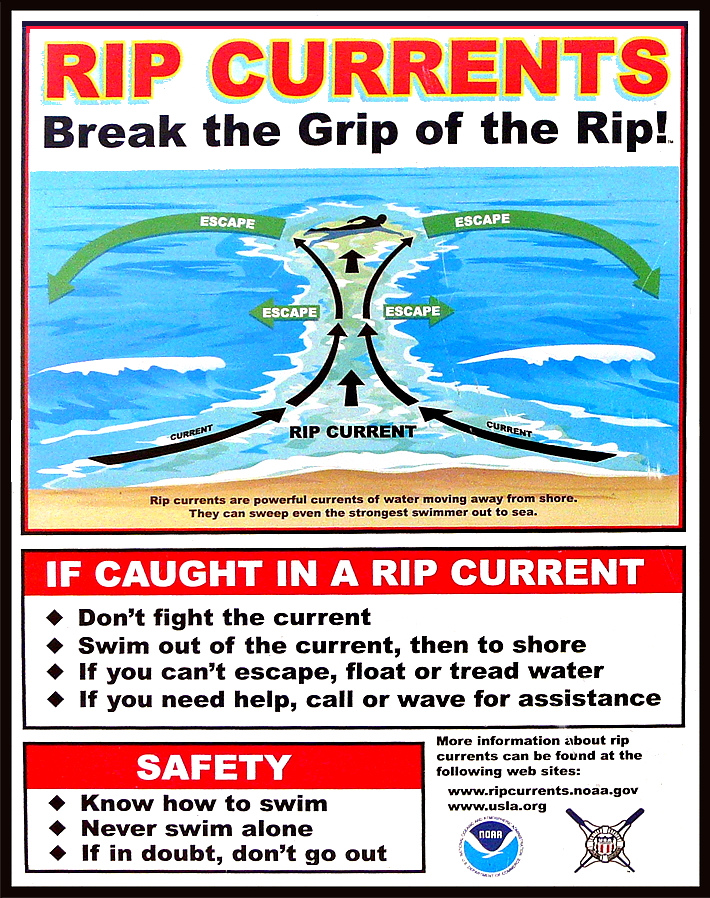
Most rip current deaths are preventable. Yet people keep drowning.
Beach-safety experts are frustrated by the mounting fatalities despite awareness campaigns and improved forecasts
Rip-current deaths in the United States are running ahead of last year’s pace – at least 29 since the beginning of the year – with peak beach season yet to come. Experts are warning the public to be aware of this largely hidden hazard ahead of Memorial Day weekend, traditionally one of the busiest beach weekends of the year. The risk of dangerous rip currents is expected to be particularly high this weekend along portions of the Southeast coast where a storm could produce heavy rain, gusty winds and rough seas. Experts say most rip-current fatalities can be prevented. Still, the number of annual rip-current deaths has steadily climbed since the National Weather Service began tracking them in 2010, reaching a record of 130 in 2021, then dipping to 85 last year. Rip currents were the third-leading cause of weather-related deaths from 2012 to 2021, behind only heat and flooding, according to the Weather Service, and in a typical year they kill more people than lightning, hurricanes or tornadoes. Rip currents are strong, narrow streams of water that flow away from the shoreline and can suddenly sweep swimmers out to sea. They can form on almost any beach with breaking waves, especially near low spots or breaks in sandbars, and near jetties or piers. Predicting where and when a rip current will form is difficult because of the many weather and ocean factors involved. The Weather Service cautions that “rip currents often form on calm, sunny days.” The Weather Service lists 26 rip-current deaths this year through April 27, not including three deaths believed to be caused by rip currents on April 28 in Destin, Fla., May 6 in Ocean City, Md., and May 12 at Cannon Beach, Ore. At this point last year, there were 19 total such deaths. Beach-safety experts are expressing frustration as fatalities trend higher again this year despite annual awareness campaigns, such as the United States Lifesaving Association’s National Beach Safety Week held every year during the week before Memorial Day, and recent improvements to rip current forecasts. “It is frustrating when we produce videos and graphics and educational information and release it at the beginning of each beach season, and it still misses so many people,” Scott Stripling, a senior meteorologist at the National Hurricane Center in Miami, said in an email. “The problem seems to be one of communication and/or lack of attention by the general public.”
Rip-current forecasts and warning signs
The Weather Service issues daily rip-current forecasts for beaches on the Atlantic Ocean, Gulf Coast, Southern California, Great Lakes, Puerto Rico and the U.S. Virgin Islands. The forecasts categorize the rip-current risk as low, moderate or high, and are informed by a rip-current model recently developed by NOAA that has made it possible to differentiate the risk between adjacent beaches. Previously the same forecast could span 100 miles or more. However, the model doesn’t enable reliable forecasts of the exact location and time of rip currents. These are influenced by a number of factors including wave characteristics, water levels, winds and the shape of a beach. Advances in artificial intelligence could help with rip-current detection – NOAA is partnering with the Southeast Coastal Ocean Observing Regional Association on a project using AI to detect rip currents in webcam imagery – but such efforts are still in their infancy. In some cases, there are visible clues to the existence of a rip current, such as a break in the waves, foamy water or objects being carried offshore, or darker water that is due to a break in a sandbar. Often, though, rip currents are difficult to see, or are best seen from a high point such as a dune line or the top of a beach access. Rip currents are particularly hard to spot in South Florida, where, the Weather Service says, they “consistently rank at or near the top of the list of deadliest weather-related hazards,” because there is not much sediment to darken or muddy the current at the shoreline. In Brevard County alone, home to nearly 72 miles of sandy beaches, there have been eight apparent rip-current drownings since November, all at beaches without lifeguards. “We have clear-water rips, so these offshore-flowing currents are very hard to detect,” Stephen Leatherman, a professor in the department of earth and environment at Florida International University, said in an email. “The best thing is to have lifeguards and for people to swim close to lifeguards. But lifeguards are very expensive, and Florida has 825 miles of good quality sandy beaches which are swimmable for most of the year.”
Warnings and tips for surviving a rip current
Rip currents flow at speeds up to 5 miles per hour. That may not sound fast, but it’s faster than many Olympic swimmers. If you are caught in a rip current, experts say not to swim directly back to shore against the current, which can quickly exhaust and drown you. Instead, swim parallel to the shore until you are out of the current, which is typically no wider than about 50 to 100 feet. You might also escape by floating or treading water, allowing the current to take you out just past the breaking waves where many rip currents tend to dissipate, and then circulate you back toward the shore. However, some rip currents can extend hundreds of yards offshore. If you see someone caught in a rip current, experts urge you not to risk your own life to attempt a swimming rescue unless you have been trained to do so and have a flotation device to assist you and the person in distress. Instead, you should get help from a lifeguard or call 911 if no lifeguard is present. You should also throw the victim something that floats, such as a lifejacket, body board, cooler or a ball, and yell instructions on how to escape. Experts agree that the best way to survive a rip current is to avoid it in the first place. That means checking the rip-current forecast before you enter the water, heeding warnings for rip currents or rough surf, and only swimming close to a lifeguard. The United States Lifesaving Association estimates the chance of someone’s drowning at a beach with a lifeguard at 1 in 18 million. “Lifeguards are trained to spot rip currents and other beach hazards and intervene as and when needed,” Chris Houser, a professor at the University of Windsor School of Environment and a longtime beach-safety researcher, said in an email. “While there is some evidence that individual beach users can be trained to spot rips, most beach users are not aware of what to look for.” U.S. lifeguards make an estimated 80,000 or more rip-current rescues each year, which suggests that education and warning messages are not reaching or are not resonating with as many people as experts would like. “If the lifeguards are flying precautionary flags, and there are signs on the lifeguard stand identifying the potential for rips in that area, and the National Weather Service and media have advertised that there is at least a moderate risk for rip currents to be present at your local beach, what else can we do?” the Weather Service’s Stripling said.
Read more » click here

 Staying safe at the beach: Rip currents, jellyfish, sharks, and other hazards
A trip to the beach can turn deadly (or painful) due to natural hazards but being aware of risks and mitigating hazards is a good way to prevent problems.
Picture this: warm weather, blue skies, and your toes in the sand – it sounds like a perfect lazy summer day at the beach. Maybe you decide to cool down in the ocean and find yourself bobbing around when suddenly you realize you are a little too far out. As panic sinks in and you start to swim towards dry land you realize your efforts are in vain and your whole body is getting tired, all the while you are drifting further into the Atlantic – you have gotten stuck in a rip current. It’s not the only potential danger in the ocean, though. There are also sharks. And, of course, there are some things on shore that ruin your day at the beach, too, including stepping on jellyfish and, of course, good old-fashionedsunburn.
Rip currents
According to the U.S. Lifesaving Association (USLA), 80 percent of all ocean rescues are related to rip currents and annually more than 100 fatalities across the country are due to rip currents. While it is obvious that swimming at a beach with lifeguards is one of the safer options, there are plenty of area beaches that lack lifeguards or maybe ocean rescue season has not started just yet. So, what is the best course of action for surviving a rip current? According to the National Weather Service, there are several things swimmers should keep in mind when dealing with these often-unseen dangers.
-
- Relax. Rip currents don’t pull you under.
- A rip current is a natural treadmill that travels an average speed of 1-2 feet per second but has been measured as fast as 8 feet per second – faster than an Olympic swimmer. Trying to swim against a rip current will only use up your energy; energy you need to survive and escape the rip current.
- Do NOT try to swim directly into to shore. Swim along the shoreline until you escape the current’s pull. When free from the pull of the current, swim at an angle away from the current toward shore.
- If you feel you can’t reach shore, relax, face the shore, and call or wave for help. Remember: If in doubt, don’t go out!
- If at all possible, only swim at beaches with lifeguards.
- If you choose to swim on beaches without a lifeguard, never swim alone. Take a friend and have that person take a cell phone so he or she can call 911 for help.
Sharks
Sharks are a fear on most every swimmer’s mind, regardless of the actual dangers posed by the large predatory fish. “NOAA states that while shark attacks are rare, they are most likely to occur near shore, typically inshore of a sandbar or between sandbars where sharks can be trapped by low tide, and near steep drop-offs where sharks’ prey gather. While the risks are small, it’s important to be aware of how to avoid an attack,” according to previous reporting.
Suggestions from NOAA for reducing the risk of a shark attack include:
-
- Don’t swim too far from shore.
- Stay in groups – sharks are more likely to attack a solitary individual.
- Avoid being in the water during darkness or twilight when sharks are most active.
- Don’t go in the water if bleeding from a wound – sharks have a very acute sense ofsmell.
- Leave the shiny jewelry at home – the reflected light resembles fish scales.
- Avoid brightly-colored swimwear – sharks see contrast particularly well.
Sunburns
Most everyone has experienced a sunburn at one point in their life and while not often thought as a major concern for many, overexposure to UV light can cause serious long-term problems including skin cancer. The Centers for Disease Control and Prevention (CDC) recommends using at least S.P.F. 15 sunscreen at least 15 minutes prior to sun exposure. Wearing a hat, long sleeves, and other protective clothing is also recommended to keep skin protected.
Jellyfish
Jellyfish and Portuguese Man of War have been spotted along the beaches of New Hanover County and surrounding area beaches already this season and the little floating creatures can pack a punch. Often times beachgoers will spot them washed up on shore and other times they can be spotted in the water, but it is best to avoid them when you can. “While all jellyfish sting, not all contain poison that hurts humans. Be careful of jellies that wash up on shore, as some can still sting if tentacles are wet. NOAA recommends that if you are stung by a jellyfish to first seek a lifeguard to give first aid. If no lifeguards are present, wash the wound with vinegar or rubbing alcohol,” NOAA suggests. And what about that … other method of treating stings? Turns out, it’s a myth. In fact, urine can actually aggravate the stinging cells of jellyfish, making things worse. These cells, which detach and stick into the skin of prey, can continue to inject venom. Urine, as well as fresh water, can cause an imbalance to the salt solution surrounding the stinging cells, causing them to continue to fire. According to Scientific American, if you don’t have vinegar or rubbing alcohol, rinsing with salt water may be your best bet.
Read more » click here

Storm Events –
 Hurricane Vehicle Decals
Property owners were provided with four (4) decals that were included in this month’s water bill. It is important that you place your decals in your vehicle or in a safe place. A $10 fee will be assessed to anyone who needs to obtain either additional or replacement decals. Decals will not be issued in the 24-hour period before an anticipated order of evacuation.
The decals are your passes to get back onto the island to check your property in the event that an emergency would necessitate restricting access to the island. Decals must be displayed in the driver side lower left-hand corner of the windshield, where they are not obstructed by any other items. Officials must be able to clearly read the decal from outside the vehicle.
Property owners without a valid decal will not be allowed on the island during restricted access. No other method of identification is accepted in an emergency situation. Click here to visit the Town website to find out more information regarding decals and emergency situations.
NC General Statute 166A-19.22
Power of municipalities and counties to enact ordinances to deal with states ofemergency.
Synopsis – The governing body may impose by declaration or enacted ordinance, prohibitions, and restrictions during a state of emergency. This includes the prohibition and restriction of movements of people in public places, including imposing a curfew; directing or compelling the voluntary or mandatory evacuation of all or part of the population, controlling ingress and egress of an emergency area, and providing for the closure of streets, roads, highways, bridges, public vehicular areas. All prohibitions and restrictions imposed by declaration or ordinance shall take effect immediately upon publication of the declaration unless the declaration sets a later time. The prohibitions and restrictions shall expire when they are terminated by the official or entity that imposed them, or when the state of emergency terminates.
Violation – Any person who violates any provisions of an ordinance or a declaration enacted or declared pursuant to this section shall be guilty of a Class 2 misdemeanor.
Hot Button Issues –
Subjects that are important to people and about which they have strong opinions

Climate
For more information » click here.
There’s something happening here
What it is ain’t exactly clear
The World Is Warming Up. And It’s Happening Faster.
Human-caused global warming has been increasing faster and faster since the 1970s.
Summer started barely a week ago, and already the United States has been smothered in a record-breaking “heat dome.” Alaska saw itsfirst-ever heat advisorythis month. And all of this comes on the heels of 2024, thehottest calendar yearin recorded history. The world is getting hotter, faster. A report published last week found that human-caused global warming is nowincreasing by 0.27 degreesCelsius per decade. That rate was recorded at 0.2 degrees in the 1970s and has been growing since. This doesn’t surprise scientists who have been crunching the numbers. For years, measurements have followed predictions that the rate ofwarming in the atmosphere would speed up. But now, patterns that have been evident in charts and graphs are starting to become a bigger part of people’s daily lives. “Each additional fractional degree of warming brings about a relatively larger increase in atmospheric extremes, like extreme downpours and severe droughts and wildfires,” said Daniel Swain, a climate scientist at the University of California. While this aligns with scientific predictions of how climate change can intensify such events, the increase in severity may feel sudden to people who experience them. “Back when we had lesser levels of warming, that relationship was a little bit less dramatic,” Dr. Swain said. “There is growing evidence that the most extreme extremes probably will increase faster and to a greater extent than we used to think was the case,” he added. Take rainfall, for example. Generally, extreme rainfall is intensifying at a rate of 7 percent with each degree Celsius of atmospheric warming. But recent studies indicate that so-called record-shattering events are increasing at double that rate, Dr. Swain said. “There is no weather that’s happening outside of climate,” said Kate Marvel, a climate scientist and author of the book “Human Nature.” “This is stuff that’s manifesting in the real world,” she said, citing catastrophes like Hurricane Helene and Vermont’s historic floods in 2023.According to Dr. Swain, scientists have yet to come to a universal understanding of these events, in part because the infrequent nature of outliers makes them difficult to study. And as warming has intensified, so have the impacts on vulnerable regions of the planet like the Arctic and Antarctic, making previously rare or hidden consequences more apparent. Scientists are fine-tuning their models to understand the behavior of the vast ice sheets in such places to match the rapid changes they’re observing. In March,a NASA analysisfound that sea levels had risen faster than expected in 2024, in part because of a combination of melting glaciers and heat penetrating deeper into oceans, causing them to expand thermodynamically. Sea surface temperatures are rising faster than previously predicted, too, according toa studypublished in April by researchers at the National Center for Earth Observation in Britain. Cecilia Bitz, a professor of climate science at the University of Washington, said that modeling the Earth is complex, and that there are an innumerable amount of small factors that could be taken into account. But even with these uncertainties, scientists have ways of building their models to identify trends that are largely accurate. “Nothing is defying our big picture about the physics of the climate system,” Dr. Bitz said. Overall atmospheric warming has consistently followed modeling predictions for decades. But recently, the fundamental imbalance responsible for this heat has been tilting – catching even scientists off guard.Global warming is a symptom of Earth’s energy imbalance, which is a measure of the difference between the total amount of heat reaching Earth from the sun, and the amount radiating back into space. In May,a paperanalyzing data from a NASA satellite found that this imbalance had grown faster than expected, more than doubling in the past two decades and becoming nearly twice as large as it was previously predicted to be. Zeke Hausfather, a research scientist at Berkeley Earth, said climate scientists were still working to understand these findings. There are various theories, such as fewer emissions of aerosols, a type of air pollution that is harmful to human health and that increases the reflectivity of clouds, which bounce the sun’s heat back into space. Historically, aerosol emissions have masked the warming effect of greenhouse gases like carbon dioxide. Over the past half-century or so, as nations reduced certain kinds of air pollution, aerosol emissions fell significantly. According to Dr. Hausfather, this change is the primary reason atmospheric warming has accelerated in recent decades. But the most worrying possibility behind Earth’s energy imbalance, he said, is how the general nature of clouds may be changing in response to climbing temperatures. It’s a feedback loop that could potentially exacerbate warming and is “one of the single biggest uncertainties in predicting future climate,” he said. As the world continues to emit planet-warming greenhouse gasses, and temperatures climb past what the human world was built to handle, Dr. Marvel said, more people will experience climate change in damaging and frightening ways. “It’s always worse than expected when it happens to you,” Dr. Marvel said. “It is one thing to see something in a climate model, and it’s a totally different thing to actually experience it in your own life.”
Read more » click here
We May Not Agree on Climate, but We All Feel the Heat
Just five days into summer, much of the United States is gripped by a record-breaking heat dome. Pavement is buckling in Wisconsin. Trains in the Northeast have had to slow or stop to avoid heat-induced “sun kinks” in the rails. Emergency rooms are expected to fill with patients with heat-related illness across the Midwest. Power grids are straining and the Washington Monument is closed to visitors. These events aren’t outliers; they are the signs of a new era of more frequent and intense heat waves that will test infrastructure, public health systems and communities. For my research on heat, I meet people from across the political spectrum who are living through these extreme heat episodes and stressing over escalating electric bills, dying livestock and dangerous working conditions. I have found that there is no need to litigate the science of climate change in these conversations. Rather, if our leaders focus on the disruptions and damage caused by heat, they can open the door to broader, more effective bipartisan solutions. Unlike hurricanes or floods, extreme heat doesn’t leave behind eye-catching wreckage. But its toll is no less profound. Exposure to heat in the workplace drags down labor productivity, suppresses local gross domestic product and hits rural economies hardest – especially those heavily dependent on manufacturing or agriculture. Supply chain disruptions and power outages that destroy inventories also drive up costs for producers and consumers, from food spoilage in grocery stores and warehouses to heat-damaged electronics and pharmaceuticals rendered unusable. The risks go beyond the economy and public health. Extreme heat is also emerging as a national security concern. It threatens the physical readiness of soldiers, weakens military installation infrastructure and complicates logistics and supply chains critical to defense operations. The Department of Defense has begun incorporating heat-related stressors into its strategic planning because of the compounding effects on personnel, equipment and mission reliability, especially in rural and remote regions. Like other sectors, the military isn’t waiting for political consensus on climate change. It’s adapting to the effects that are already here. As the costs from extreme heat mount, there is growing interest from industries and lawmakers to come up with new solutions. Congress recently formed a bipartisan Extreme Heat Caucus – proof that the issue is gaining recognition across the aisle. The focus is on responding to worker injuries, economic losses and public safety risks. That’s a promising sign that heat can unite lawmakers on urgently needed nonpartisan solutions. Imagine if our approach to heat mirrored how we prepare for hurricanes – anticipating its damage, issuing targeted alerts and deploying protective infrastructure, such as cooling centers, shaded transit stops and reflective roofing materials. A new approach should also include better emergency response systems that prioritize vulnerable populations. While the National Weather Service does issue heat alerts, they are often based on statistical thresholds (like the 95th or 98th percentile of past regional heat waves) and generally do not incorporate health outcomes. Many of the most serious health effects occur well below those statistical thresholds. As a result, alerts may come too late or not at all. More nonpartisan support for dealing with increasingly brutal summers could also mean updated alerts, as well as better workplace protections, a modernized electric grid to avoid outages and the development of smarter technologies. Business leaders are beginning to recognize the need to address extreme heat. GE Appliances recently installed sensor-driven ventilation systems to keep factory floors cooler and less humid. The result was increased employee comfort, greatly improved retention of workers and safer working conditions. In the construction industry, some firms are giving employees devices that detect early signs of heat stress, helping field supervisors respond before a medical emergency occurs. Delta Air Lines is working with the Korey Stringer Institute, a research center focused on heat and health, to develop policies to protect their ground crews, who can be exposed to very high temperatures from heat radiating off the tarmac and jet engines. United Parcel Service recently rolled out cooling hats, towels and sleeves along with water for its delivery workers and added fans and exhaust heat shields to vehicles as part of a new heat-safety agreement with the Teamsters. The insurance industry is also beginning to rethink how it responds to the rising risks of extreme heat. One emerging tool is parametric insurance, a policy that issues automatic payouts when specific temperature thresholds are met, rather than requiring damage assessments or lengthy claims processes. This kind of approach isn’t about replacing income; it’s about helping businesses, farms and independent workers absorb shocks and keep operating. The solutions are out there – we just need to scale them. Congress should support bipartisan efforts like the new Extreme Heat Caucus. Businesses should treat heat not as a seasonal inconvenience, but a year-round operational risk. And cities, states and the federal government must invest in extreme heat preparedness, not just recovery. Extreme heat is not a niche environmental issue. It determines whether construction crews can safely finish a job, whether school buildings without adequate air-conditioning can stay open and whether crops make it to market or wither in the field. If we get serious about heat, we don’t just weather the summer – we will protect workers, safeguard infrastructure and strengthen the systems that communities rely upon every day, building a more resilient economy for everyone.
Read more » click here

Flood Insurance Program
For more information » click here
National Flood Insurance Program: Reauthorization
Congress must periodically renew the NFIP’s statutory authority to operate. On March 14, 2025, the president signed legislation passed by Congress that extends the National Flood Insurance Program’s (NFIP’s) authorization to September 30, 2025.
Congress must now reauthorize the NFIP
by no later than 11:59 pm on September 30, 2025.

GenX
For more information » click here

Homeowners Insurance
For more information » click here
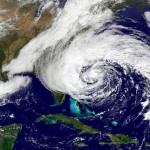
Hurricane Season
For more information » click here
Hurricane season runs from June 1 through November 30
NOAA predicts above-normal 2025 Atlantic hurricane season
Above-average Atlantic Ocean temperatures set the stage
NOAA’s outlook for the 2025 Atlantic hurricane season, which goes from June 1 to November 30, predicts a 30% chance of a near-normal season, a 60% chance of an above-normal season, and a 10% chance of a below-normal season. The agency is forecasting a range of 13 to 19 total named storms (winds of 39 mph or higher). Of those, 6-10 are forecast to become hurricanes (winds of 74 mph or higher), including 3-5 major hurricanes (category 3, 4 or 5; with winds of 111 mph or higher). NOAA has a 70% confidence in these ranges.”NOAA and the National Weather Service are using the most advanced weather models and cutting-edge hurricane tracking systems to provide Americans with real-time storm forecasts and warnings,” said Commerce Secretary Howard Lutnick. “With these models and forecasting tools, we have never been more prepared for hurricane season.””As we witnessed last year with significant inland flooding from hurricanes Helene and Debby, the impacts of hurricanes can reach far beyond coastal communities,” said Acting NOAA Administrator Laura Grimm. “NOAA is critical for the delivery of early and accurate forecasts and warnings, and provides the scientific expertise needed to save lives and property.”
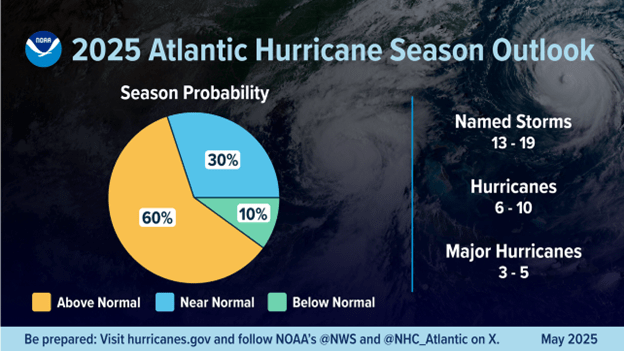 Factors influencing NOAA’s predictions
The season is expected to be above normal – due to a confluence of factors, including continued ENSO-neutral conditions, warmer than average ocean temperatures, forecasts for weak wind shear, and the potential for higher activity from the West African Monsoon, a primary starting point for Atlantic hurricanes. All of these elements tend to favor tropical storm formation. The high activity era continues in the Atlantic Basin, featuring high-heat content in the ocean and reduced trade winds. The higher-heat content provides more energy to fuel storm development, while weaker winds allow the storms to develop without disruption.This hurricane season also features the potential for a northward shift of the West African monsoon, producing tropical waves that seed some of the strongest and most long-lived Atlantic storms. “In my 30 years at the National Weather Service, we’ve never had more advanced models and warning systems in place to monitor the weather,” said NOAA’s National Weather Service Director Ken Graham. “This outlook is a call to action: be prepared. Take proactive steps now to make a plan and gather supplies to ensure you’re ready before a storm threatens.”
Improved hurricane analysis and forecasts in store for 2025
NOAA will improve its forecast communications, decision support, and storm recovery efforts this season. These include:
-
- NOAA’s model, the Hurricane Analysis and Forecast System, will undergo an upgrade that is expected to result in another 5% improvement of tracking and intensity forecasts that will help forecasters provide more accurate watches and warnings.
- NOAA’s National Hurricane Center (NHC) and Central Pacific Hurricane Center will be able to issue tropical cyclone advisory products up to 72 hours before the arrival of storm surge or tropical-storm-force winds on land, giving communities more time to prepare.
- NOAA’s Climate Prediction Center’s Global Tropical Hazards Outlook, which provides advance notice of potential tropical cyclone risks, has been extended from two weeks to three weeks, to provide additional time for preparation and response.
Enhanced communication products for this season
-
- NHC will offer Spanish language text products to include the Tropical Weather Outlook, Public Advisories, the Tropical Cyclone Discussion, the Tropical Cyclone Update and Key Messages.
- NHC will again issue an experimental version of the forecast cone graphic that includes a depiction of inland tropical storm and hurricane watches and warnings in effect for the continental U.S. New for this year, the graphic will highlight areas where a hurricane watch and tropical storm warning are simultaneously in effect.
- NHC will provide a rip current risk map when at least one active tropical system is present. The map uses data provided by local National Weather Service forecast offices. Swells from distant hurricanes cause dangerous surf and rip current conditions along the coastline.
Innovative tools for this year
-
- NOAA National Environmental Satellite, Data, and Information Services (NESDIS), in collaboration with NOAA’s Office of Marine and Aviation Operations and NOAA Research, is deploying a new, experimental electronically scanning radar system called ROARS on NOAA’s P-3 hurricane hunter research aircraft. The system will scan beneath the plane to collect data on the ocean waves and the wind structure of the hurricane.
- NOAA Weather Prediction Center’s experimental Probabilistic Precipitation Portal provides user-friendly access to see the forecast for rain and flash flooding up to three days in advance. In 2024, Hurricane Helene caused more than 30 inches of extreme inland rainfall that was devastating and deadly to communities in North Carolina.
NOAA’s outlook is for overall seasonal activity and is not a landfall forecast. NOAA also issued seasonal hurricane outlooks for the eastern Pacific and central Pacific hurricane basins. NOAA’s Climate Prediction Center will update the 2025 Atlantic seasonal outlook in early August, prior to the historical peak of the season.
Read more » click here
Atlantic Hurricane Season Could Go ‘0 For June.’
Does That Matter For The Rest Of The Season?
Unlike one year ago, this June has been dead quiet in the Atlantic. Our deeper dive examines whether this is unusual and whether that provides anything meaningful about what the rest of the season holds.
The 2025 Atlantic hurricane season may fail to produce its first storm through the rest of June for the first time in 11 years. But that doesn’t mean the rest of the season won’t pose dangers to the U.S. and Caribbean.
‘0 For June,’ Unlike Last Year
While the Eastern Pacific has already generated five storms and two hurricanes, including Erick, we’re still waiting for the first named storm, “Andrea”, to develop in the Atlantic Basin. -One year ago, Alberto first became a tropical storm on June 19 in the Gulf, then Beryl exploded from a tropical storm to a Cat 4 hurricane by June 30 in the eastern Caribbean Sea.
Is This Unusual?
The short answer is, “For recent years, yes, but in general, not really.” Since the satellite era (1966), the season’s first storm arrived, on average, around June 10. Over a 30-year period from 1991 through 2020, that average date was June 20, according to the National Hurricane Center. Twenty-seven of 59 hurricane seasons since 1966 have failed to generate a June storm. That last happened in 2018 and 2019. This may be the first season to not produce a single storm in June, or before June, since 2014. But the last five seasons from 2020 through 2024 each produced at least one June storm. Four of those seasons, including the past two, produced multiple June storms.
Why So Quiet?
June and November are typically the two quietest months of hurricane season. By a measure known as accumulated cyclone energy or ACE, only about 2% of the Atlantic hurricane season’s activity occurs through June. This year, a combination of strong wind shear over the western Gulf and Caribbean Sea, higher than average surface pressure, more stable air suppressing thunderstorms, and less ocean heat than last year are keeping a lid on development, so far.
Does This Matter For The Rest Of The Season?
Given this “0 for June,” there is less of a chance that 2025’s season will be as frenetic as, say, 2020, 2017 or 2005.Since 1993, Junes with multiple storms correlate to hyperactive seasons, averaging 18 more storms, nine hurricanes and four major (Cat 3-plus) hurricanes, according to Todd Crawford, Vice President of Meteorology at Atmospheric G2. Crawford also found that seven of eight seasons with at least 10 hurricanes also had at least one June storm.
‘It Only Takes One’
Here’s what happened in the last two seasons without a June storm:
2019: Another 17 storms, six hurricanes and three major hurricanes formed, including Cat 5 Dorian’s catastrophic raking of the northwest Bahamas.
2018: Another 14 storms, eight hurricanes and two major hurricanes formed, including Florence’s catastrophic rainfall in the Carolinas, followed by Michael’s Cat 5 landfall in the Florida Panhandle.
Each of those three hurricanes was so destructive and/or deadly that their names were retired from future use.
Despite potentially somewhat reduced numbers for the season overall, the Atmospheric G2 team is forecasting three hurricanes to make a U.S. landfall in 2025. And it only takes one storm to strike where you are to make any season memorably bad.
Prepare Now, Regardless
The bottom line is we’re still very early in the season, with the most active months of August and September ahead. Now, not in the days before a hurricane strikes, is a good time to refresh or develop a plan. That includes knowing if you live in an evacuation zone, assembling a disaster kit at home, making your home as resilient as possible, checking on your insurance policy and making an inventory of your belongings.
Read more » click here
Inlet Hazard Areas
For more information » click here
.
Lockwood Folly Inlet
For more information » click here.

Seismic Testing / Offshore Drilling
For more information » click here.

Offshore Wind Farms
For more information » click here
Things I Think I Think –
 Eating out is one of the great little joys of life.
Restaurant Review:
The Dinner Club visits a new restaurant once a month. Ratings reflect the reviewer’s reaction to food, ambience and service, with price taken into consideration.
///// June 2025
Name: Rx Chickens & Oysters
Cuisine: Seafood
Location: 421 Castle Street, Wilmington NC
Contact: 910.399.3080 / https://www.rxwilmington.com
Food: Average / Very Good / Excellent / Exceptional
Service: Efficient / Proficient / Professional / Expert
Ambience: Drab / Plain / Distinct / Elegant
Cost: $26 Inexpensive <=17 / Moderate <=26 / Expensive <=35 / Exorbitant <=40
Rating: Two Stars
Rx is located in downtown Wilmington on the corner of Fifth and Castle; in a residential neighborhood, away from any other downtown eatery. The name Rx pays homage to the building’s heritage, occupying the old Hall’s Drug Store. Rx, originally a farm-to-table restaurant, closed the doors in February 2022 and reopened in January 2024 after rebranding as Rx Chicken and Oysters a sea-to-table restaurant that farms their own oysters and catch their own fish. Now offering a casual menu focused on chicken and seafood, with a limited number of entrees.
 Cloud 9
9 Estell Lee Pl
Wilmington, North Carolina 28401
910.726.9226
Rooftop Bar
https://cloud9ilm.com/
Enjoy panoramic views from the Cloud 9 rooftop bar which overlooks picturesque downtown Wilmington. This premier open-air rooftop venue is located on the Riverwalk in downtown Wilmington on the ninth floor of the Embassy Suites. The bar is open seven (7) days a week at 4:00 PM and is currently serving almost fifty (50) different brews on tap and in cans and more than 20 wine selections. They also offer live music Thursday through Saturday evenings throughout the summer months.This is a must visit the next time you are in Wilmington.
Dining Guide – Local * Lou’s Views
Dining Guide – North * Lou’s Views
Dining Guide – South * Lou’s Views
Restaurant Reviews – North * Lou’s Views
Restaurant Reviews – South * Lou’s Views
Book Review:
Read several books from The New York Times best sellers fiction list monthly
Selection represents this month’s pick of the litter

KING OF ASHES by S.A. Cosby
In this southern crime novel Roman, the eldest brother, returns home to uncover that their father’s coma was caused by an accident linked to a local drug gang, prompting him to use his financial skills to protect his family from danger stemming from his brother Dante’s recklessness.
That’s it for this newsletter
See you next month
Lou’s Views . HBPOIN
. “Gather and disseminate information
. “Identify the issues and determine how they affect you
. “Act as a watchdog
. “Grass roots monthly newsletter since 2008